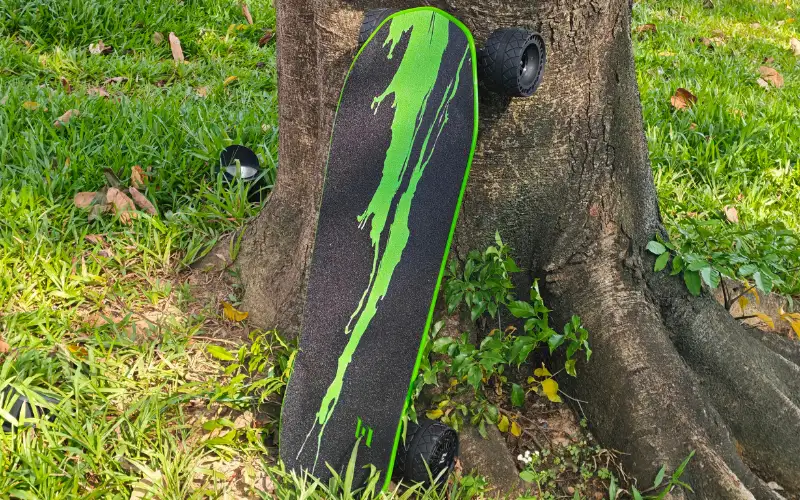


I was exactly 2.4 miles from my apartment when the remote buzzed, flashed red, and the board died completely.
It was a hot Tuesday in July, and the “25-mile maximum range” promised on the manufacturer’s glossy website had just ended at mile six.
If you’ve never carried an 18-pound slab of wood, dead lithium-ion cells, and heavy hub motors under your arm for two miles, let me save you the experience: It feels like lugging a bag of wet cement that constantly kicks you in the shins.
That $500 purchase was supposed to be my frictionless entry into the “last-mile commute revolution.” Instead, it became a brutal masterclass in reading between the lines of e-skate marketing.
When you’re shopping for your first board under $500, the spec sheets are weaponized to distract you. They sell you on blistering top speeds you’ll likely never use, while burying the truth about battery voltage sag, cheap braking curves that throw you off balance, and bone-rattling stiff decks that numb your feet.
I’ve spent the last three years riding, repairing, and destroying entry-level boards so you don’t have to. If you want to avoid buying a motorized paperweight, you don’t need another generic top-ten list. You need to know how these machines actually survive the asphalt. This is the definitive best budget electric skateboard buying guide, a roadmap built entirely from real-world street and off-road testing, scraped knees, and hard pavement.
Also read: 4 Best Electric Skateboards for Commuting (Save Time & Money on Your Ride)
The Best Value Electric Skateboards
For riders who want a good balance between price, performance, comfort, and everyday usability, three models stand out in the budget category: the Ecomobl Supermini 2WD, ET Storm 2.0, and ET Pro 2.0.
Ecomobl Supermini 2WD (Affordable Electric Skateboard)

The Ecomobl Supermini 2WD is a compact and affordable street electric skateboard designed for everyday city riding and commuting. Its relatively compact design makes it easy to handle around streets and urban areas, while its 118mm rubber wheels help absorb some of the vibration from imperfect roads.
The Supermini is available with both hub-motor and gearbox-motor configurations. Depending on the version, it offers up to 63 km of range and up to 60 km/h of top speed under the manufacturer’s stated conditions. The board also features CNC aluminum trucks, an adjustable rear hanger, integrated lighting, and an IP63 water-resistance rating.
For riders who mainly want a street electric skateboard that feels compact, responsive, and comfortable for daily riding, the Supermini 2WD is one of the most interesting choices in this price range.
Ecomobl ET Storm 2.0 (Cheapest Electric Skateboard by Ecomobl)
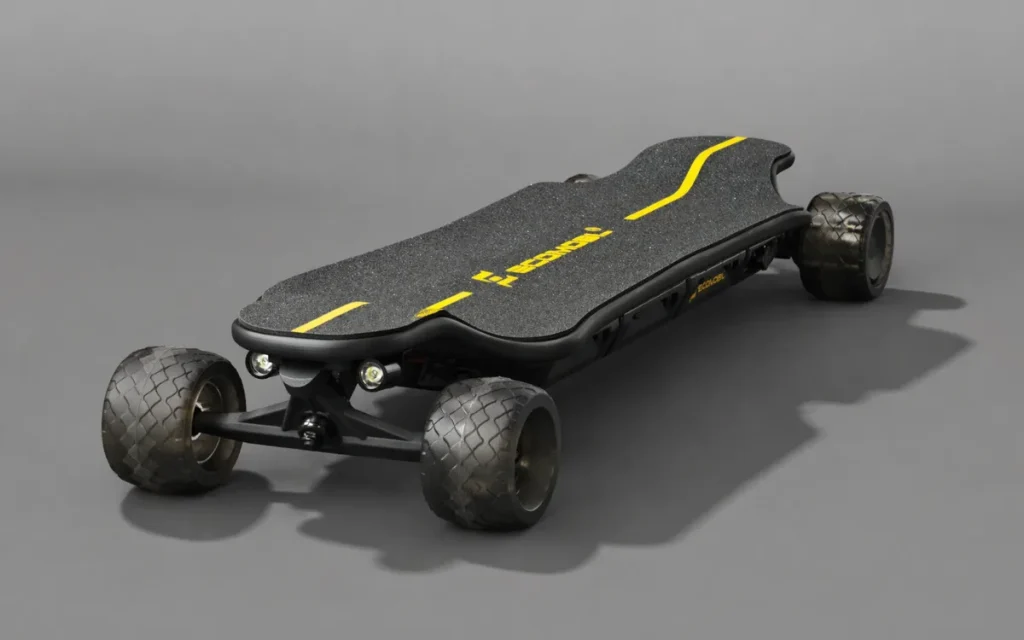
The Ecomobl ET Storm 2.0 is another budget electric skateboard aimed at riders who want a comfortable city board without moving into a higher price range.
It uses dual motors, 105mm wheels, and a 12S battery system. The board has a range of up to 65 km and a top speed of up to 52 km/h according to Ecomobl’s current specifications. Its carbon fiber-integrated shock-absorbing battery box is designed to improve comfort while keeping the board relatively compact.
The ET Storm 2.0 is a great option for riders who spend most of their time on paved roads and want a mix of range, speed, and everyday comfort.
Ecomobl ET Pro 2.0
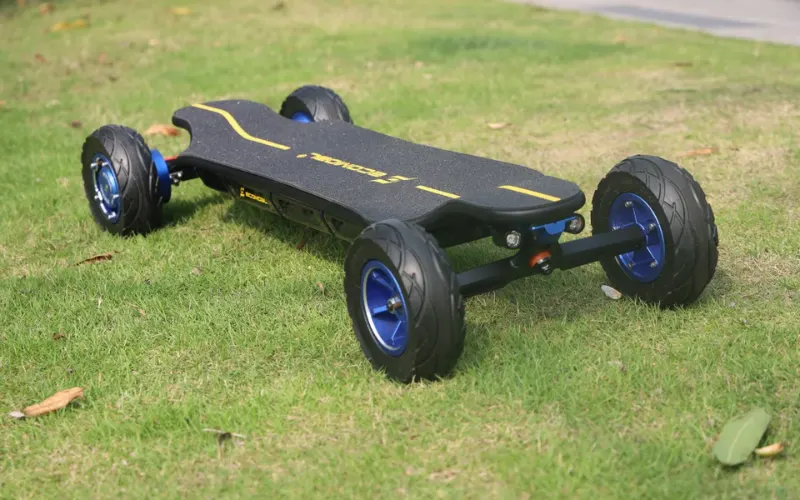
The Ecomobl ET Pro 2.0 sits one step above the entry-level street boards and offers a more performance-focused setup.
It uses dual planetary gear motors, a 12S battery, 180mm pneumatic wheels, and a 9-layer maple and fiberglass deck. The current specifications list a range of 35 to 45 km and a maximum speed of up to 55 km/h, depending on riding conditions.
The ET Pro 2.0 is a good choice for riders who want a board that can handle everyday commuting while also offering more power and stability for longer recreational rides.
Quick Comparison
| Model | Riding Style | Range | Top Speed | Price |
|---|---|---|---|---|
| Supermini 2WD | Street | Up to 63 km | Up to 60 km/h | $899 |
| ET Storm 2.0 | Street | Up to 65 km | Up to 52 km/h | $699 |
| ET Pro 2.0 | Street / mixed terrain | Up to 45 km | Up to 55 km/h | $999 |
Specifications and prices can vary by configuration and riding conditions.
Explore other e-boards
What Makes a Budget Electric Skateboard Worth Buying?
Before comparing models, it helps to understand the specifications that actually determine whether a budget board is worth buying.
Battery Range
Look beyond the advertised maximum range. Real-world range depends on rider weight, speed, temperature, terrain, hills, road conditions, and riding style.
A manufacturer may measure maximum range under controlled conditions, so your actual riding distance can be lower. If you plan to use an electric skateboard for commuting, choose a board with enough battery capacity to comfortably cover your normal route rather than choosing based only on the advertised maximum.
Deck Material and Flex
The deck has a major effect on ride comfort and stability.
Maple and fiberglass decks can provide a good combination of durability and flex, while carbon fiber decks are often used on higher-performance boards. A little flex can make longer rides more comfortable by helping absorb road vibration.
Remote and Braking Curve
The remote is one of the most important parts of an electric skateboard because it controls acceleration and braking.
A smooth acceleration curve makes it easier to control the board, particularly for newer riders. Progressive braking is equally important because sudden braking can make the board feel difficult to manage.
Understanding how the ESC, battery, motors, and regenerative braking work can also help you make better purchasing decisions. See our guide on how electric skateboards actually work for a deeper explanation.
Wheel Size and Type
Wheel choice should match where you ride.
Smaller street wheels are generally suited to smooth pavement and urban riding, while larger pneumatic wheels are better for rough roads, gravel, grass, and trails.
If most of your riding happens in the city, a street board can be lighter and easier to maneuver. If you regularly encounter rough surfaces, an all-terrain or mountain board may be a better choice.
For more buying advice, see our guide covering the 11 key factors to consider when choosing your first electric skateboard.
Best Electric Skateboards Under $1500
If your budget is around $1,500, you can move beyond entry-level boards and choose from models with larger batteries, stronger motors, suspension systems, larger wheels, and more capable drivetrains.
Here are three Ecomobl options worth considering.
Ecomobl ET2 Pro
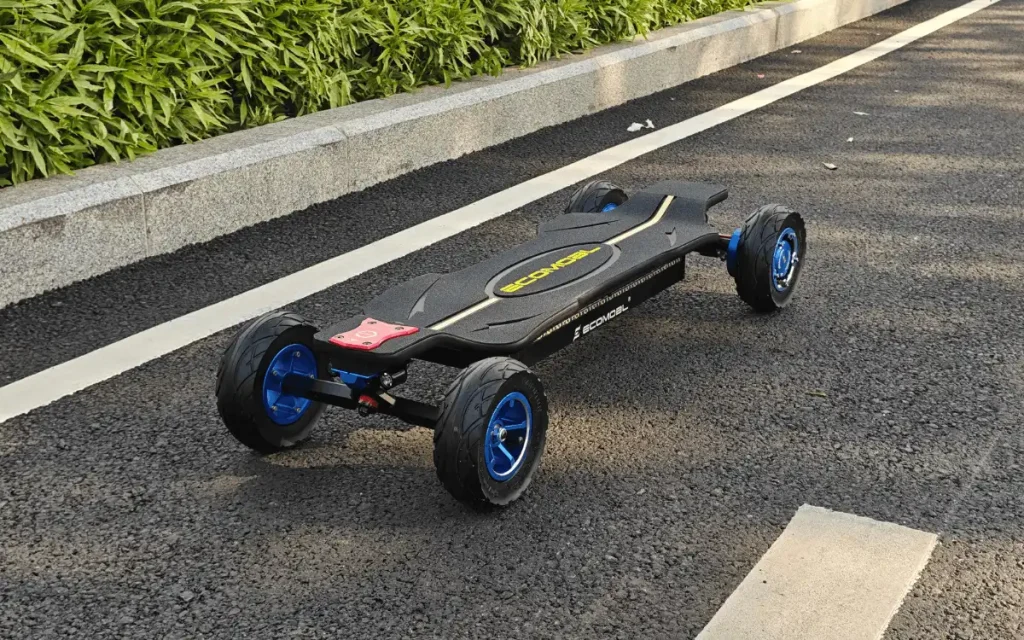
The Ecomobl ET2 Pro is one of the most versatile choices in this price range. It is available in both 2WD and 4WD versions and combines a large 20Ah battery with planetary gear motors and 180mm pneumatic tires.
The current specifications list a range of up to 55 km, speeds of up to 55 km/h, and a rider weight limit of 150 kg. The board also includes integrated front, rear, and side lighting.
For riders who want one board that can handle city streets as well as rougher terrain, the ET2 Pro offers a strong balance of performance and versatility.
Ecomobl Ripper Pro
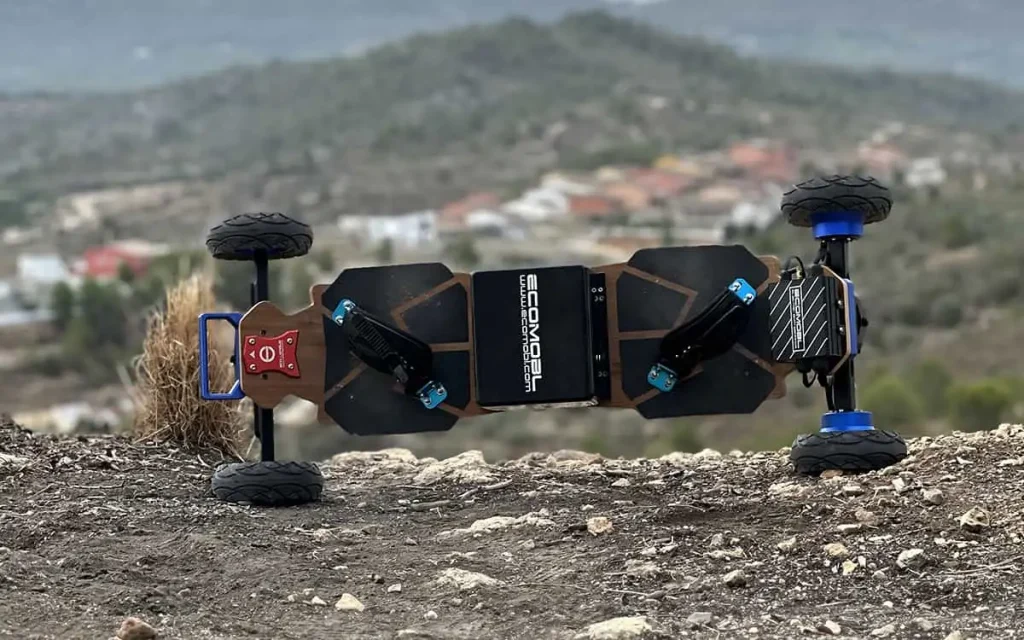
The Ecomobl Ripper Pro is designed more specifically around electric mountain boarding. It is available in 2WD and 4WD configurations and uses large 180mm pneumatic tires, planetary gear drive motors, and a 9-layer maple deck.
It offers up to 40 to 45 km of range and a top speed of up to 40 to 50 km/h depending on configuration and riding conditions.
The Ripper Pro makes sense for riders who want to spend more time on grass, gravel, dirt tracks, and other uneven surfaces while still keeping the board within a relatively accessible price range.
Ecomobl M24 2WD
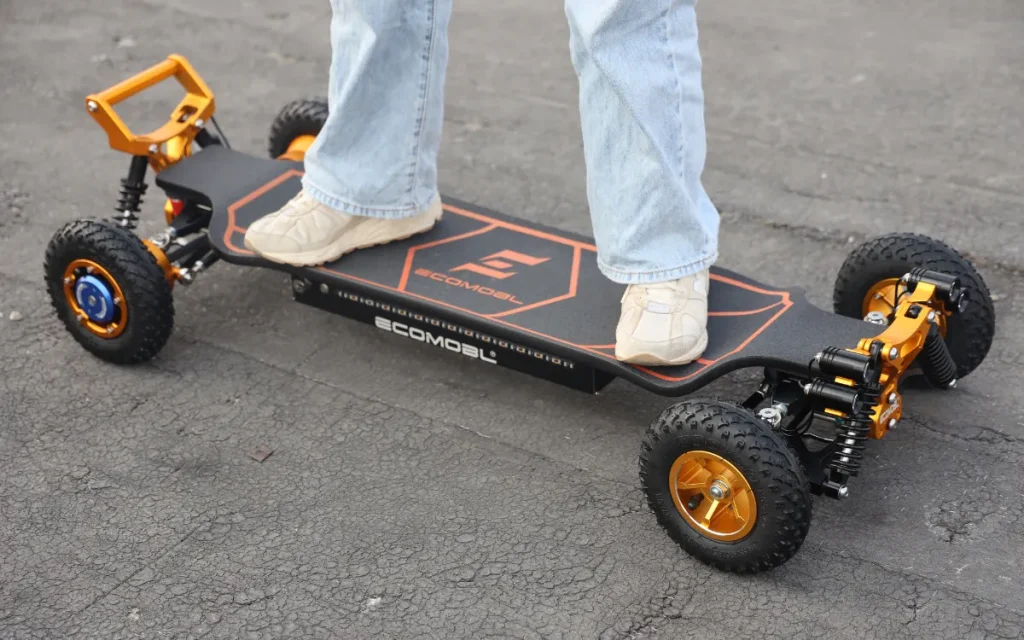
The Ecomobl M24 2WD is another strong option for riders who want more capability than a typical street longboard.
Its suspension system and larger wheels make it more comfortable on rougher surfaces, while the 2WD setup keeps the design simpler than a 4WD board.
The M24 2WD is particularly appealing to riders who want a board that can move between paved roads and light off-road terrain without going all the way to a dedicated mountain board.
Which One Should You Choose?
Choose the ET2 Pro if you want the most versatile option for commuting, recreational riding, and mixed terrain.
Choose the Ripper Pro if you are more interested in electric mountain boarding and spending time on trails, grass, gravel, and rough surfaces.
Choose the M24 2WD if you want suspension and larger wheels while maintaining a more traditional electric skateboard layout.
For another look at performance differences between Ecomobl models, check out our guide to the fastest electric skateboards.
Also check: Best Electric Skateboards for Adults You Can’t Ignore (Top 3 Picks)
Best Electric Mountain Board Under $200: Telum 2WD
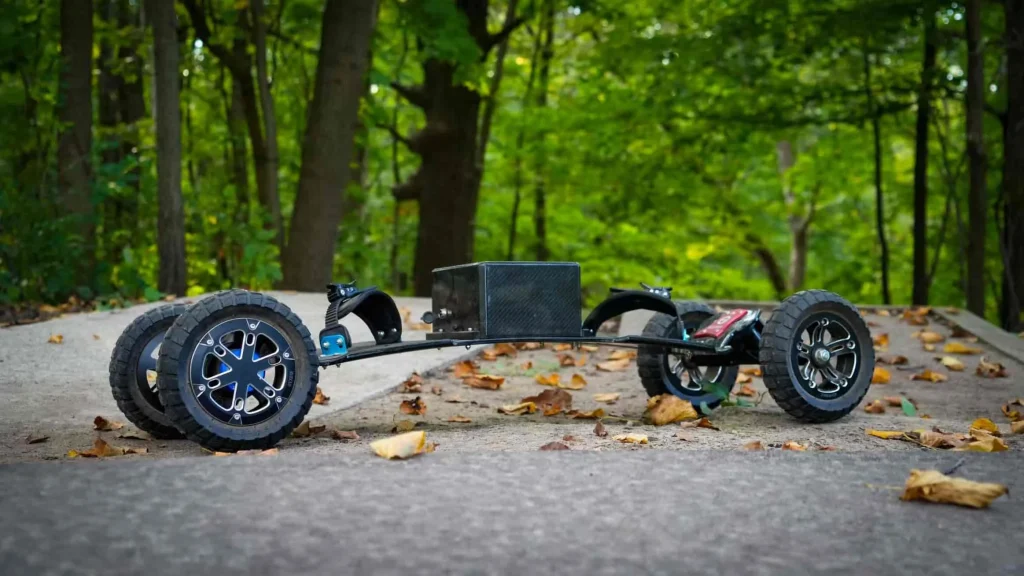
If your main goal is trail riding and off-road performance, an electric mountain board is a better choice than a conventional street skateboard.
The Ecomobl Telum 2WD is built specifically for riders who want strong performance on rough terrain. It uses a 14S4P battery, dual 6382 motors, planetary gear drive, and large 220mm x 76mm pneumatic tires.
The Telum 2WD also features a 100% carbon fiber flexi deck designed to provide a combination of strength, flexibility, and vibration absorption. Its current specifications list a range of approximately 38 to 45 km and a top speed of up to 55 km/h.
With its large pneumatic tires, high-torque drivetrain, carbon fiber deck, and suspension-oriented mountain board design, the Telum 2WD is a strong choice for riders who prioritize off-road capability.
If you are new to mountain boards, the Ecomobl Ripper Pro provides a lower-cost entry point, while the Telum 2WD is aimed at riders looking for more power and a more premium setup.
Best Electric Skateboards for Different Riding Styles
|
There is no single electric skateboard that is perfect for every rider. The best choice depends on where you ride and what you expect from the board. For street riding: The Supermini 2WD and ET Storm 2.0 are both designed specifically for street riding. The Supermini focuses on a compact design and comfortable rubber wheels, while the ET Storm 2.0 offers a lightweight setup with 105mm wheels and a long advertised range. For commuting and mixed terrain: The ET Pro 2.0 provides a balance of power, comfort, and range for everyday riding. For versatile all-terrain riding: The ET2 Pro is a strong choice thanks to its large pneumatic tires, planetary gear drive, and available 2WD or 4WD configurations. For off-road riding: The M24 2WD and Ripper Pro offer larger wheels and additional capability for rougher terrain. For serious mountain boarding: The Telum 2WD is designed around high-torque performance, large pneumatic tires, and a flexible carbon fiber deck. |
Final Thoughts
I still ride past the exact intersection where my first board died three years ago. Only now do I not even glance down at the battery indicator.
When you buy the right electric skateboard, one chosen for reliable torque, predictable braking, and honest range rather than flashy, inflated marketing specs, the anxiety of the commute completely disappears. You stop bracing for the sudden jerk of cheap speed controllers and start actually leaning into the carve.
Your first electric skateboard shouldn’t be a gamble, and it shouldn’t leave you stranded with a heavy piece of wood under your arm. Respect the spec sheet, but always trust the street and off-road tracks.
Buy the gear, keep your weight over your front trucks, and I’ll see you out on the track.
FAQs About Budget Electric Skateboards
What is a good speed for a beginner electric skateboard?
Most beginners are comfortable starting at 15 to 20 mph and working up from there. Boards with a beginner mode or adjustable speed limit are strongly recommended for new riders. The 11 key factors for choosing your first electric skateboard cover speed selection, alongside everything else worth considering before buying.
How long does a budget electric skateboard battery last?
Entry-level batteries typically last 300 to 500 charge cycles before capacity begins to decline noticeably. With regular commuting, that translates to two to four years of everyday use.
How much should I spend on my first electric skateboard?
Riders who want a reliable daily commuter with quality components should expect to spend $1,000 to $1,500. The complete electric skateboard pricing guide breaks down what each price tier actually gets you in terms of components, build quality, and real-world performance. Boards under $500 from unrecognized brands frequently use low-quality speed controllers and cells that underperform within months of purchase.
Do I need special skills to ride an electric skateboard?
No prior skateboarding experience is required for most entry-level boards, but some balance practice helps. Boards with smooth acceleration curves and a beginner mode make the learning curve significantly shorter.