


Electric skateboards have evolved far beyond simple motorized boards. Today, they integrate advanced technologies that improve efficiency, safety, and overall riding experience. One of the most valuable of these features is regenerative braking (not all electric skateboards have this feature), a system that not only slows you down but also helps recharge your battery while doing so.
In this article, we’ll break down what regenerative braking is, how it works, its benefits, limitations, and what riders should realistically expect from it.
What is Regenerative Braking
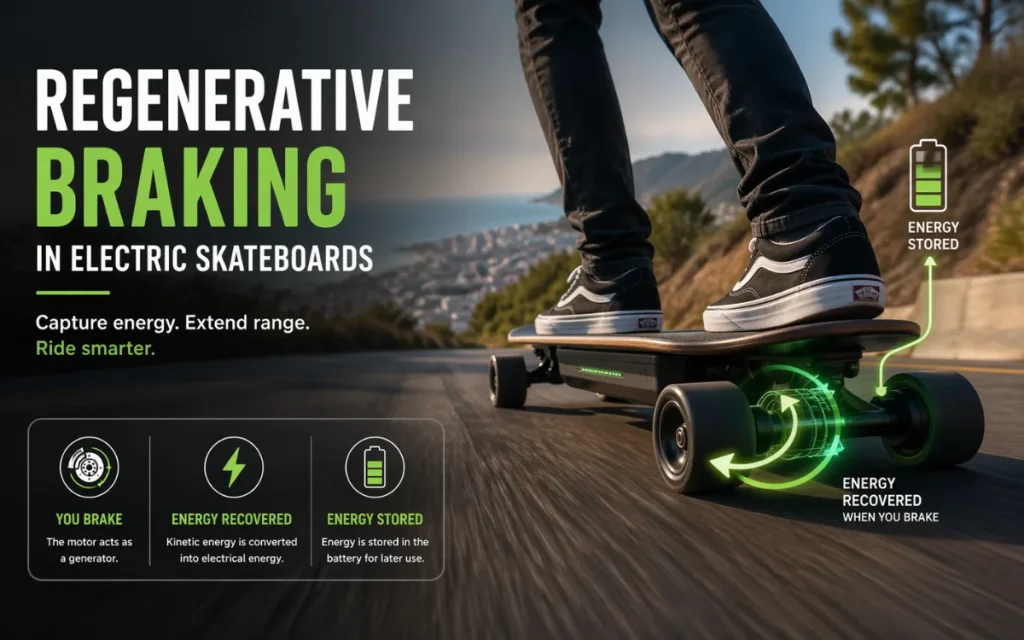
Regenerative braking is a technology that allows an electric skateboard to recover energy during braking and send it back to the battery. Instead of wasting energy as heat (like traditional braking systems), the skateboard’s motor temporarily acts as a generator.
In simple terms:
- When you accelerate, the battery powers the motor to spin the wheels.
- When you brake, the wheels drive the motor in reverse.
- This process converts kinetic energy (your motion) back into electrical energy and feeds it into the battery.
How Regenerative Braking Works
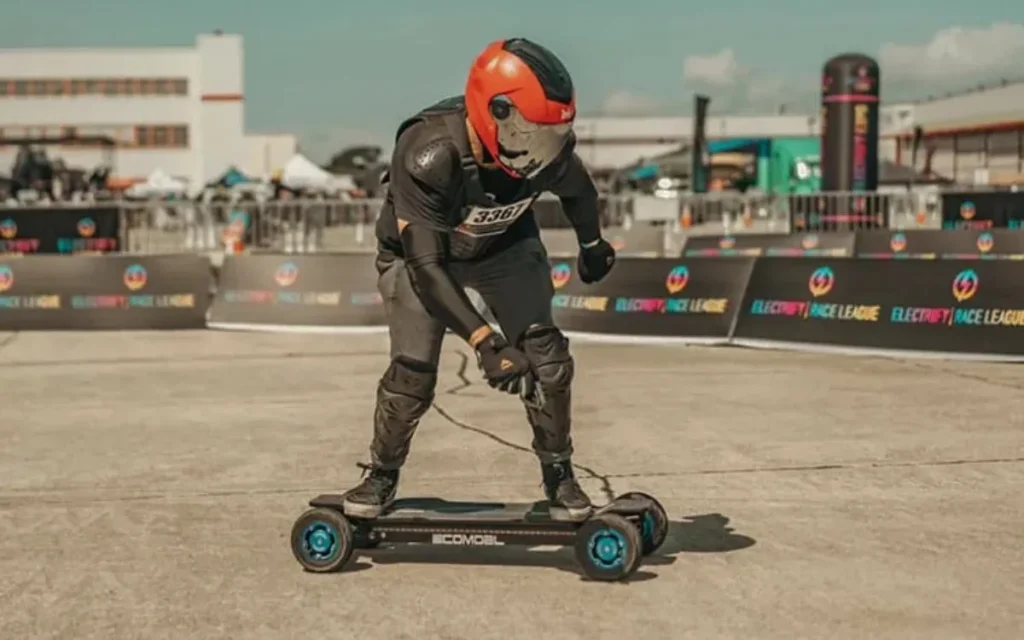
Electric skateboards use brushless DC motors (BLDC) controlled by an electronic speed controller (ESC). During braking:
- The rider activates the brake using the remote.
- The ESC changes the motor’s function from “driving” to “generating.”
- The spinning wheels turn the motor.
- The motor produces electrical energy.
- That energy is sent back into the battery.
This process creates resistance in the motor, which slows the board down smoothly.
Key Benefits of Regenerative Braking
1. Energy Efficiency
One of the biggest advantages is improved energy efficiency. While it doesn’t fully recharge your battery, it helps recover some energy that would otherwise be lost.
2. Extended Range (Slightly)
Regenerative braking can increase your riding range, especially in situations with frequent stopping or downhill riding. However, the increase is usually modest.
3. Smoother Braking Experience
Unlike mechanical brakes, regenerative braking offers gradual and controlled deceleration, making rides safer and more comfortable.
4. Reduced Wear and Tear
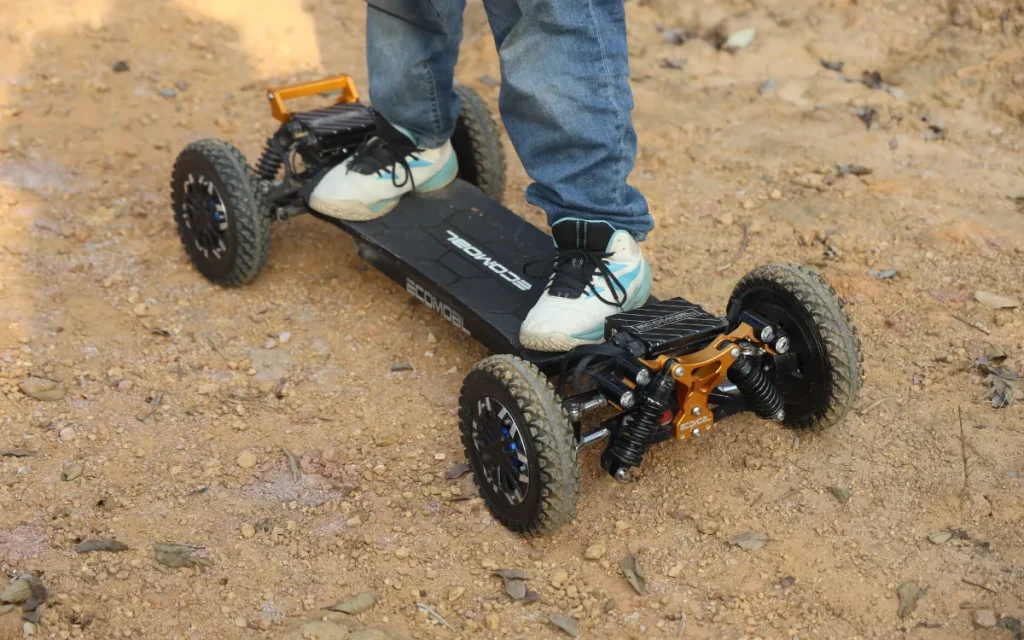
Since most electric skateboards rely on electronic braking instead of physical brake pads, there’s less mechanical wear, resulting in lower maintenance.
5. Better Control on Downhill Rides
Regenerative braking helps maintain a steady speed when going downhill, giving riders better control and confidence.
Read: How to Increase the Lifespan of An Electric Skateboard (All Seasons)
Limitations of Regenerative Braking
While it sounds highly efficient, there are some important limitations:
1. Minimal Energy Recovery
In reality, regenerative braking only recovers a small percentage of energy, often around 5–15% depending on riding conditions.
2. Battery Limitations
If your battery is already fully charged, it cannot accept additional energy. In such cases, regenerative braking may be reduced or disabled to protect the battery.
3. Not a Replacement for Emergency Braking
Regenerative braking is effective for controlled slowing, but it may not always be enough for sudden stops, especially at high speeds.
4. Performance Varies by Terrain
- Works best: downhill or stop-and-go riding
- Less effective: long flat rides at constant speed
Also read: 6 Best Electric Skateboards to Buy in 2026: Top Picks for Every Use
When Does Regenerative Braking Work Best?
You’ll notice the most benefit in these scenarios:
- Urban commuting with frequent stops
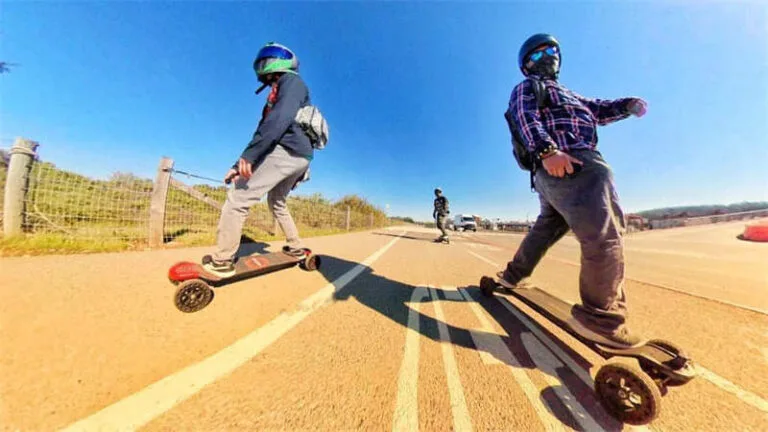
- Downhill riding, where gravity keeps the wheels spinning
- Technical trails with varying speeds
If you mostly ride on flat terrain at a constant speed, the impact will be minimal.
Is Regenerative Braking Safe?
Yes, when used correctly, regenerative braking is safe and reliable. Modern electric skateboards are equipped with advanced ESCs that manage braking force smoothly. However, riders should:
- Avoid braking too hard at high speeds
- Be cautious when the battery is fully charged
- Practice controlled braking for better stability
Realistic Expectations
It’s important not to overestimate what regenerative braking can do. It’s not a major charging solution, but rather an efficiency feature that:
- Improves battery usage slightly
- Enhances ride control
- Reduces energy waste
Think of it as a bonus feature, not a primary way to recharge your board. As we mentioned earlier, this feature is not available on all electric skateboards; just a few boards have it.
Final Thoughts
Regenerative braking is a smart and practical feature in modern electric skateboards. By converting braking energy back into usable power, it adds efficiency, improves control, and enhances the overall riding experience.
While the energy recovery is relatively small, the benefits in terms of smooth braking and reduced wear make it an essential component of today’s high-performance boards. Whether you’re commuting in the city or riding downhill trails, regenerative braking helps you ride smarter and more efficiently.

