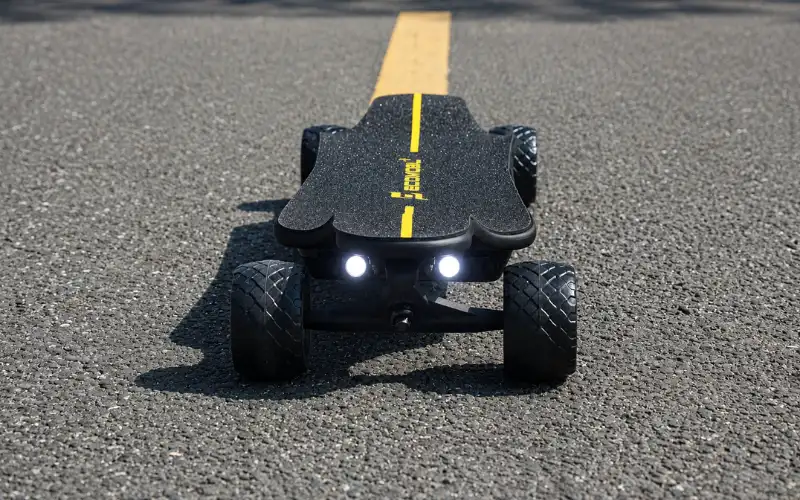


Riding downhill on an electric skateboard can feel incredible, but it’s also where things can go wrong the fastest. Speed builds quickly, control becomes harder, and small mistakes can turn into serious crashes.
The good news? With the right techniques and mindset, you can ride downhill safely and confidently.
Here’s a practical, no-nonsense guide based on real riding principles, not recycled fluff.
Understand the Risk Before You Ride
Downhill riding isn’t just “regular riding, but faster.” It’s a completely different skill set.
When you go downhill:
- Speed increases without needing the throttle
- Braking distance becomes longer
- Stability decreases at higher speeds
- Mistakes happen faster than your reaction time
If you’re not comfortable controlling your board at medium speeds on flat ground, you’re not ready for hills yet. Build that foundation first.
Start Small Always
One of the biggest mistakes riders make is jumping straight into steep hills.
Instead:
- Begin with gentle slopes
- Practice controlling speed, not chasing it
- Learn how your board reacts when going downhill
Every hill teaches you something about how your brakes respond, how your board handles vibration, and how your body reacts to speed.
Read: How to Increase the Lifespan of An Electric Skateboard (All Seasons)
Master Your Braking First
Your brakes are your lifeline downhill.
Before attempting any serious descent:
- Test braking power on flat ground
- Learn how gradually vs. hard braking feels
- Practice stopping from higher speeds
Real tip:
Don’t wait until you’re already going too fast to test your brakes. That’s how people panic and crash.
Technique:
- Apply brakes smoothly, not suddenly
- Shift your weight slightly backward while braking
- Avoid locking your wheels (if your board allows it)
Use Carving to Control Speed
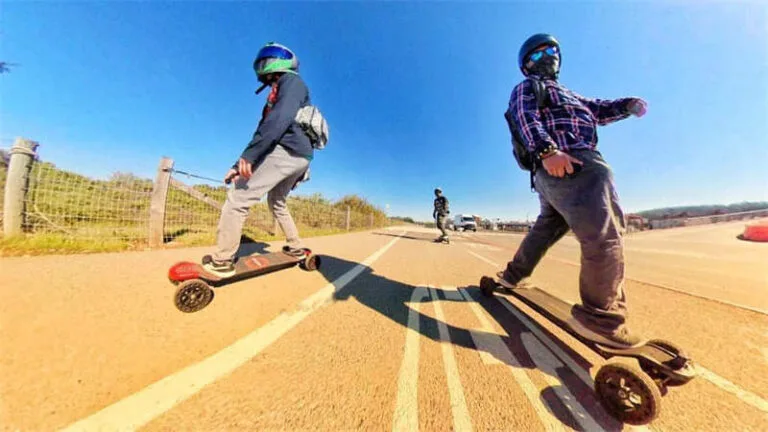
Instead of relying solely on brakes, use carving (wide S-shaped turns) to naturally slow down.
Why it works:
- It increases the distance traveled
- Reduces direct downhill acceleration
- Improves stability
How to carve safely:
- Keep turns wide and controlled
- Stay relaxed, don’t stiffen up
- Look where you want to go, not at your feet
Carving is especially useful on long hills where constant braking can overheat your system or drain your battery.
Also read: What Happens If the Electric Skateboard Remote Disconnects While Riding?
Stay Low and Stable
Your body position matters more than you think.
Correct stance:
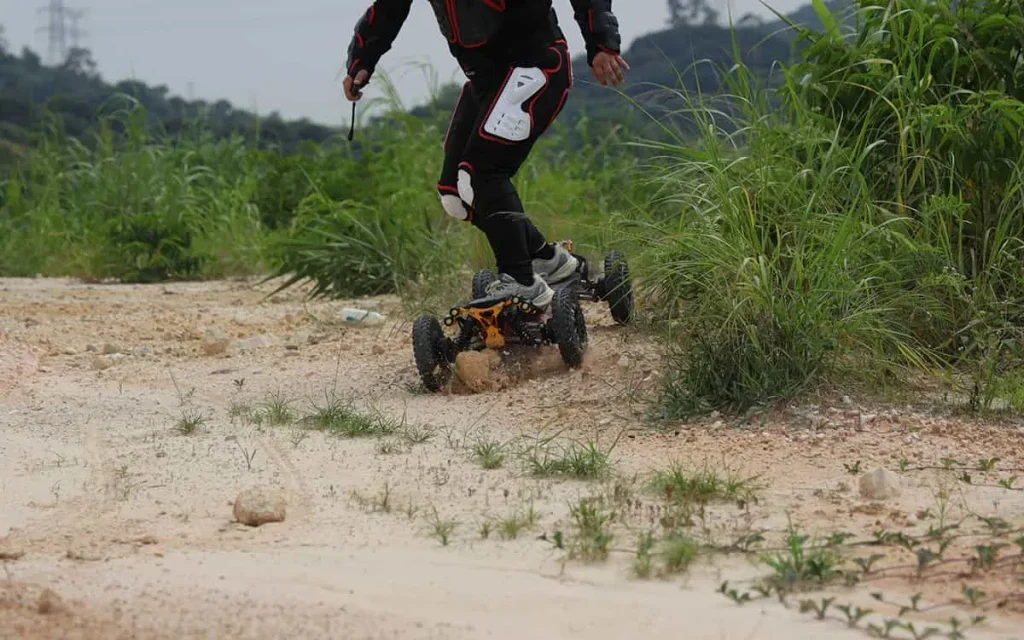
- Bend your knees (don’t stand stiff)
- Lower your center of gravity
- Keep your weight balanced, not too far forward
Why it matters:
A lower stance helps absorb vibrations and keeps your board stable at speed.
If you stand upright:
- You’ll wobble more
- You’ll react more slowly
- You’re more likely to lose control
Watch for Speed Wobbles
Speed wobbles are one of the most dangerous parts of downhill riding.
They happen when:
- Your trucks start oscillating rapidly
- You’re going faster than your stability level
- Your stance is too stiff or unbalanced
How to prevent them:
- Stay relaxed and loose
- Keep more weight on your front foot
- Don’t overcorrect small movements
If wobbles start:
- Don’t panic
- Gently reduce speed
- Avoid sudden braking or sharp turns
Read: How Do Electric Skateboards Actually Work? Everything You Need to Know
Check Your Equipment Before Every Ride
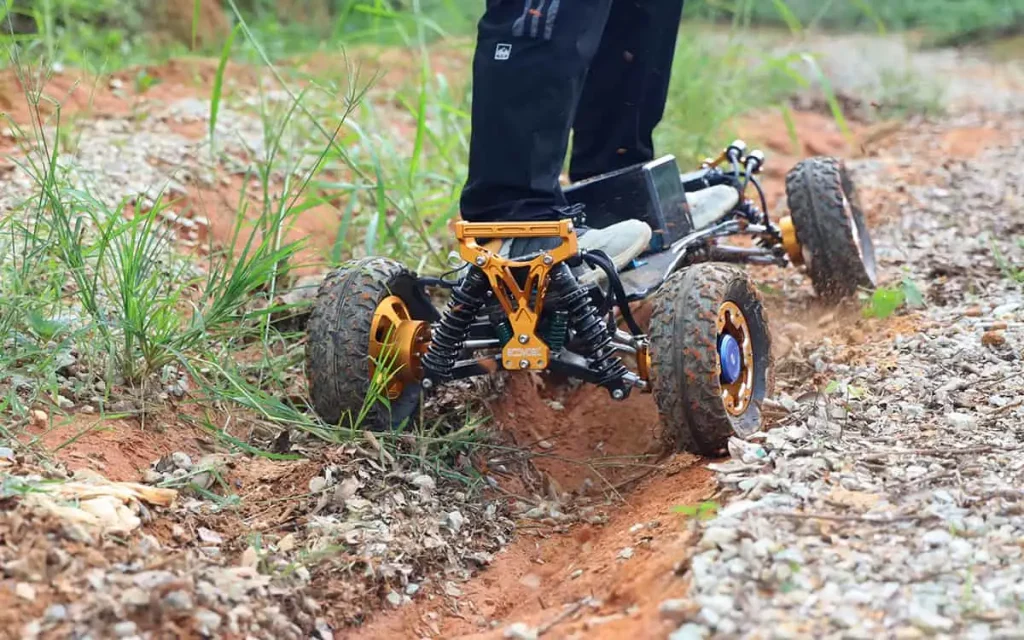
Downhill riding puts extra stress on your board.
Before riding:
- Tighten all bolts
- Check truck tightness (not too loose, not too tight)
- Inspect wheels for wear
- Ensure brakes are responsive
- Make sure your battery is sufficiently charged
Important:
Braking performance can drop if your battery is fully charged or extremely low, so you know how your board behaves.
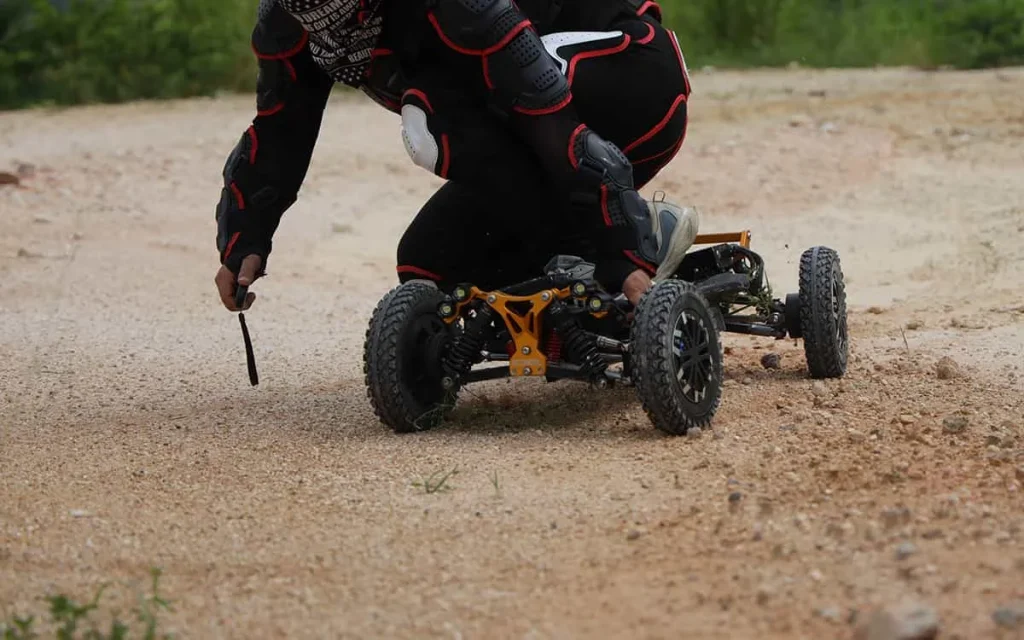
Wear Proper Safety Gear (No Excuses)
If you’re riding downhill without protection, you’re taking unnecessary risks.
Minimum gear:
- Helmet (full-face is best for speed)
- Gloves
- Knee and elbow pads
At higher speeds, even a small fall can cause serious injury. Gear doesn’t make you invincible, but it gives you a second chance.
Read the Road Ahead
Downhill riding is not just about your board; it’s about your environment.
Always scan for:
- Cars and traffic
- Pedestrians
- Gravel or sand
- Cracks and potholes
- Sharp turns
Rule:
If you can’t see what’s ahead, slow down.
Blind hills and turns are where most accidents happen.
Control Your Speed, Not Your Ego
It’s tempting to go faster, especially when the ride feels smooth.
But safe riders:
- Know their limits
- Respect the hill
- Ride within control, not at maximum speed
A good mindset:
“If I can’t stop safely at this speed, I’m going too fast.”
Know When to Bail
Sometimes, things go wrong. You need to know when to step off.
Safe bail tips:
- Only bail at lower speeds
- Aim to run it out, not jump wildly
- Roll if you fall (don’t stiffen up)
At high speeds, bailing becomes dangerous, so your focus should always be on preventing that situation early.
Final Thoughts
Downhill electric skateboarding is one of the most thrilling experiences, but it demands respect.
Ride smart, not recklessly.
Focus on:
- Control over speed
- Skill over confidence
- Awareness over excitement
The riders who stay safe long-term aren’t the fearless ones; they’re the disciplined ones.
Frequently Asked Questions (FAQs)
1. Is it safe to ride an electric skateboard downhill?
Yes, but only if you have proper control, experience, and safety awareness. Beginners should avoid steep hills and start with gentle slopes to build confidence and skill.
2. What is the safest way to control speed downhill?
The safest approach is a combination of smooth braking and carving. Relying only on brakes can be risky, especially on long hills, so using carving helps maintain better control.
3. Can brakes fail when riding downhill?
Brakes don’t usually “fail,” but their effectiveness can be reduced due to factors like battery level, overheating, or improper technique. That’s why it’s important to test your braking before riding downhill.
4. What causes speed wobbles, and how can I avoid them?
Speed wobbles are caused by instability at high speeds, often due to stiff posture or improper weight distribution. Staying relaxed, keeping a low stance, and maintaining slight pressure on the front foot can help prevent them.
5. Should beginners try downhill riding?
Beginners should only attempt very mild slopes after they are comfortable with basic riding, braking, and turning. Jumping into steep hills too early can be dangerous.
6. Do I need special gear for downhill riding?
Yes. At minimum, you should wear a helmet, gloves, and pads. For higher speeds, a full-face helmet is strongly recommended for better protection.
7. How fast is too fast when going downhill?
Any speed at which you feel you cannot stop safely is too fast. Safe speed varies depending on your skill level, road conditions, and board performance.
8. Is carving better than braking downhill?
Neither is better alone; they work best together. Carving helps control speed naturally, while braking provides stopping power when needed.