


Electric skateboards have quickly gained popularity, blending fun, urban mobility, and advanced technology. They provide a distinctive mix of speed, convenience, and thrill, but are they truly beginner-friendly? For newcomers to skateboarding or personal electric vehicles, the learning curve and safety aspects might appear daunting.
This guide will examine whether electric skateboards suit beginners, what features to consider, and how to ride safely with confidence.
Why Electric Skateboards Are Beginner-Friendly
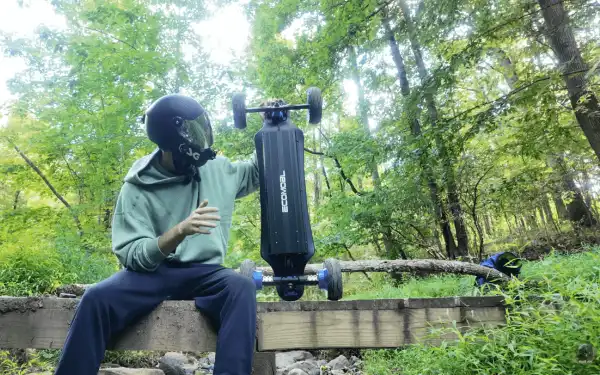
Unlike traditional skateboards, electric skateboards remove some of the most challenging aspects of learning to ride. For complete novices, they provide an approachable and controlled experience, especially when the right board is chosen.
Smooth Acceleration and Speed Control
One of the biggest hurdles for new riders is sudden acceleration. Beginner-friendly electric skateboards include adjustable speed settings and soft acceleration curves, which allow riders to start slow and gradually increase speed. Many boards feature multiple modes, such as:
-
Beginner/Eco Mode: Perfect for learning balance and control at low speeds.
-
Intermediate Mode: Allows moderate cruising while improving comfort with higher speeds.
-
Advanced Mode: For riders who feel confident and want more thrills, usable after mastering the basics.
This tiered approach ensures a smoother learning process and reduces the risk of accidents.
Stability Through Deck Design
Balance is critical for any beginner. Electric skateboards often feature wider decks and trucks, providing a stable platform. Some boards also include flexible materials that absorb bumps and vibrations, making the ride smoother and less intimidating for new riders.
Progressive Braking
Braking on an electric skateboard is electronically controlled, offering a consistent and predictable stop. High-quality beginner boards allow for gradual braking without throwing the rider forward, which is a common risk on traditional skateboards.
Key Benefits for Beginners
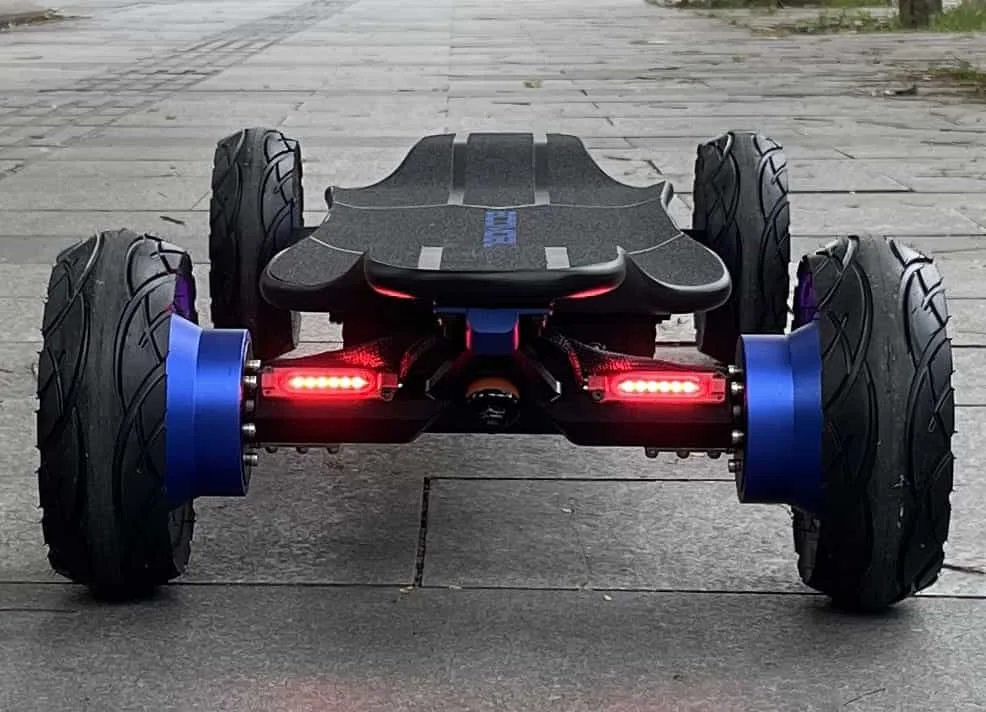
Electric skateboards can simplify the initial learning process compared to conventional skateboards. Here’s how:
No Manual Pushing Required
Traditional skateboarding requires riders to push off with one leg, which can be physically demanding and difficult to coordinate. Electric skateboards eliminate this challenge, allowing beginners to focus on balance, posture, and turning.
Intuitive Remote Control
Most electric skateboards come with handheld wireless remotes. These controllers manage acceleration, braking, and speed adjustments with simple thumb or finger movements, making it easier for beginners to focus on riding rather than footwork.
Adjustable Speeds Promote Confidence
Many boards include customizable speed ranges. Beginners can ride at slower, more controlled speeds while gradually building their skill level and comfort. This is particularly useful for urban riding or learning on smooth surfaces.
Practical Commuting Tool
Electric skateboards aren’t just recreational. They provide a convenient commuting option for short distances. Beginners can start using them for small errands or short trips without struggling with heavy manual effort.
2 Best Electric Skateboards for Beginners by Ecomobl
Here’s a closer look at the ET Pro and ET2 Pro from Ecomobl, with strengths and trade-offs, especially in a campus-use scenario.
Ecomobl ET Pro
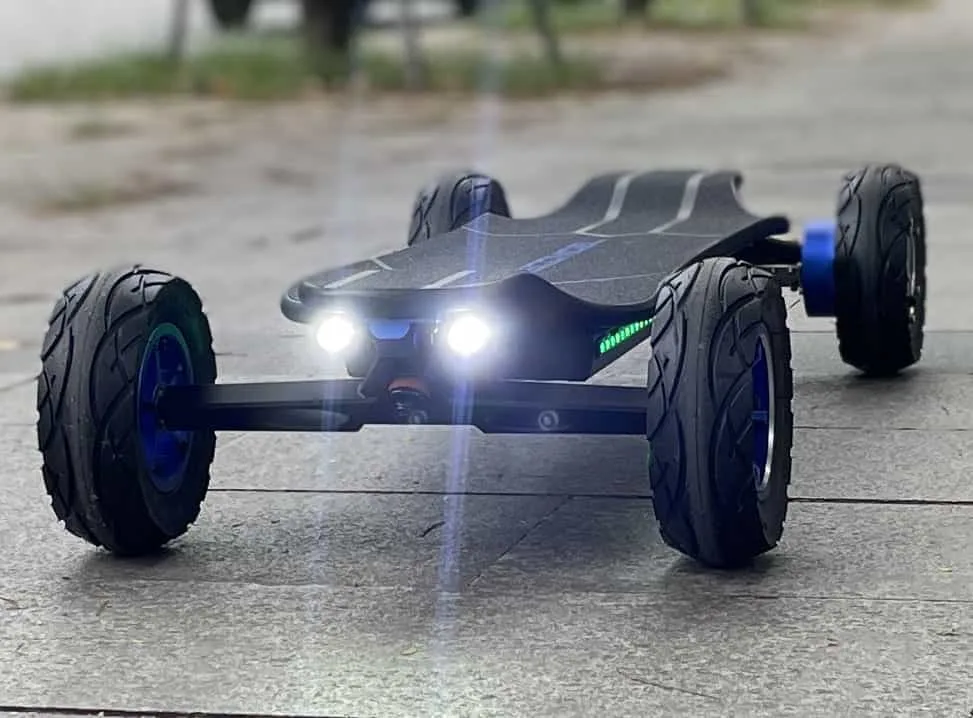
Key specs:
-
Range: ~ 35-45 km / 20-28 miles (test conditions: 143 lb rider, moderate speed)
-
Top speed: about 40-55 km/h (25-34 mph)
-
Battery: 12S3P, ~518 Wh
-
Weight: ~ 13.8 kg / 30.4 lbs
-
Deck / build: 9-layer maple + 2 layers fiberglass; tooling includes street/all-terrain wheels (~180×60 mm)
-
Lights: headlights, tail/body light; remote has a screen
Strengths:
-
Solid range. 20-28 miles is generally enough for a busy day of moving around a mid-sized campus (depending on how much walking vs riding).
-
Decent speed and acceleration help when facing hills or covering long distances between buildings.
-
All-terrain capability is useful, since not all sidewalks or paths are smooth. Better wheels help.
-
Lighting is helpful for safety when riding early in the morning or evening.
Trade-offs/challenges:
-
Weight is non-trivial. At ~30 lbs, carrying it for long distances (up stairs, on transit, etc.) could get tiring.
-
The top speed is high. On crowded sidewalks or where speeding tickets/campus rules apply, you’ll rarely use full speed, but the power is there (also means more risk).
-
Charge time, while not insane, means you’ll probably want a backup plan / charging opportunity (dorm sockets, etc.).
Ecomobl ET2 Pro
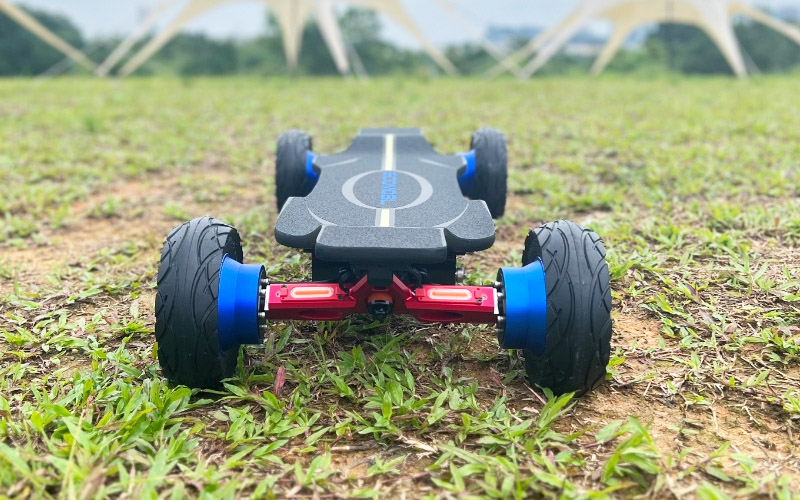
Key specs:
-
Range: ~ 40-55 km / 25-34 miles (for a 65 kg / ~143 lb rider)
-
Top speed: ~ 40-55 km/h (25-34 mph)
-
Battery: 12S5P, ~864 Wh
-
Weight: ~ 16.5 kg / 36.4 lbs
-
Incline capability: 30-40% gradient
-
Same wheel size and similar build features (lights, remote, etc.) as ET Pro, but with a more powerful battery & torque.
Strengths:
-
Much greater range, meaning fewer worries about battery mid-day. Great if you have long walks or rides between buildings, or maybe want to use the board for errands beyond just class.
-
Better hill climbing (due to higher battery capacity/power). If your campus is hilly or has steep ramps/walkways, that helps.
-
Similar build quality and comfort features as the ET Pro.
Trade-offs:
-
Heavier. At ~36 lbs, it’s more of a “ride-or-wheel” scenario; if you need to carry it often, it’ll be more burdensome.
-
Price tends to be higher for the extra battery & power. It might require more initial investment.
-
Larger range + higher power means you’ll want to be extra careful about safety (helmets, speed control), and plan for secure storage/charging.
Also Read: Best Electric Skateboards for Adults
Challenges Beginners Should Consider
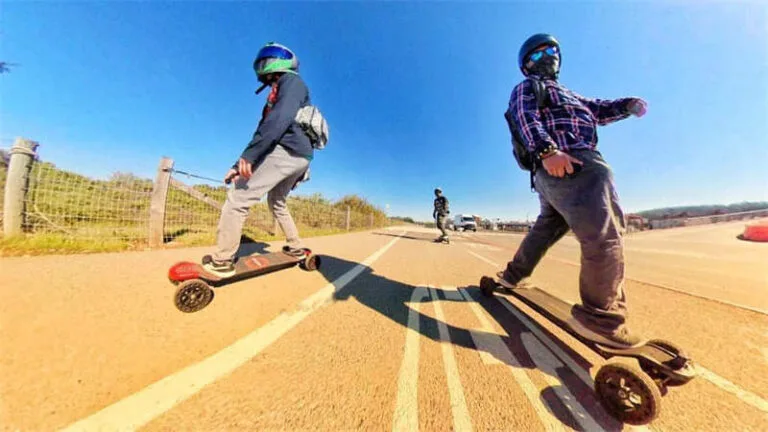
While beginner-friendly electric skateboards exist, some challenges remain:
Learning Balance Still Matters
Even with a stable deck, beginners need time to learn weight distribution, turning techniques, and maintaining stability. Falling occasionally is part of the learning process.
Speed Can Be Intimidating
Many electric skateboards can reach speeds exceeding 20 mph. Beginners should resist the temptation to use higher speed modes until fully comfortable.
Road and Terrain Hazards
Street and urban environments present obstacles such as cracks, pebbles, and uneven surfaces. While larger wheels and off-road boards address these issues, they can be heavier and harder to maneuver for beginners.
Safety Gear Is Essential
Falling is inevitable for beginners, making safety gear non-negotiable. Recommended equipment includes:
-
Helmet
-
Wrist guards
Wearing proper protection reduces the risk of serious injury and builds confidence while learning.
Choosing the Right Electric Skateboard for Beginners
Selecting the right board is crucial for a smooth and safe learning experience. Key features to look for include:
-
Multiple speed modes with a beginner-friendly option
-
Smooth acceleration and braking
-
Medium-length deck with wide trucks for stability
-
Reliable battery range for consistent rides
-
Wheels suitable for your typical riding surface
Boards designed for urban cruising or commuting are usually better for beginners than high-performance or all-terrain boards, which may be harder to control.
Tips for Beginners Learning to Ride
Even with the right board, beginners should follow some essential tips:
-
Start Slow: Begin on the lowest speed mode and gradually increase as you gain confidence.
-
Practice Balancing: Stand on the board without moving to understand your stance and center of gravity.
-
Bend Your Knees: Slightly bent knees absorb shocks and help maintain balance.
-
Master Braking: Regularly practice stopping smoothly.
-
Ride on Smooth Surfaces: Avoid traffic, rough pavement, and obstacles during initial learning.
-
Wear Safety Gear: Always wear protective equipment to reduce the risk of injury.
By following these steps, beginners can minimize risk and enjoy a smoother learning curve.
Conclusion
Electric skateboards can be an excellent choice for beginners when chosen thoughtfully and ridden responsibly. They combine intuitive controls, adjustable speeds, and stable designs to create a safe and enjoyable learning experience. While balance and awareness of speed remain essential, these boards allow newcomers to start riding with confidence and gradually progress to more advanced techniques.
For anyone interested in urban mobility, fun commuting, or a new hobby, an electric skateboard is not just beginner-friendly; it can be a gateway to a lifelong passion for riding.

