


Riding a board with four wheels and gliding across the ground has long been one of the most recognizable aspects of skateboarding. Originally emerging in 1950s California, skateboarding was closely tied to surf culture, allowing surfers to recreate the feeling of riding waves when the ocean was calm.
Over the decades, skateboarding evolved rapidly, gaining mainstream popularity in the 1960s and 1970s with the introduction of competitions, professional riders, and iconic brands.
Today, skateboarding has entered a new era with the rise of electric skateboards. These boards combine traditional skating fundamentals with motorized propulsion, offering a smoother, faster, and more accessible riding experience. Whether cruising through the city, commuting, or exploring off-road terrain, electric skateboarding provides physical, mental, and lifestyle benefits for riders of all ages.
One common question remains for parents and beginners alike: What is the best age to start electric skateboarding?
Understanding physical readiness, mental development, and safety considerations is essential before stepping onto an electric board.
Related: Traditional to Electric Skateboarding: Evolution of Riding Culture
Best Age to Start Electric Skateboarding
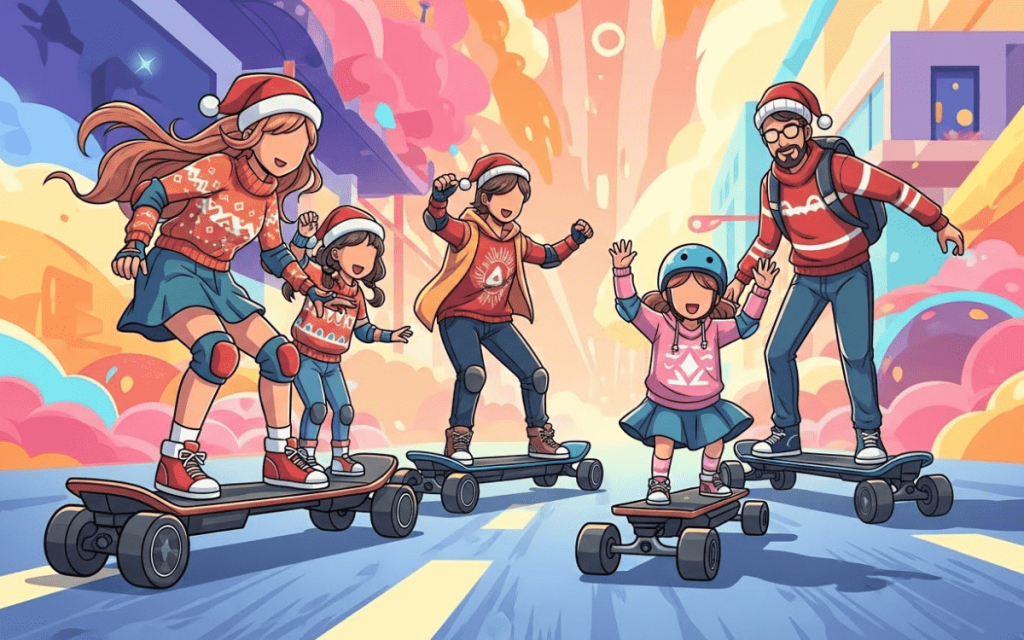
Most skateboarding instructors and safety experts recommend around age 8 as the earliest suitable starting point under close supervision. By this age, children typically have better balance, coordination, and the ability to understand basic safety rules.
However, many experts agree that ages 8–12 represent the ideal range to begin electric skateboarding more regularly. During this period, children develop stronger muscles, improved reaction times, and better risk awareness. Research also indicates that injury rates decrease significantly after age 9, as bones and cognitive skills mature.
While younger children may benefit from balance boards or low-speed practice in controlled environments, electric skateboards should be introduced gradually, with strict safety measures in place.
Benefits of Starting Electric Skateboarding at a Young Age
Introducing children to electric skateboarding at an appropriate age can deliver numerous physical and psychological benefits. From a physical standpoint, early exposure helps develop balance, coordination, and overall motor skills. Even with motor assistance, riders must constantly adjust their posture, maintain stability, and react to changes in terrain.
Balance training plays a significant role in stimulating brain development, particularly in the cerebellum, which controls coordination and movement. Over time, young riders build enhanced proprioception, the body’s natural awareness of position and motion. This leads to quicker reflexes, improved agility, and better control, all of which are valuable both on and off the board.
Mentally, electric skateboarding encourages perseverance and problem-solving. Children learn through repetition, trial, and error. Falling, getting back up, and trying again builds resilience and confidence. The focus required to control speed, steering, and braking strengthens concentration and decision-making skills. These cognitive benefits often extend beyond riding, positively influencing academic performance and everyday tasks.
Read: Are Electric Skateboards Good for Beginners? All You Need to Know
Physical Development Needed for Electric Skateboarding
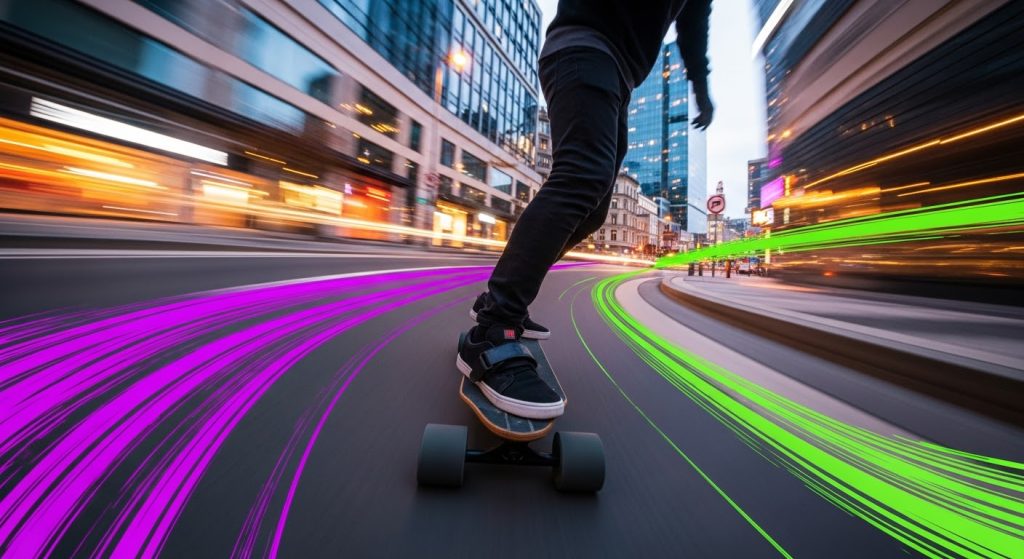
Electric skateboarding still demands a solid physical foundation, even though riders rely less on pushing compared to traditional skateboards. Balance and coordination are critical, as riders must control acceleration, deceleration, and turning while maintaining a stable center of gravity.
Leg strength is equally important. Riders use their legs to stabilize the board, absorb vibrations, squat during turns, and step off safely when stopping. Over time, electric skateboarding strengthens leg, ankle, and core muscles, contributing to overall fitness.
However, younger children may be more susceptible to injuries due to developing bones and joints. Falls at higher electric skateboard speeds can pose greater risks than traditional skating. This makes it essential to start electric skateboarding only when a child has developed sufficient muscle control, coordination, and physical awareness to handle the board responsibly.
Mental Development Needed for Electric Skateboarding
Mental readiness is just as important as physical ability when it comes to electric skateboarding. Riders must maintain focus, manage speed, and react quickly to obstacles. Electric boards can accelerate rapidly, so understanding throttle control and braking requires maturity and concentration.
Confidence builds gradually as riders master basic skills. Successfully learning how to turn, stop, and ride smoothly increases self-assurance and encourages responsible risk-taking. Just as important is judgment n;t riders must be able to assess terrain, traffic, and environmental hazards in real time.
Younger children often lack the cognitive ability to accurately evaluate risk. Starting electric skateboarding during pre-adolescence allows for better decision-making, emotional control, and awareness of consequences. This mental maturity significantly improves safety and long-term enjoyment.
Safety Tips for Beginning Electric Skateboarders
Safety should always be the top priority, especially for young or first-time electric skateboard riders.
-
Wear full protective gear: A certified helmet is essential, along with knee pads, elbow pads, wrist guards, and sturdy closed-toe shoes.
-
Start slow: Beginners should learn on flat, open surfaces and practice low-speed cruising before increasing speed.
-
Adult supervision: Children should always be supervised until they demonstrate consistent safe riding habits.
-
Choose the right environment: Smooth pavement, empty parking lots, or controlled skateparks are ideal learning spaces. Avoid traffic and uneven terrain.
-
Use beginner-friendly boards: Models with adjustable speed modes, stable decks, and reliable braking systems, such as ECOMOBL electric skateboards, are well-suited for new riders.
Following these safety practices helps reduce injury risks and builds a strong foundation for confident riding.
Also Read: Which Electric Skateboard is Right for You?
Conclusion
Electric skateboarding offers an exciting blend of fun, mobility, and physical activity for riders of all ages. However, choosing the right starting age is important for maximizing benefits while minimizing risks. Physical coordination, leg strength, focus, and risk awareness all play key roles in determining readiness.
For most children, starting electric skateboarding between the ages of 8 and 12 provides the best balance between skill development and safety. Combined with proper protective gear, gradual skill progression, adult supervision, and safe riding environments, young riders can enjoy electric skateboarding confidently and responsibly.
By prioritizing well-being over speed or performance, parents and beginners alike can ensure that electric skateboarding becomes a rewarding, lifelong activity one smooth ride at a time.

