


Electric skateboards in 2026 have come a long way in accommodating heavier riders. For anyone over 200 lbs, performance isn’t just about top speed or sleek design; it’s about real-world ride quality, stability, and long-term durability.
In this blog, we’ll break down what features truly matter for heavy riders, how to evaluate a board beyond weight capacity, and which premium models are built to meet the challenge.
Why Weight Capacity Isn’t the Full Story?
Most boards list a maximum weight capacity of 200-300 lbs. But staying within that number doesn’t guarantee performance. Heavier riders may still face reduced acceleration, motor strain, deck flex, and shorter battery life. That’s because weight affects every major component, from torque output to braking response and structural fatigue over time.
The electric skateboard’s weight limit listed on a spec sheet is only the starting point. What truly matters is how the board performs under load: torque delivery, structural strength, battery efficiency, braking reliability, and rider confidence at speed. A board may claim a high weight capacity, but without the right motors, deck construction, and drivetrain, performance can drop quickly for heavier riders.
To choose a board that holds up under load, focus less on the label and more on how each part is engineered to perform with extra weight.
Top 4 Electric Skateboards for Heavy Riders (300+ lbs)
Ecomobl specializes in high-performance, heavy-duty electric skateboards built for riders who demand strength, torque, and reliability. For riders weighing 300 lbs and above, these four models stand out for their power, reinforced construction, and real-world durability across urban streets and extreme off-road terrain.
1. Ecomobl Telum BA 4WD – Extreme Off-Road & Big-Air Beast
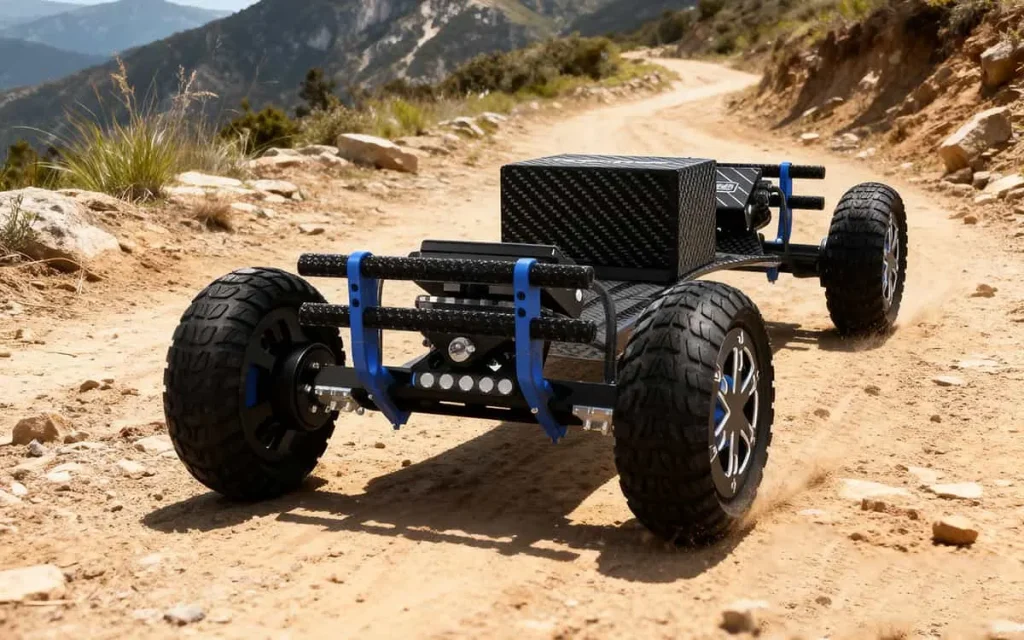
Rider Weight Limit: 330 lbs (150 kg)
Motors: High-torque 4WD setup
Battery: High-capacity lithium battery (BA series)
Deck: Reinforced composite deck
Max Speed: ~30-34 mph (48-55 km/h)
Drivetrain: Planetary Gear Drive
The Telum BA 4WD is engineered for aggressive riding, jumps, and extreme terrain. Built with a wider stance and ultra-stable geometry, it’s ideal for heavy riders who want confidence at speed and during big drops. The powerful 4WD system ensures excellent traction on dirt, gravel, and steep trails, making it one of Ecomobl’s most capable off-road platforms.
2. Ecomobl M24 Pro (4WD) – Heavy-Duty Powerhouse
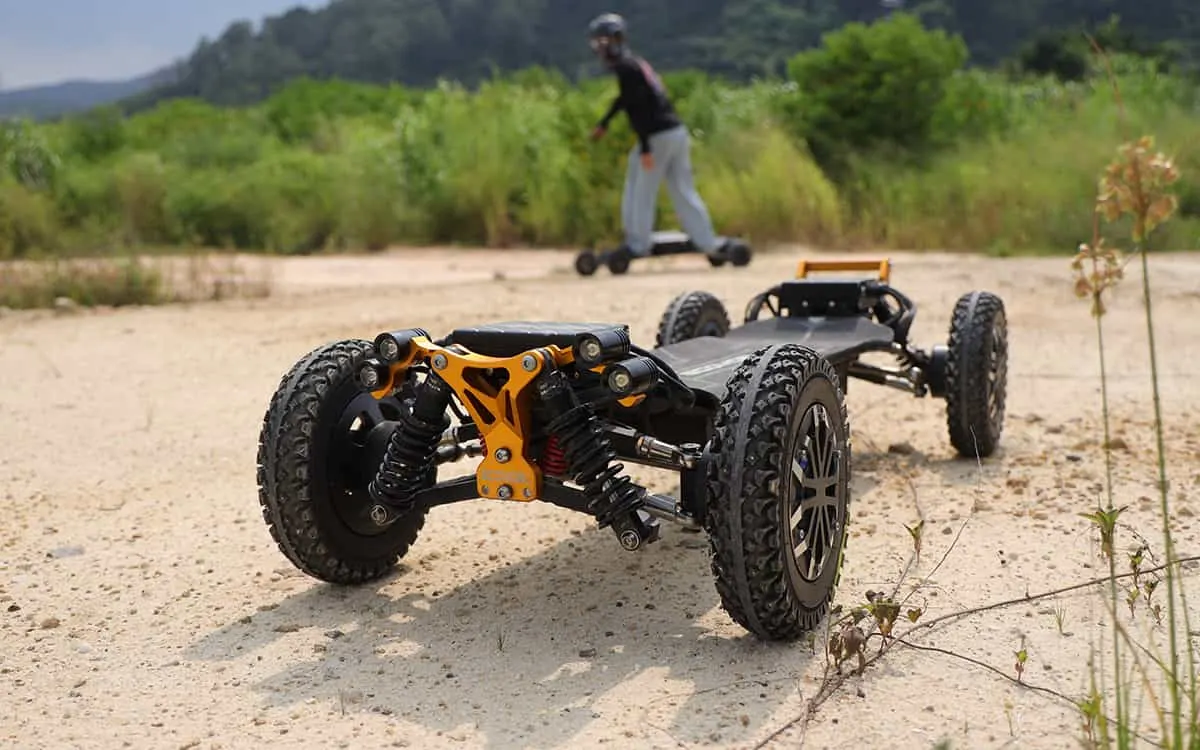
Rider Weight Limit: 330 lbs (150 kg)
Motors: 6382 Motors × 4
Battery: 25Ah, 12S5P
Deck: 7-layer maple + 2-layer fiberglass
Max Speed: 28–34 mph (45–50 km/h)
Drivetrain: Planetary Gear Drive
Designed for serious off-road riders, the M24 Pro delivers massive torque and stability. Its four 6382 motors produce up to 12,200W of combined power, making steep climbs, loose gravel, and rugged trails feel effortless even for heavier riders. The reinforced maple-fiberglass deck provides excellent load distribution and long-term durability.
3. Ecomobl Hybrid X5 – Balanced Urban and Trail Performance
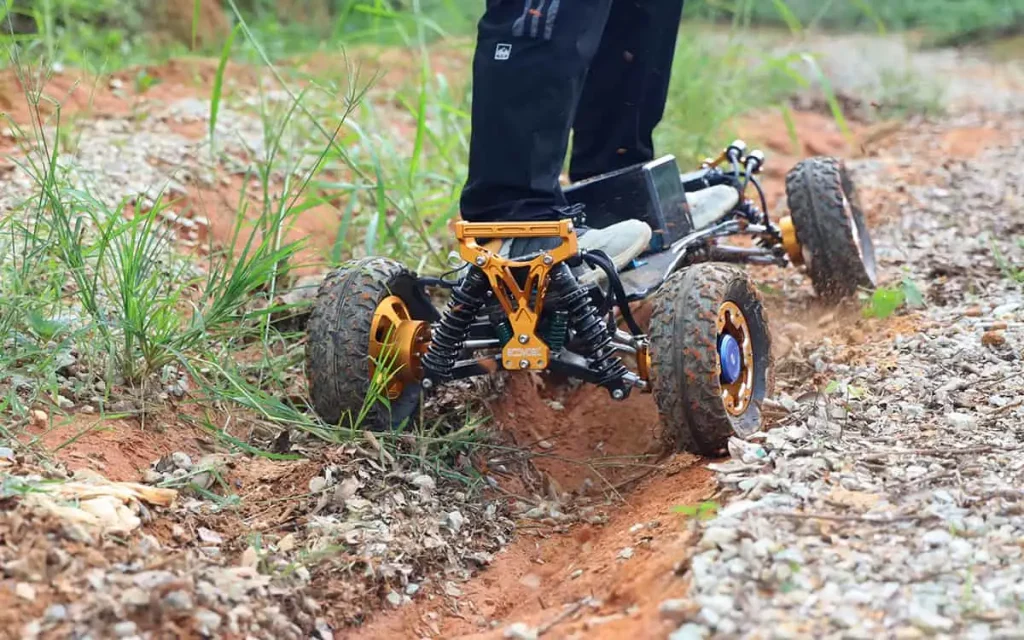
Rider Weight Limit: 330 lbs (150 kg)
Motors: 6385 Motors with Hall Sensors × 4
Battery: 24Ah, 14S6P, 10C 40T
Deck: 100% Carbon Fiber Flexi Deck
Max Speed: 34–40 mph (55–65 km/h)
Drivetrain: Planetary Gear Drive
The Hybrid X5 is a high-powered all-rounder built for riders who want speed, comfort, and versatility. Its quad 6385 motors deliver up to 15,000W, ensuring fast acceleration and consistent performance under heavy loads. The carbon fiber flex deck absorbs vibration, while suspension trucks help smooth out cracks, bumps, and uneven pavement.
4. Ecomobl Ripper Pro – Compact Power for Heavy Riders
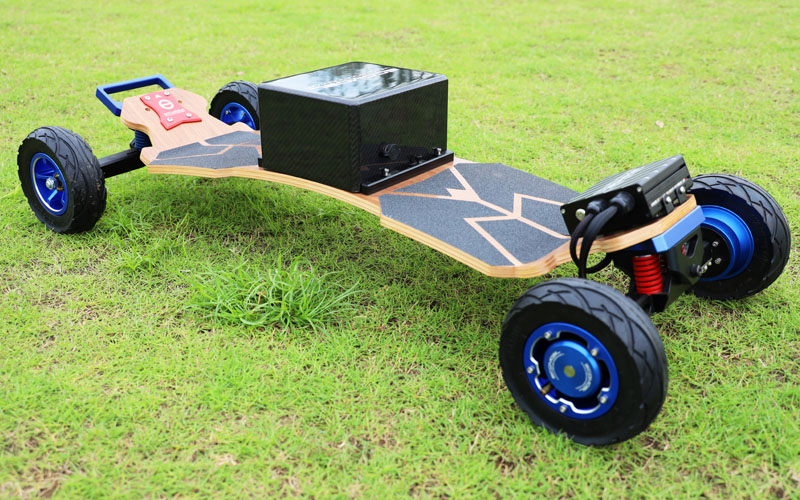
Rider Weight Limit: 330 lbs (150 kg)
Motors: High-output dual/4WD motor setup
Battery: High-density lithium battery
Deck: Strong, lightweight composite deck
Max Speed: ~25–31 mph (40–50 km/h)
Drivetrain: Planetary Gear Drive
The Ripper Pro 2WD & 4WD proves that heavy-rider boards don’t have to be oversized. Compact yet powerful, it delivers strong acceleration and reliable torque for heavier riders who want a more agile board. Ideal for mixed riding urban paths, hills, and light trails, the Ripper Pro balances portability with serious performance.
Side-by-Side Comparison Table
| Feature | M24 Pro | Hybrid X5 | Telum BA | Ripper Pro |
|---|---|---|---|---|
| Weight Capacity | 330 lbs (150 kg) | 330 lbs (150 kg) | 330 lbs (150 kg) | 330 lbs (150 kg) |
| Motor Setup | 6382 × 4 (12,200W) | 6385 × 4 (15,000W) | 4WD High-Torque Motors | Dual/Four High-Output Motors |
| Battery | 25Ah, 12S5P | 24Ah, 14S6P, 10C 40T | High-capacity BA battery | High-density lithium |
| Deck Material | Maple + Fiberglass | Carbon Fiber Flexi Deck | Reinforced Composite | Composite Deck |
| Terrain | Extreme off-road, trails | Urban & light off-road | Extreme off-road, jumps | Urban & light trails |
| Max Speed | Up to 34 mph | Up to 40 mph | Up to 34 mph | Up to 31 mph |
| Range | Up to 30 miles | Up to 35 miles | Long-range off-road focused | Moderate-long range |
| Best For | Trail explorers, heavy off-road riders | Speed, comfort, versatility | Big air, extreme terrain | Compact power & agility |
Key Features That Matter Most for Heavy Riders
Choosing an electric skateboard as a heavier rider involves more than checking the listed weight limit. Components must work together to maintain power, stability, and comfort under load. The following features are essential for long-term performance and rider safety.
Deck Material and Rigidity
Deck strength directly impacts ride quality and long-term durability, especially for riders over 200 lbs. While some boards may advertise a 250–300 lb weight rating, the material and design of the deck determine whether that board can truly handle stress without compromising control.
Bamboo decks are often favored for their flex and shock absorption. However, under heavy weight, that flex increases dramatically and can cause instability at high speeds or during tight turns. This can lead to speed wobbles or bottoming out, especially when hitting bumps or descending slopes.
For riders over 220 lbs, a rigid deck preferably made from carbon fiber composites or 7 to 12-ply Canadian maple is much more reliable. These materials provide a stiff platform that resists flex, enhances cornering precision, and keeps the board stable under dynamic load. Decks with reinforced structures or metal support inserts offer added peace of mind for long-distance or high-speed rides.
Motor Torque and Configuration
Motor power is a limiting factor for heavier individuals. More weight requires higher torque to maintain performance, especially during starts, hill climbs, and rapid acceleration. Boards with low-power motors may move, but they’ll struggle with sluggish acceleration, overheating, or voltage sag under strain.
Torque depends not just on wattage, but also on motor type and drive system:
- In the realm of electric skateboards, Hub Motor Drives are widely used due to their compact design and quiet operation. These motors are embedded directly in the wheels, offering a clean and maintenance-friendly setup.
- An advanced evolution of this system is the Planetary Gear Drive, a high-torque upgrade built upon the hub motor concept. By integrating a compact gear reduction mechanism within the motor housing, this design significantly amplifies torque output.
While standard hub motors suffice for light commuting and flat surfaces, planetary gear drives are better suited for riders requiring stronger acceleration and load-bearing capabilities. The internal gearing acts as a torque multiplier, enabling the board to handle steeper inclines, rougher surfaces, and heavier loads with greater stability.
For individuals above 250 lbs, configurations with dual planetary gear drives or high-powered multi-motor hub systems are generally the baseline.
Battery Output and Cell Quality
Battery performance plays a critical role in how long and how well a board handles weight. Heavier riders require more watt-hours per mile, which means batteries must deliver consistent power output without sagging or overheating.
Key battery specs to look for include:
- Voltage (12S or 14S systems): Higher-voltage setups (50.4V–58.8V) support more powerful motors and reduce current draw, minimizing heat and improving efficiency.
- Amp-Hour Rating (Ah): An 18Ah or larger pack is recommended for heavier riders, offering increased range and less stress on each cell.
- Battery Cells: Look for boards using 21700 high-discharge lithium cells, which outperform older 18650 cells in terms of output, longevity, and heat resistance.
Voltage sag is a common issue for heavier riders. It causes noticeable drop-offs in speed and torque as the battery depletes. Boards that use smart battery management systems (BMS) and high-drain cells will offer more consistent output, reducing mid-ride performance dips.
Suspension, Trucks, and Wheels
Heavy riders place more load on every bump, crack, and turn. Without proper suspension and wheel design, vibrations can lead to foot fatigue, poor handling, and long-term deck damage.
Boards designed for heavier users often include:
Independent suspension systems or spring-based suspension trucks, which isolate shocks from the deck and keep the wheels planted on uneven ground. These are especially important for off-road or all-terrain boards.
Shock-absorbing trucks (like double kingpin setups with bushings or dampers) improve turning response while reducing vibration.
Pneumatic tires (air-filled) or large-diameter airless rubber tires help cushion impacts and improve traction. Sizes between 150mm and 200mm (6–8 inches) are ideal for weight support and terrain versatility.
Standard urethane street wheels are not ideal for heavier riders on anything but smooth asphalt. Boards built for load handling should have off-road or hybrid wheels, reinforced axles, and trucks made from forged or CNC-machined aluminum for added durability.
Braking Systems and Control Reliability
Braking performance is often overlooked but critical for heavier riders. More weight translates to more forward momentum, and that means longer stopping distances if the braking system isn’t designed to handle it.
Most premium boards use regenerative electronic braking, which feeds energy back into the battery. However, the controller must be calibrated to brake gradually and effectively under high momentum. Sudden or overly aggressive braking can destabilize the rider, especially at higher speeds.
Boards like the Ecomobl M24 and Hybrid X5 feature finely tuned firmware that offers smooth, responsive braking even under the added inertia of heavier riders. This feature is especially useful when descending hills or riding in traffic.
Wireless remotes with adjustable braking curves are another valuable feature, allowing riders to customize brake intensity depending on terrain or body weight.
Real-World Riding: What Heavy People Can Expect
Braking and Safety
The more weight, the more momentum. Regenerative braking on Ecomobl boards is designed to slow heavier riders down without losing control, even on downhill trips. Not only is this safer, but it also saves battery life.
Ride Stability
A rigid deck and quick-acting suspension cut down on flex and wobble. For heavy people, this means fewer speed wobbles and better cornering, especially on rough terrain.
Uphill Performance
Torque is applied on hills. Both the Hybrid X5 and M24 deliver solid climbing power without throttle lag or overrunning heat, even when carrying more than 250 lbs.
Final Thoughts
For heavy riders, the best electric skateboard isn’t just one that claims to support more weight; it’s one designed to perform under that weight consistently, safely, and comfortably. Ecomobl’s Tellum BA and Hybrid X5 stand out by combining torque, deck rigidity, long-range batteries, and suspension systems that work in unison under pressure.
Whether you’re blazing through trails or navigating the city, these boards deliver power, control, and confidence for bigger riders who refuse to compromise.

