


An electric skateboard is a motorized version of a traditional skateboard, powered by electric motors and a rechargeable battery. Unlike push skateboards, electric skateboards let riders accelerate, cruise, and brake using a wireless remote control, with no kicking required.
Generally, an e-skateboard works by converting electrical energy from the battery into mechanical motion through motors, which turn the wheels and move the rider forward or backward.
Behind this simple idea is a carefully engineered system of components working together seamlessly.
But for many riders and buyers, one key question remains:
How Do Electric Skateboards Work?
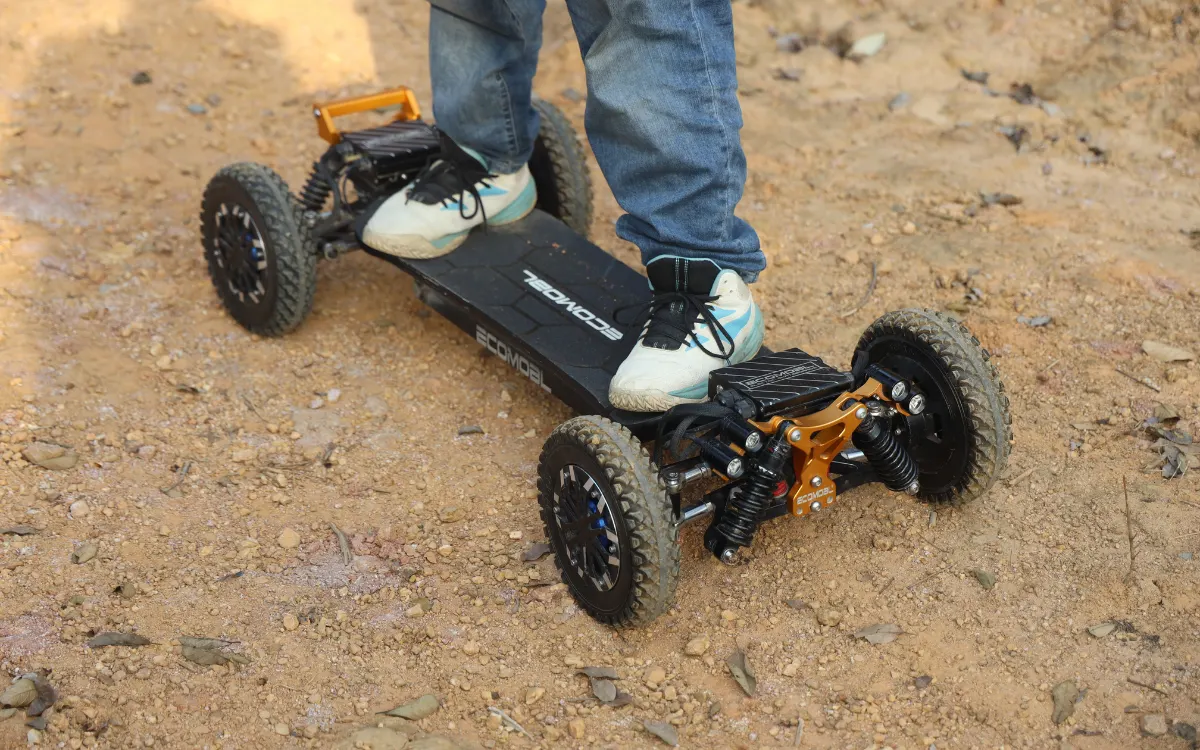
Electric skateboards work by converting electrical energy stored in a battery into controlled wheel movement using motors, with the rider controlling everything through a wireless remote.
Here is the process explained clearly and step by step:
First, the electric skateboard’s battery stores electrical power. When the board is turned on, this battery supplies energy to the electronic system, but does not move the board on its own.
When the rider presses the throttle or brake on the remote control, the remote sends a wireless signal to the board’s Electronic Speed Controller (ESC). The ESC acts as the brain of the electric skateboard. It interprets how much acceleration or braking the rider wants based on the remote input.
Next, the ESC draws the required amount of power from the battery and delivers it to the electric motors. These motors then rotate, either increasing speed, maintaining cruising speed, or slowing down the board. The motors are connected to the wheels either directly (hub motors) or through belts and pulleys (belt-driven systems).
As the motors spin the wheels, the skateboard moves forward or backward smoothly. When the rider applies the brake using the remote, the ESC tells the motors to slow the wheel rotation. In most electric skateboards, this happens through regenerative braking, where the motors briefly act as generators, converting motion back into electrical energy while reducing speed.
Throughout the ride, the ESC continuously balances power delivery, motor speed, and braking force to ensure a smooth, stable, and safe ride. All of this happens in real time, responding instantly to the rider’s commands from the remote control.
In simple terms, electric skateboards operate using a battery-powered motor system controlled wirelessly by a remote, allowing riders to accelerate, cruise, and brake simply by controlling the board with their hands.
The Core Components of an Electric Skateboard
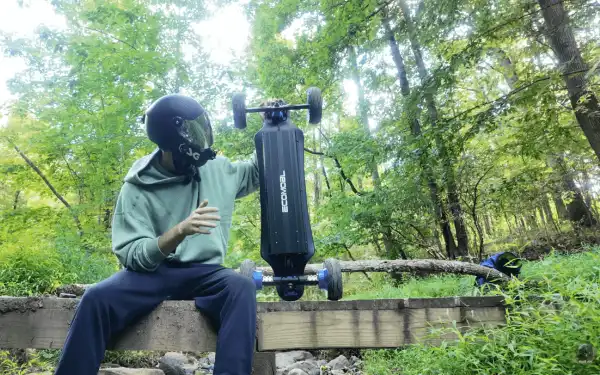
To understand how electric skateboards work, it’s best to look at each major component individually and then see how they interact as a complete system.
1. The Deck: The Foundation of the Board
The deck is the platform you stand on. While it may look similar to a traditional skateboard deck, electric skateboard decks are built to handle:
-
Extra weight from batteries and motors
-
Higher speeds and torque
-
Vibrations from rough terrain
Most electric skateboard decks are made from:
-
Maple wood (flexible and durable)
-
Bamboo (lightweight with natural shock absorption)
-
Carbon fiber (ultra-stiff and strong for performance boards)
The deck often houses the battery enclosure and electronic components underneath, while providing grip tape on top for rider stability.
2. Electric Motors: Turning Power Into Motion
Electric skateboard motors are responsible for making the wheels spin. They receive electrical power from the battery and convert it into rotational force.
There are two main types of motors used in electric skateboards:
Hub Motors
-
Built directly into the wheels
-
Quiet and low-maintenance
-
Provide a clean, minimalist look
Hub motors deliver power straight to the wheels but may offer slightly less torque and ride comfort compared to belt-driven systems.
Belt-Driven Motors
-
Mounted near the trucks and connected to wheels via belts and pulleys
-
Offer higher torque and stronger acceleration
-
Allow wheel customization
Belt-driven systems are popular in performance and off-road electric skateboards because of their power and responsiveness.
Simple Gearbox Motors
-
Use a basic gear reduction system between the motor and wheel
-
Improve torque while keeping a compact design
-
Require less maintenance than belt systems
Simple gearbox motors balance efficiency and durability. By reducing motor speed and increasing torque through gears, they offer smoother power delivery than direct-drive setups, making them suitable for commuting and everyday riding.
Planetary Gear Structure Motors
-
Features a complex internal planetary gear system
-
Deliver high torque in a compact and enclosed design
-
Offer smooth acceleration and strong power transfer
Planetary gear motors use multiple gears working together to distribute load evenly and maximize efficiency. This advanced gear structure allows electric skateboards to achieve strong acceleration, excellent hill-climbing performance, and quieter operation compared to traditional belt systems, making them ideal for high-end and premium electric skateboards.
3. The Battery: The Power Source
The battery is the heart of an electric skateboard. It stores electrical energy and supplies it to the motors when you accelerate.
Most modern electric skateboards use lithium-ion or lithium-polymer batteries due to their:
-
High energy density
-
Lightweight design
-
Rechargeability
Battery capacity is usually measured in watt-hours (Wh), which determines:
-
How far can you ride on a single charge
-
How long can the board maintain high speeds
A larger battery typically means more range, but it also adds weight and cost.
4. ESC (Electronic Speed Controller): The Brain of the Board
The ESC, or Electronic Speed Controller, acts as the brain of the electric skateboard. It manages communication between the battery, motors, and remote control.
The ESC controls:
-
Acceleration smoothness
-
Braking strength
-
Speed limits
-
Safety features like overheating protection
When you move the throttle on your remote, the ESC interprets that signal and tells the motors exactly how much power to deliver.
Without the ESC, an electric skateboard would be impossible to control safely.
The Remote Control: How You Control an Electric Skateboard
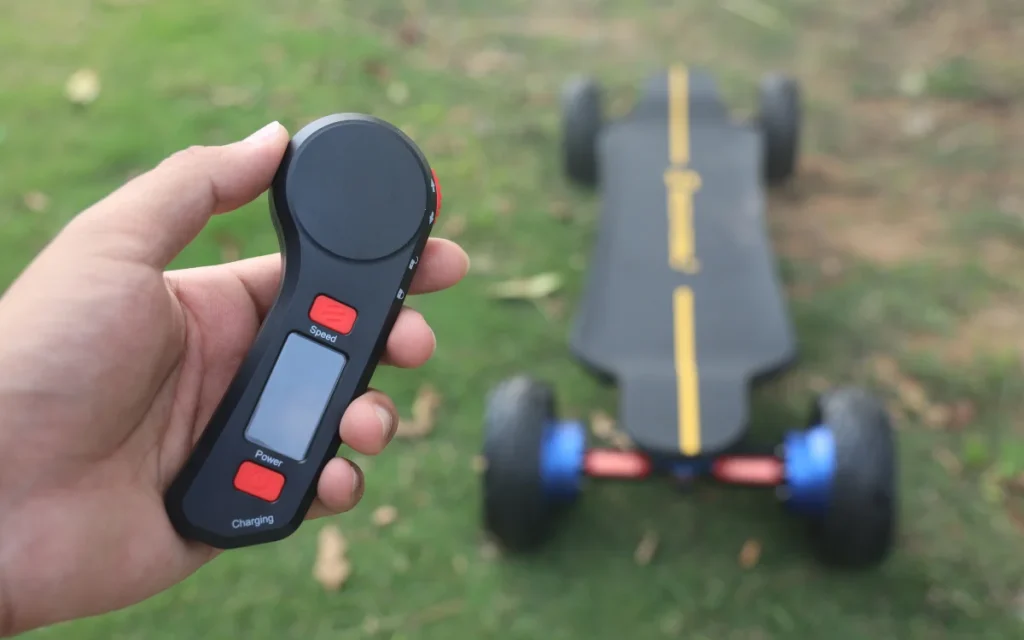
One of the most important and often overlooked parts of an electric skateboard is the remote control.
What Does the Remote Control Do?
The remote control allows you to:
-
Accelerate forward
-
Slow down or brake
-
Reverse (on most models)
-
Switch riding modes
-
Monitor battery levels
It communicates wirelessly (usually via Bluetooth or RF signals) with the ESC, giving you real-time control over the board.
Related: Top 5 Best-selling Electric Skateboards With Remote Control
How the Remote Control Works
When you move the throttle wheel or trigger on the remote:
-
Input Signal
You adjust the throttle or brake using your thumb or finger. -
Wireless Transmission
The remote sends a wireless signal to the ESC mounted on the board. -
ESC Processing
The ESC interprets your input as how fast, how slow, or how hard to brake. -
Motor Response
The ESC delivers the appropriate amount of power from the battery to the motors.
This process happens almost instantly, making electric skateboards feel smooth and responsive.
Types of Electric Skateboard Remotes
Most electric skateboards use one of the following remote styles:
-
Thumb wheel remotes – Smooth and precise speed control
-
Trigger remotes – Similar to RC car controllers
-
Multi-function remotes – Include LCD screens showing speed, distance, and battery life
A high-quality remote is essential for safety, especially when riding at higher speeds or downhill, where precise braking control matters.
Braking on an Electric Skateboard: How It Really Works
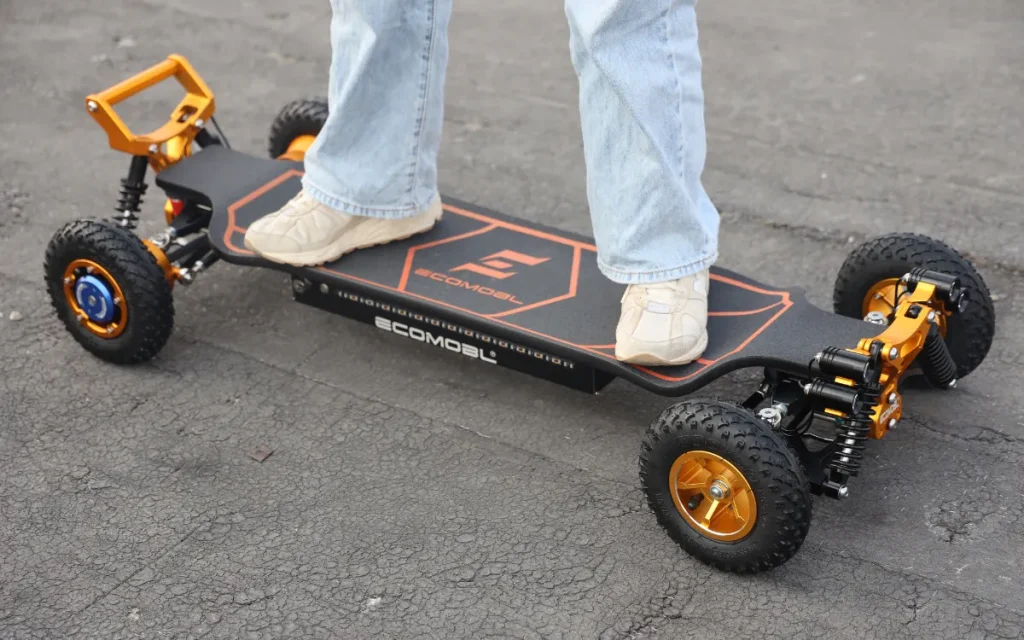
Unlike traditional brakes, electric skateboards use regenerative braking.
What Is Regenerative Braking?
When you brake using the remote:
-
The motors reverse their function
-
Instead of consuming power, they act like generators
-
Some energy is sent back to the battery
This system:
-
Slows the board smoothly
-
Reduces wear on mechanical parts
-
Slightly extends battery life
The ESC carefully controls braking force to prevent wheel lock-up and keep the ride stable.
Trucks and Wheels: Stability and Control
Trucks
Electric skateboard trucks are similar to traditional skateboard trucks but reinforced to handle higher speeds and motor torque. They connect the deck to the wheels and allow turning and carving.
Wheels
Electric skateboard wheels vary based on riding style:
-
Urethane wheels for smooth pavement
-
All-terrain rubber wheels for dirt, grass, and gravel
Wheel size affects:
-
Ride comfort
-
Acceleration
-
Top speed
Larger wheels roll over obstacles more easily but may reduce range slightly.
How Everything Works Together While Riding
When you ride an electric skateboard, here’s what happens step by step:
-
You stand on the deck and power on the board, and the remote
-
The remote connects wirelessly to the ESC
-
You gently push the throttle on the remote
-
The ESC draws power from the battery
-
Motors spin the wheels and move the board forward
-
You adjust speed and direction using the remote
-
When braking, the motors slow the wheels using regenerative braking
All of this happens seamlessly, giving the rider a smooth and intuitive riding experience.
Safety Systems Built Into Electric Skateboards
Modern electric skateboards include multiple safety features, such as:
-
Overcurrent protection
-
Battery temperature monitoring
-
Low-voltage cutoffs
-
Remote disconnection failsafes
These systems help protect both the rider and the electronics during everyday use.
Why Understanding How Electric Skateboards Work Matters
Knowing how an electric skateboard works helps you:
-
Ride more safely
-
Maintain and troubleshoot issues
-
Appreciate the technology behind the ride
It also helps you understand the importance of quality components, especially the remote control, which is your primary interface with the board.
Final Thoughts
Electric skateboards combine mechanical engineering, electrical systems, and smart control technology seamlessly. From the battery and motors to the ESC and remote control, each part plays a vital role in providing a smooth, powerful, and controlled ride.
At the center of it all is the remote control, giving riders instant command over speed and braking, making electric skateboards not just fast but safe and intuitive as well.
As electric skateboarding continues to evolve, understanding how these machines work will help riders get the most out of every ride, whether commuting, carving, or exploring new terrain.

