


Riding an electric skateboard on snow is one of the most demanding and adventurous riding experiences. Snow turns smooth pavement into a constantly shifting surface where grip disappears, braking becomes difficult, and balance is continuously tested. While electric skateboards are designed primarily for dry urban terrain, many riders still want to explore winter riding.
However, riding on snow requires advanced skills, the right equipment, and a deep understanding of how winter conditions affect your board. This guide explains everything you need to know, from preparation and safety gear to riding techniques and post-ride maintenance.
Is It Safe to Ride an Electric Skateboard on Snow?
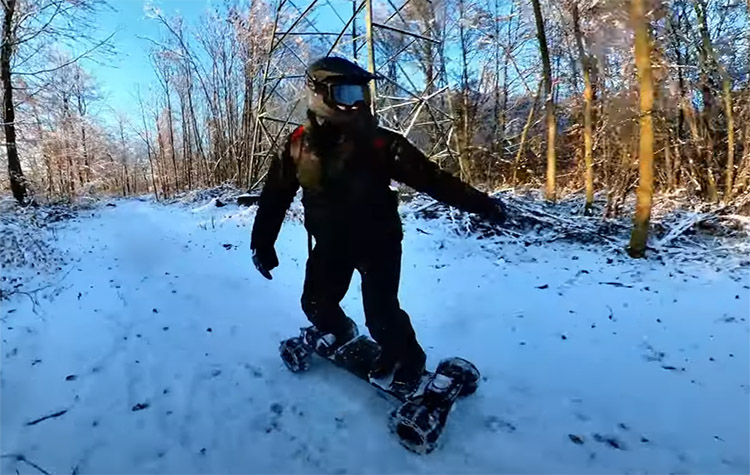
The simple truth is that electric skateboards are not built for snow riding.
Most electric skateboard manufacturers design their boards for asphalt, concrete, and dry off-road terrain. Snow introduces moisture, cold, and loss of traction, three elements that directly impact performance and safety.
Why Snow Riding Is Risky?
-
Reduced traction: Snow and ice dramatically reduce wheel grip.
-
Longer braking distance: Your stopping distance can double or triple.
-
Hidden obstacles: Snow hides cracks, rocks, and potholes.
-
Moisture damage: Electronics are vulnerable to water.
-
Cold battery impact: Cold reduces battery output and range.
Even e-boards with water resistance ratings are not immune to damage from salt, slush, and freezing temperatures.
Snow riding should only be attempted by experienced riders in controlled environments.
Understanding the Challenges of Snow Riding
Snow riding is not just “normal riding with snow on the ground.” It changes how your board behaves in nearly every way.
Loss of Grip and Stability
Snow acts like tiny ball bearings under your wheels. Even with off-road tires, traction is unpredictable. One patch of packed snow may feel solid, while another sends your board sliding sideways.
Inconsistent Terrain
Snow covers dips, cracks, and debris. What looks like a smooth path could hide a curb edge or rock.
Slippery Transitions
Moving between pavement and snow is dangerous. Tires may suddenly lose grip when crossing icy patches.
Increased Rider Fatigue
Balancing on snow requires constant micro-adjustments, which quickly tire your legs and core.
Check Your Skateboard’s Specifications
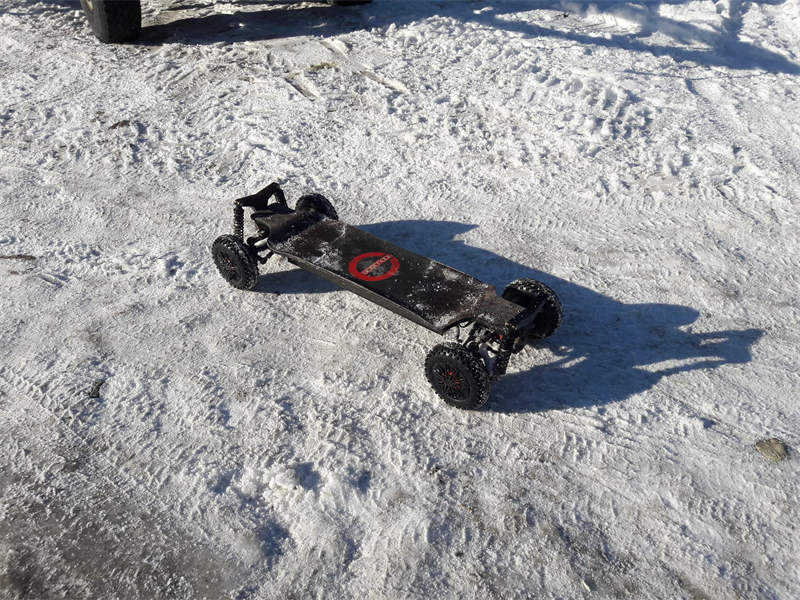
Not all electric skateboards are equally capable in winter conditions.
Before riding on snow, examine your board’s:
Water Resistance
Look for an IP rating:
-
IP55 or higher is preferred
-
Fully sealed battery enclosure
-
Protected ESC housing
-
Waterproof connectors
Ground Clearance
Snow piles reduce clearance. Low-profile street boards will scrape and lose stability.
Drive Power
Snow requires higher torque. Boards with dual motors and high torque perform better.
Always check your manufacturer’s official riding guidelines. Many explicitly forbid snow riding.
Use Off-Road or All-Terrain Wheels
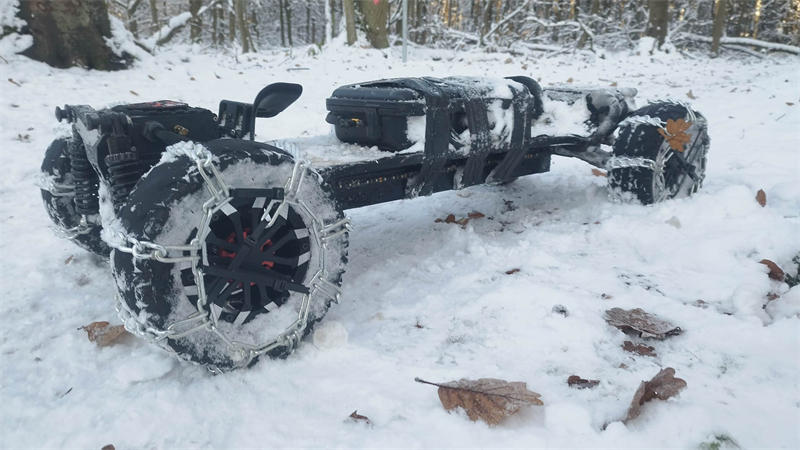
Wheel selection is the single most important upgrade for snow riding.
Why Street Wheels Fail in Snow
Standard urethane wheels:
-
Have no tread
-
Slide easily
-
Cannot absorb bumps
-
Lose grip instantly on ice
Best Wheel Options for Snow
-
Pneumatic tires (6”–8”)
-
Knobby all-terrain tires
-
Rubber snow-style treads
Benefits of Pneumatic Tires
-
Improved traction on packed snow
-
Better shock absorption
-
Increased stability
-
Reduced vibration on frozen ground
Lowering tire pressure slightly increases the contact patch and grip.
Wear Proper Winter Riding Gear
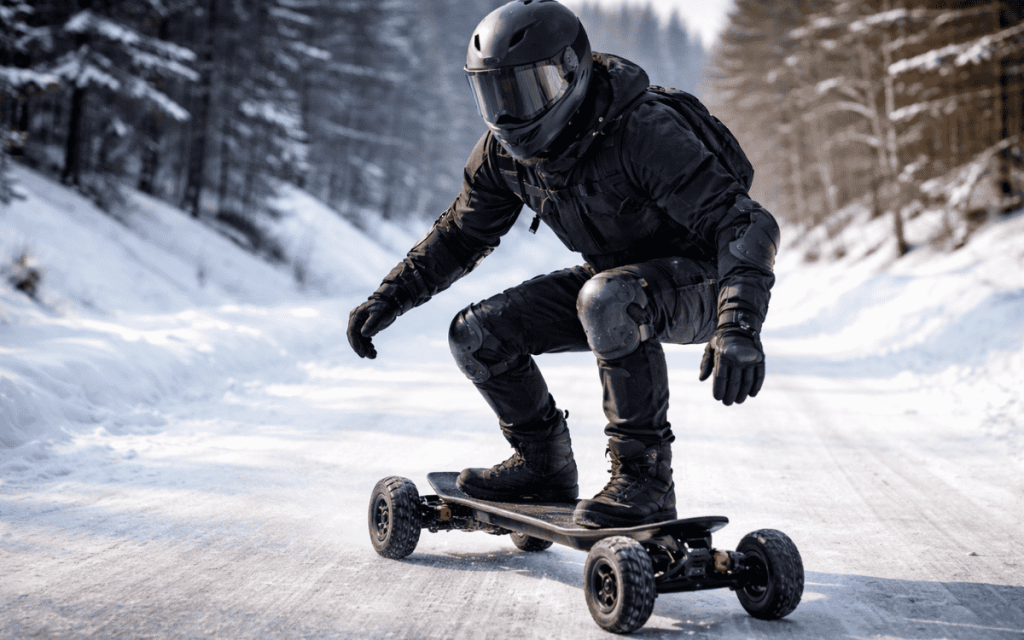
Snow riding greatly increases fall risk. Proper protection is non-negotiable.
Essential Protective Gear
-
Full-face helmet (protects chin and jaw)
-
Wrist guards (the most common injury)
-
Knee pads
-
Elbow pads
-
Impact shorts (tailbone protection)
Cold-Weather Clothing
-
Waterproof insulated jacket
-
Thermal base layers
-
Snow gloves with grip
-
Waterproof riding pants
-
Winter boots with ankle support
Cold stiffens muscles and slows reaction time, making injuries more likely.
Related: Top 11 Cold-Weather Riding Gears Every Electric Skateboarder Needs
Choose the Right Riding Location
Never ride on snow-covered roads with traffic.
Best Locations for Snow Riding
-
Empty parking lots
-
Snow-packed bike trails
-
Frozen park paths
-
Wide pedestrian walkways
-
Flat open parks
Areas to Avoid
-
Steep hills
-
Intersections
-
Icy bridges
-
Roads treated with salt
-
Crowded sidewalks
Start on flat terrain until you understand how your board reacts on snow.
Riding Technique for Snow Conditions
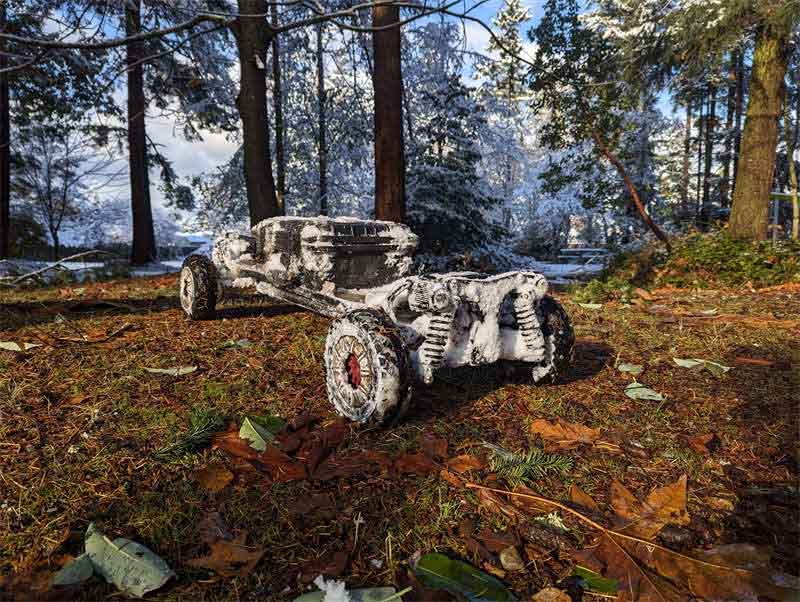
Snow riding requires slower speeds, smoother inputs, and constant awareness.
Ride at Low Speed
Use your board’s lowest speed mode:
-
Beginner mode
-
Eco mode
-
Low power mode
Avoid sport or turbo modes. Sudden torque can spin your wheels instantly.
Maintain a Low and Balanced Stance
A low stance increases stability.
-
Bend your knees
-
Keep feet wide apart
-
Relax your upper body
-
Keep your head upright
Think of riding like snowboarding, smooth, flowing movements.
Smooth Throttle and Braking Control
Avoid jerky inputs.
-
Roll on the roller gently.
-
Brake progressively
-
Never slam brakes
-
Feather the trigger
Sudden braking can lock wheels and cause uncontrolled slides.
Weight Distribution
-
Lean slightly forward when accelerating
-
Shift weight back gently when braking
-
Keepyour shoulders aligned with the board
Let your legs act as suspension.
Avoid Icy Patches at All Costs
Ice is the number one danger.
Why Ice Is So Dangerous
-
Zero traction
-
Instant sliding
-
No braking control
-
Unpredictable direction changes
Even snow tires struggle on ice.
How to Identify Ice
-
Dark glossy patches
-
Shiny frozen areas
-
Hard compacted snow
-
Slush that has refrozen
If you encounter ice, slow down and step off.
Battery Care in Cold Weather
Cold temperatures directly affect lithium-ion batteries.
How Cold Impacts Batteries
-
Reduced voltage output
-
Shorter range
-
Slower acceleration
-
Sudden shutdown risk
Best Battery Practices
-
Store the board indoors
-
Warm battery before riding
-
Avoid fast charging when cold
-
Let the board warm up before charging
Expect a 20–40% range reduction in winter.
Post-Ride Cleaning and Maintenance
Snow contains salt, moisture, and grit, all enemies of electronics.
Post-Ride Cleaning Routine
-
Power off the board
-
Remove battery (if possible)
-
Wipe the deck and enclosure
-
Dry motors and belts
-
Clean bearings
-
Inspect connectors
-
Let the board dry indoors
Preventative Maintenance
-
Apply bearing lubricant
-
Check seals and gaskets
-
Tighten hardware
-
Look for corrosion
Road salt can destroy bearings and motor shafts quickly.
Know Your Limits
Snow riding is physically demanding and technically challenging.
You should already be comfortable with:
-
Emergency braking
-
High-speed balance
-
Off-road terrain
-
Slide control
-
Board recovery
If conditions feel sketchy, stop riding.
When You Should Not Ride on Snow
Avoid snow riding when:
-
Snow is deep
-
Ice is widespread
-
Visibility is low
-
Temperatures are extreme
-
Roads are heavily salted
Some days are simply not rideable.
Final Thoughts
Riding an electric skateboard on snow is an extreme form of riding that demands advanced skills, specialized equipment, and serious respect for winter conditions.
If you decide to ride:
-
Upgrade to off-road tires
-
Ride slowly and smoothly
-
Wear full protection
-
Avoid ice
-
Protect your electronics
-
Maintain your board properly
Remember: most manufacturers do not recommend snow riding, and warranty coverage may be void. Your safety always comes first.
With preparation, discipline, and respect for winter terrain, snow riding can be a thrilling challenge, but it should never be taken lightly.

