


Electric skateboarding is pure adrenaline with speed, flow, and freedom. But true mastery comes from knowing when and how to brake. Whether you are carving coastal hills or weaving through the city, braking is the subtle skill that transforms thrill into control. It is not just a feature of your board. It is your lifeline when the unexpected happens.
This guide breaks down the pro-level braking techniques every electric skateboard rider needs to ride faster, brake smarter, and push limits with confidence.
Understanding Your Electric Skateboard’s Braking System
Before you can brake like a professional, you need to understand what is happening under the deck.
Electric skateboards use regenerative braking, a system where the motor reverses its function when you engage the brake. Instead of driving the wheels forward, it creates resistance that slows the board and sends power back into the battery.
Important points to know:
- When the brakes are applied, the motor generates energy and feeds it into the battery.
- The ESC on advanced boards smooths out braking even when the battery is nearly full.
- Four Wheel Drive boards brake harder because all four wheels provide resistance.
- Two-wheel drive boards rely only on the driven wheels, usually the rear, creating a slightly longer braking distance.
- Braking power can often be adjusted based on riding mode and terrain.
- When the battery is nearly full, braking strength can decrease, so brake earlier when riding downhill.
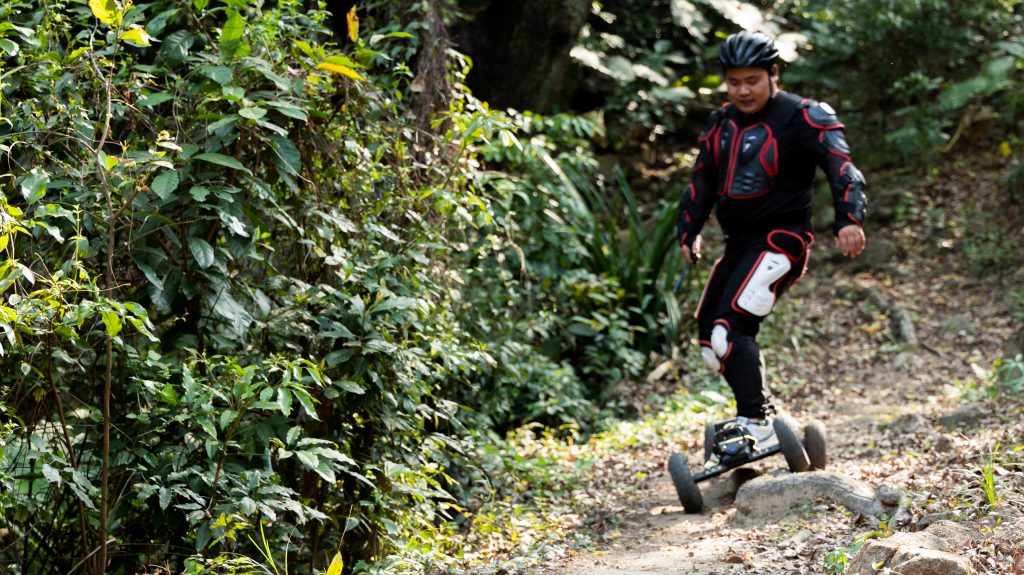
Proper Body Positioning for Optimal Braking
Even the best braking system cannot compensate for poor technique. Your body position directly affects stability, control, and stopping distance.
Foundational Braking Stance
- Bend your knees more than usual to lower your center of gravity
- Shift your weight slightly toward your back foot
- Engage your core to stabilize your upper body
- Keep your shoulders aligned with your board
- Look forward instead of down at your feet
Board Specific Tips
- All-terrain boards benefit from a wider stance
- Urban cruiser boards work best with a centered stance
Progressive Braking Techniques for Smooth Stops
Smooth braking sets experienced riders apart from beginners. Sudden braking can cause skidding or even throw you forward, especially at higher speeds.
Professional Techniques for Controlled Deceleration
Gradual Force Application
Start with light braking pressure and increase it gradually as you slow down.
Pulse Braking
Alternate between braking and coasting when riding at high speed to maintain stability.
Momentum Control
Shift your weight naturally with the board so your body never moves ahead of the deck.
Terrain-Based Adjustments
Use toe pressure to ease off and heel pressure to apply firmer stops, depending on the slope.
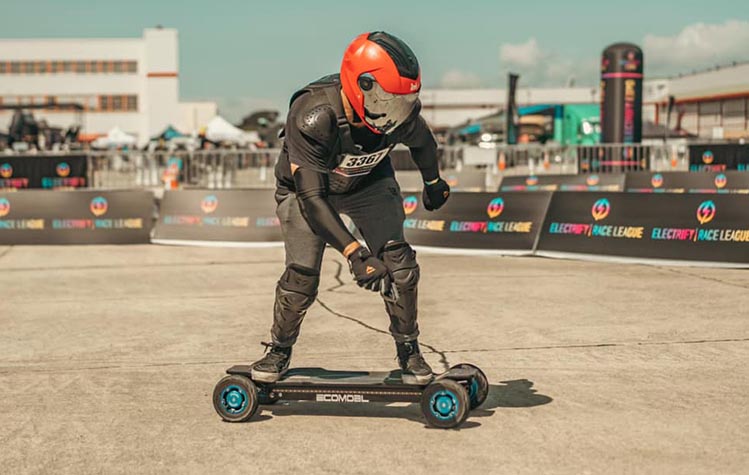
Emergency Braking: How to Stop Fast When It Counts
Emergencies require quick reactions and proper technique.
Steps for Emergency Braking
- Drop into a low, balanced stance
- Shift your weight firmly backward without lifting the front wheels
- Apply up to seventy percent braking power in the first second
- Engage your core to absorb force
- Look at your exit path, not the obstacle
Realistic Braking Distances
At twenty-five miles per hour on dry pavement:
- High-performance boards usually need fifteen to sixteen meters of stopping distance
- On wet, loose, or downhill terrain, this can extend to twenty meters or more
There is no safe way to run out of a fall at these speeds. Proper braking is essential. Always plan your braking window ahead of time.
The Tech Behind ECOMOBL Braking Systems
ECOMOBL boards feature advanced braking engineering for maximum safety and control.
- Regenerative braking converts kinetic energy into battery power
- Dynamic electronic braking adjusts strength in real time
- Motor resistance engineering ensures smooth but strong deceleration
- Dual braking systems provide redundancy in high-performance models
These braking systems are tuned for stability, speed, and all-terrain consistency.
Common Braking Mistakes to Avoid
Avoid these braking errors:
- Applying maximum braking force instantly
- Keeping your body rigid instead of flexible
- Ignoring road surface changes
- Braking hard while turning
- Skipping practice before riding in traffic
Correct these mistakes by practicing in open spaces such as empty parking lots until braking feels natural.
Maintenance Tips for Reliable Braking
Your braking system requires regular care.
Remote Signal Check
- Test brake responsiveness before every ride
- Watch for signal delay
- Keep your battery charged enough for consistent performance
Mechanical Inspection
- Tighten the truck’s wheels and all hardware
- Check motor wiring
- Inspect wheel bearings
Software Upkeep
- Keep firmware updated
- Test braking after updates
- Save your ESC profiles
Upgrading Your Braking Setup
ECOMOBL offers several ways to improve braking performance.
ESC Upgrades
- Customizable braking curves
- Improved heat resistance
- Programmable sensitivity
Premium Remote Controls
- Higher input resolution
- Adjustable brake strength
- Haptic feedback
Wheel Optimization
- Larger wheels allow smooth braking
- Smaller wheels reduce stopping distance
- Specialized rubber for wet grip
Master Your Ride and Master Your Stops
Perfect braking does more than prevent accidents. It unlocks your board’s full performance potential. When you trust your braking ability, you can ride faster and push harder with confidence.
With consistent practice, routine maintenance, and high-quality equipment, you can develop braking finesse that matches the engineering of your ECOMOBL board.
Explore the full line of ECOMOBL electric skateboards and accessories to level up your riding experience.
Questions Asked by People
What should I do if my brakes fail
Stay calm. Turn uphill if possible to reduce speed, use a controlled foot drag, or perform a safe bailout if necessary. Practice these techniques before you need them.
How often should I check my brakes?
Perform a quick brake test before every ride and a full inspection each week. Check more often after riding in wet or rough conditions.
Are electric skateboard brakes reliable?
Yes. ECOMOBL uses regenerative and electronic braking systems for dependable performance, but no system is perfect. Learn foot braking as a backup.
Can I brake safely downhill?
Yes. Start earlier, apply gentle sustained pressure, shift weight backward, and use pulse braking on long descents. ECOMOBL thermal management helps maintain braking power on hills.

