


Most car trips are shorter than people think. According to a 2021 study conducted for the U.S. Bureau of Transportation Statistics by the Maryland Transportation Institute, 52 percent of all trips in the United States cover less than three miles, and 28 percent cover less than one mile. That is the kind of distance an electric skateboard handles easily, which raises a real question for many riders: could a board replace a car, not just supplement one?
For a growing number of people in cities and college towns, the answer is yes, at least for most of the week. This guide walks through the real costs, the real logistics, and the real limitations of using an electric skateboard as your primary way to get around.
The Financial Case for Going Car-Free
The math starts with what a car actually costs. According to AAA’s 2025 Your Driving Costs study, the average annual cost to own and operate a new vehicle is $11,577, or about $965 a month, once you factor in the purchase price, financing, fuel, insurance, maintenance, and depreciation. That number assumes a vehicle driven about 15,000 miles a year over five years.
By comparison, a quality electric skateboard is a one-time purchase in the hundreds to low thousands of dollars, with ongoing costs limited to electricity for charging, occasional wheel or bearing replacements, and battery upkeep. Even accounting for the cost of a board, a helmet, and basic gear, most riders recover the full purchase price within the first year simply by avoiding car payments, insurance premiums, and gas or EV charging costs for their daily trips.
This does not mean every rider can eliminate a car. It means that for the short, everyday trips that make up more than half of all trips Americans take, a board can absorb a significant share of what a car would otherwise be doing, and the savings add up quickly.
What Kind of Trips Actually Work
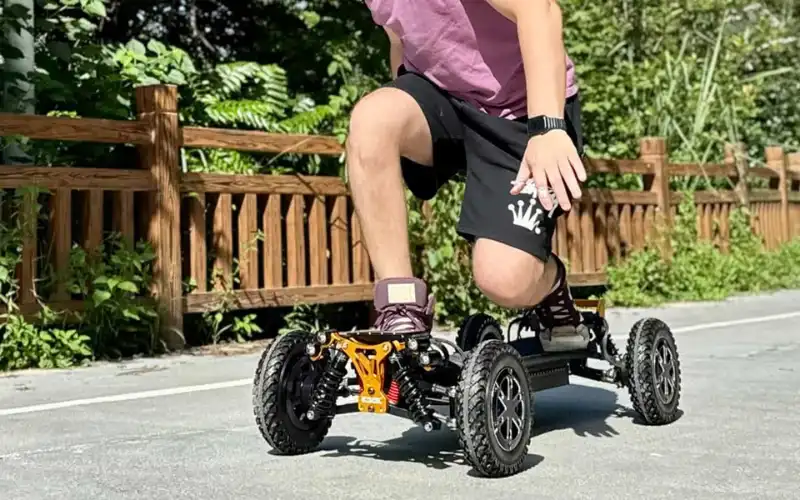
Living car-free on a board works best when you think in terms of trip types rather than total mileage. A daily commute, a grocery run, a trip to class, or a ride to meet friends are all well within the comfortable range of most electric skateboards on a single charge. Longer errands, trips that require hauling large or heavy items, and travel outside a rideable radius are where a car, rideshare, or transit connection still makes sense.
Before committing to car-free living, it is worth mapping out your actual weekly routine: where you go, how far, and how often. If most of your trips fall under five to seven miles each way, a well-chosen board can realistically cover the majority of them. Our guide on what terrains electric skateboards can handle safely is a good starting point for evaluating whether your specific streets, hills, and surfaces are a good match.
Building a Realistic Weekly Routine
Commuting:
This is usually the easiest trip to replace. If your commute is a few miles through city streets, our tips on riding efficiently through urban environments cover route selection, timing, and how to handle traffic-heavy stretches without adding stress to your ride.
Groceries and errands:
This is where car-free living gets logistical rather than aspirational. A backpack or messenger bag handles a normal grocery run, but you will want to plan smaller, more frequent shopping trips rather than one large weekly haul. Riders who carry cargo regularly should also revisit braking habits, since stopping distance and control change with added weight. Our guide to proper braking technique is worth reviewing before you start regularly riding with a full bag.
Evening and early morning trips:
Visibility matters more once a board becomes your default transportation rather than an occasional weekend ride. If your schedule includes early commutes or evening plans, make sure your setup is suited for low light. Our roundup of electric skateboards built for night riding covers what to look for if visibility is a regular part of your routine.
Building in a Weather Backup Plan
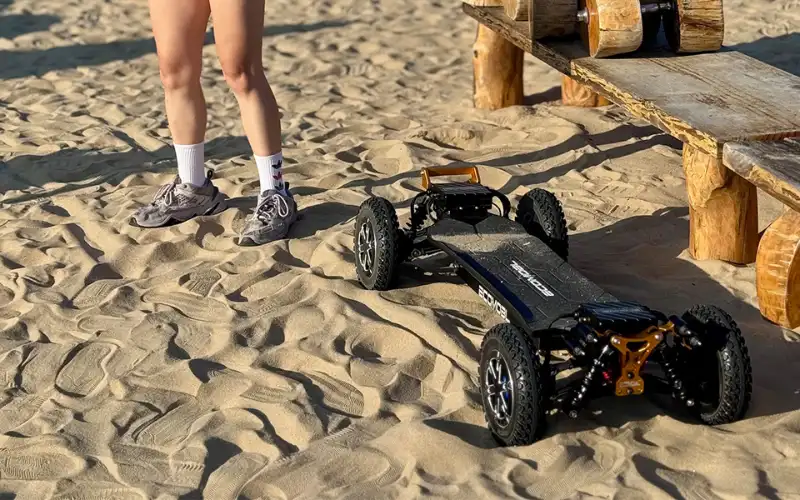
No electric skateboard setup should be the only option in your transportation plan, and weather is the most common reason why. Rain, snow, and extreme heat all affect ride quality and safety, and a realistic car-free plan includes a backup for the days riding is not the right call. That backup might be public transit, a rideshare, walking, or simply working from home when possible.
The goal is not to ride in every condition. It is to make the board your default choice on the roughly nine out of ten days when conditions are fine, while having a plan for the rest.
Combining Your Board with Public Transit
For longer distances, the most effective car-free strategy is usually not a board alone. It is a board paired with public transit. Many riders use an electric skateboard to cover the first and last mile of a longer trip: riding from home to a train or bus stop, then again from the final stop to their destination. This “first mile, last mile” approach solves one of the most persistent gaps in public transit systems, which often leave riders with an inconvenient walk at either end of their trip.
A compact, portable board makes this pairing easier, since it needs to be carried on and off transit rather than parked and locked outside.
Know the Rules Before You Commit
Going car-free on a board only works if you are riding within the law. Electric skateboard regulations vary significantly by city and state, covering where you can ride, how fast you can go, and whether a board is even street-legal in the first place. Before restructuring your transportation around a board, check the specifics for where you live in our guide to electric skateboard laws by state.
What Doesn’t Work Well
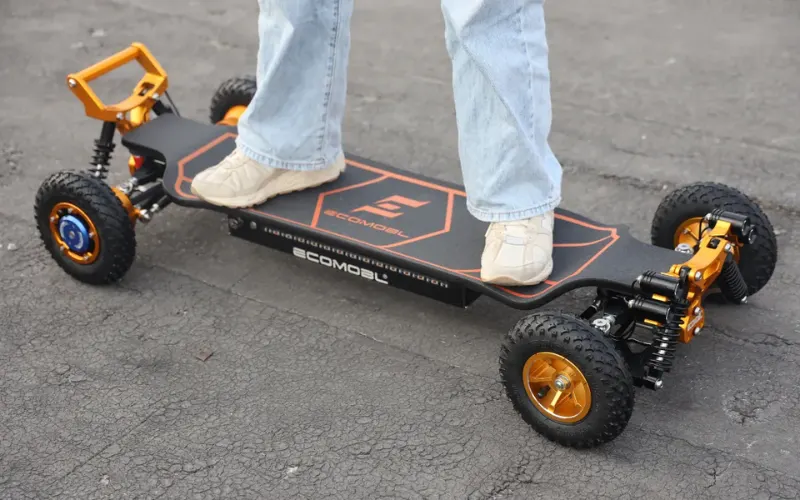
It is worth being honest about the limits. Long highway-distance trips, hauling large items like furniture, riding with young children, and travel during heavy storms or icy conditions are all situations where a board is not the right tool. Riders who go fully car-free typically keep access to a car through a shared vehicle, a rideshare budget, or a rental for the handful of trips each month a board genuinely cannot handle. The environmental and financial benefit still holds even with occasional car use, since the majority of daily trips are what get replaced, not all of them.
New riders sometimes try to force a board into situations it was not designed for, which is one of the more common ways people get discouraged. Our breakdown of mistakes new electric skateboard riders make is a useful check before you commit to a full transportation switch.
The Environmental Side of the Equation
The financial case is easy to measure, but the environmental case is part of why more riders are making the switch. The Environmental Protection Agency estimates that the average gasoline passenger vehicle emits about 400 grams of CO2 per mile, or roughly 4.6 metric tons per year for a typical driver. Since more than half of all car trips in the U.S. cover distances well within an electric skateboard’s range, shifting even a portion of those trips away from a car adds up over a year of daily riding, without requiring a single long trip to be replaced.
This shift is also part of a broader pattern in how cities are rethinking transportation infrastructure. We cover that bigger picture in our article on smart city mobility and where electric skateboards fit in.
A Realistic Starting Point
You do not need to sell your car on day one to test whether car-free living works for you. A more realistic approach is to track your trips for two weeks, note how many were under five miles, and try replacing those specific trips with your board while keeping your car or transit pass as backup. Most people who make the full switch arrive at it gradually, once the board has proven itself on the routine, everyday trips that make up the bulk of their week.
If you are looking to connect with other riders who have already made this shift, whether for route recommendations, gear advice, or just company on a commute, our guide to building an electric skateboard community is a good next step.
Frequently Asked Questions
Can an electric skateboard really replace a car?
For most short, everyday trips, yes. Federal transportation data shows more than half of all U.S. car trips are under three miles, which is well within the range of most electric skateboards. Longer trips, bad weather, and hauling large items still typically require a car, transit, or rideshare.
How much money can you save going car-free with a board?
AAA’s 2025 study puts average annual car ownership costs at $11,577. An electric skateboard is a one-time purchase with minimal ongoing costs, so most riders recoup the price of a board well within their first year of car-free commuting.
What do you do when it rains or snows?
A realistic car-free plan includes a backup option, such as transit, rideshare, or walking, for days when weather makes riding unsafe. The goal is to make the board your default option, not your only option.
Is it safer to combine a board with public transit rather than riding the whole distance?
For longer trips, yes. Using a board to cover the first and last mile of a transit trip is one of the most common and practical car-free strategies, since it solves the walking gap on either end of a bus or train ride.