

|
Learn the unwritten rules of electric skateboard etiquette for bike lanes, sidewalks, and trails, so you can ride safely, respectfully, and without conflict. |
Riding an electric skateboard is one of the most enjoyable ways to move through a city or explore a trail. Still, it means sharing space with cyclists, pedestrians, hikers, and drivers moving at different speeds and with different expectations. A single careless pass or an unexpected swerve can turn a great ride into a close call, or worse, give the entire e-skate community a bad reputation.
Good etiquette is not just about being polite. It is about riding in a way that keeps you and everyone around you safe. Whether you are commuting through downtown or carving up a weekend trail, here is how to share the road the right way.
Why Etiquette Matters More Than You Think
Electric skateboards occupy a gray area in a lot of cities. Some municipalities treat them like bicycles, others like motorized vehicles, and a few have no clear rules at all. If you have not already checked the regulations where you live, it is worth reading our guide on electric skateboard laws and legal status by state before you plan your route.
Because the legal framework is still catching up with the technology, riders end up carrying an extra responsibility. Every considerate pass, every yielded right of way, and every predictable move builds trust with the people around you. Every reckless one chips away at it and can lead to stricter local rules for all riders down the line.
Sharing Bike Lanes
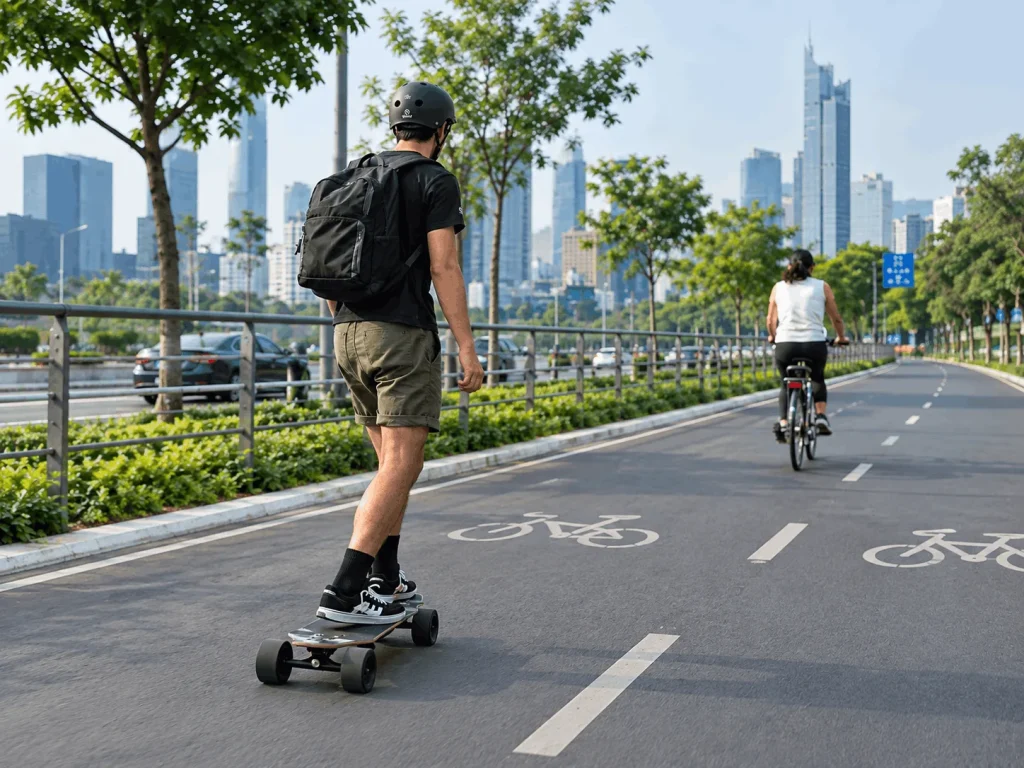
Bike lanes are often the most natural fit for an electric skateboard, since your speed and profile are closer to a bicycle’s than a pedestrian’s. Still, a few habits will keep things friendly between you and the cyclists around you.
Match your speed to the flow of traffic. If you are riding well below the speed of cyclists around you, you become an obstacle. If you are riding well above it, you become a hazard. Aim to move at a pace that blends in rather than one that forces others to react to you.
Signal before you pass. A quick call of “on your left” or a hand signal gives cyclists time to hold their line instead of swerving in surprise. Passing silently at speed is one of the fastest ways to cause an accident in a shared lane.
Stay predictable. Sudden direction changes are dangerous in any shared lane, but they are especially risky on a board, where your stopping distance and turning radius behave differently than a bike’s. If you feel your board start to shimmy at speed, ease off the throttle rather than making a sharp correction. Our guide on electric skateboard speed wobbles covers what causes this and how to ride out of it safely.
Know when to brake early. Braking on a skateboard is not the same as braking on a bike, and cyclists behind you may not anticipate how quickly you slow down. Reviewing proper braking techniques will help you stop smoothly instead of lurching, which keeps following traffic from having to react suddenly.
Riding on Sidewalks
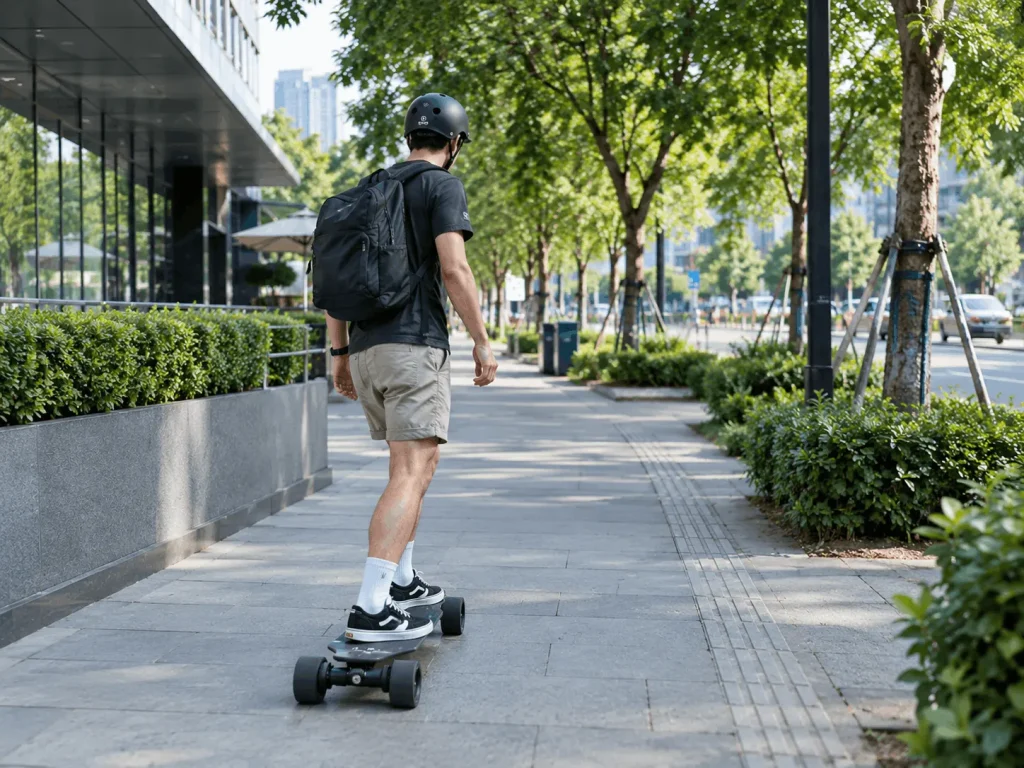
Sidewalks belong to pedestrians first. If local law allows electric skateboards on sidewalks at all, riding there comes with a different set of expectations than a bike lane or street.
Slow down, always. A sidewalk is not the place to test your board’s top speed. Keep your pace close to a brisk walk, especially near storefronts, bus stops, or intersections where people step out unexpectedly.
Give pedestrians the right of way, every time. This includes people with strollers, wheelchairs, and pets. If the sidewalk is narrow or crowded, it is often faster and safer to dismount and walk your board for a few yards than to squeeze past.
Announce your approach. A soft verbal heads-up as you approach from behind is far less startling than a silent board suddenly passing someone’s shoulder. Electric skateboards are quiet by nature, which is a benefit in traffic but a real risk around unsuspecting pedestrians who cannot hear you coming.
Avoid weaving through foot traffic. Constant lane changes on a crowded sidewalk make you unpredictable and increase the odds of a collision. If the sidewalk is busy, treat it the way you would treat heavy street traffic and slow to a crawl or find another route.
If you are riding through a dense downtown area regularly, our urban commute tips for city riders go into more detail on route planning and reading the rhythm of city streets, which pairs well with good sidewalk manners.
Trail Riding Etiquette
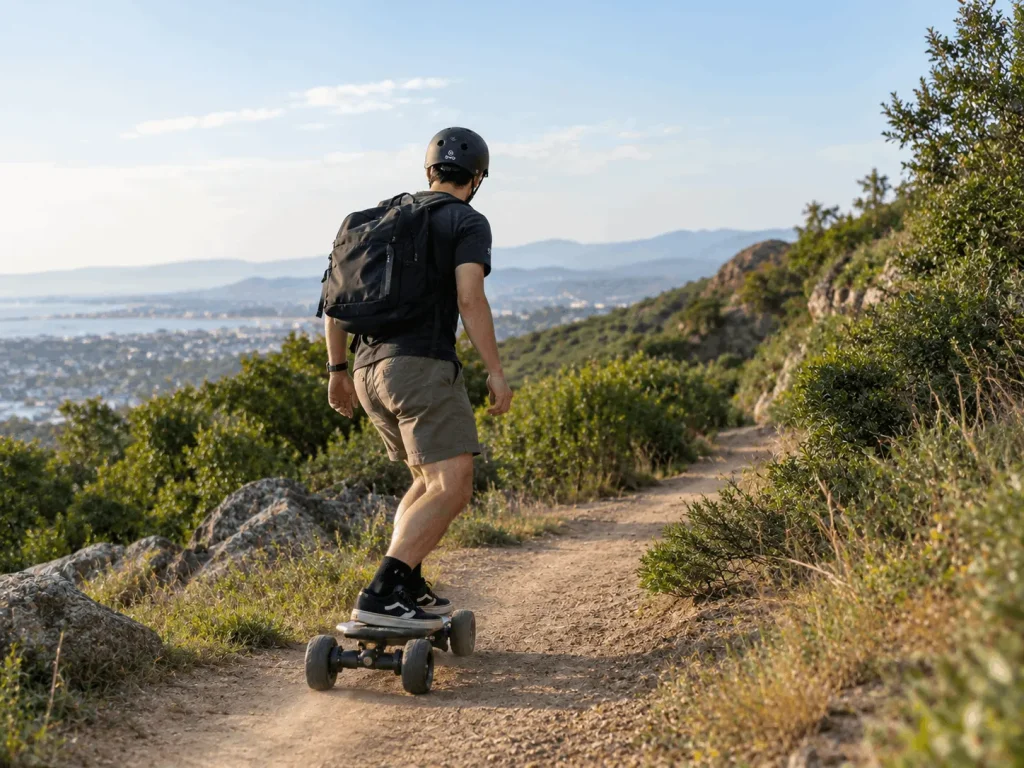
Trails bring their own etiquette, shaped less by traffic law and more by the shared culture of hikers, mountain bikers, and off-road riders who use the same paths.
Yield to hikers and horses. On most multi-use trails, the unwritten hierarchy puts hikers and equestrians first, cyclists and e-boards second. Slow down well before you reach them, move off to the side if the trail is narrow, and offer a friendly greeting as you pass.
Stay on marked trails. Cutting new lines through vegetation damages the terrain and can turn other trail users against powered riders entirely. Not every trail is built to handle the torque and weight of an electric mountain board, so it is worth understanding what terrains electric skateboards can handle safely before you commit to a route.
Watch your dust and your noise. Off-road electric skateboards are far quieter than gas-powered options, but a fast pass still kicks up dust and startles wildlife or fellow riders. Ease off your speed around blind corners and narrow sections where visibility is limited.
Ride with a buddy when possible. Trails are less forgiving than city streets if something goes wrong, and cell coverage is not always reliable. If you are looking to connect with other local riders for group sessions, our guide on building an electric skateboard community has tips on finding ride buddies and staying safe as a group.
A Few Universal Rules, Wherever You Ride
Some etiquette applies no matter what surface you are on.
Be seen, especially at night. Low-light riding demands extra visibility for everyone around you, not just yourself. If you ride in the evening, invest in a board with proper lighting, or add your own, and take a look at our picks for the best electric skateboards for night riding and low visibility.
Keep your board under control at all times. Riding beyond your skill level is one of the fastest ways to lose the trust of everyone sharing the space with you. If you are still building confidence, our roundup of common mistakes new electric skateboarders make is a good checkpoint before you tackle busier routes.
Take responsibility for your line. In a bike lane, on a sidewalk, or on a trail, the golden rule is the same: assume other people cannot predict what you are about to do, and ride in a way that makes it easy for them anyway.
Riding Well Is Good for Everyone
Electric skateboards are still earning their place in the broader transportation landscape, alongside bikes, scooters, and pedestrians. How individual riders behave has a real effect on how welcome the technology is in shared spaces going forward. We talk more about this bigger picture in our piece on smart city mobility and where electric skateboards fit in.
The short version is simple. Slow down around others, communicate your movements, yield when it is not clear whose turn it is, and treat every bike lane, sidewalk, and trail as a space you are borrowing rather than one you own. Ride that way consistently, and you will not just avoid accidents. You will help keep these shared spaces open to electric skateboards for years to come.