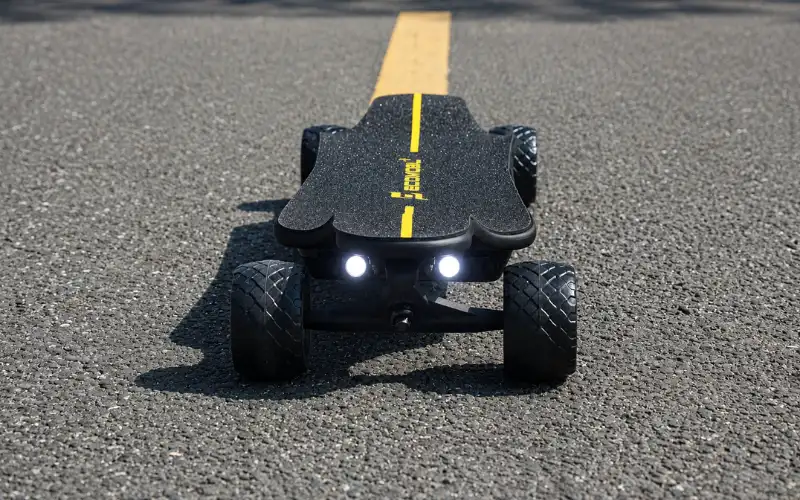


One of the most common questions riders ask before buying an electric skateboard is: How far can it go on a single charge? This distance, commonly called range, varies widely depending on several factors. Unlike traditional skateboards, e-boards rely heavily on battery efficiency, rider behavior, and terrain conditions.
In this guide, we break down the key factors that affect electric skateboard range and explain how you can get the most out of every charge.
1. Rider Weight
Rider weight plays a major role in how far an electric skateboard can travel. Heavier riders require more energy to accelerate, maintain speed, and climb hills. The added weight places a constant demand on both the motor and battery.
Lighter riders around 150 lbs (68 kg) can often achieve 25 to 50 percent more range compared to riders closer to 200 lbs (90 kg). Frequent stops, starts, and uphill sections further amplify this difference.
Tip: When choosing a board, consider your body weight and typical daily travel distance. Opting for a larger battery capacity ensures consistent performance and helps avoid range anxiety.
2. Terrain and Hills
Terrain has a significant impact on range. Riders cruising on flat urban roads will naturally travel farther than those navigating hilly or uneven routes.
Even mild inclines force the motor to draw extra power to maintain speed. Over time, this added load noticeably drains the battery. If you frequently encounter hills, look for boards with high-capacity batteries and powerful motors.
Range-saving tips on hills:
- Avoid aggressive acceleration going uphill
- Use a lower speed mode (Level 1 or 2) on climbs
- Maintain a steady pace rather than alternating bursts
These small adjustments can add meaningful distance to each ride. For more ways to get the most from your board, see 10 Ways to Upgrade an Electric Skateboard.
3. Battery Type and Quality
Battery quality is one of the most critical factors affecting range. Most modern electric skateboards use lithium-ion batteries, which offer a solid balance of capacity, lifespan, and safety. Newer lithium polymer cells can deliver 10 to 20 percent more range thanks to improved energy density.
Key takeaway: A higher-capacity battery from a trusted manufacturer ensures better range today and more consistent performance over the long term. Low-quality or generic packs degrade faster, reducing range and reliability.
4. Wheels and Bearings
Wheels and bearings directly affect rolling efficiency. Softer wheels offer comfort and grip but increase rolling resistance, which drains the battery faster. Harder urethane wheels roll more efficiently and help preserve range, especially on smooth surfaces. For a deeper look at wheel options, the complete electric skateboard wheel comparison guide is worth reading.
Bearings also matter more than most riders realize. Dirty, misaligned, or corroded bearings create friction, forcing the motor to work harder.
To improve efficiency:
- Use quality, low-resistance wheels suited to your terrain
- Keep bearings clean and well-lubricated
- Remove unnecessary weight or cargo from your setup
5. Cruising Speed
Speed is one of the biggest range killers. High speeds are enjoyable, but they are far less energy-efficient. Most electric skateboards have a sweet spot between 10 and 15 mph (16 to 24 km/h) where energy consumption is best optimized.
Riding at top speed forces the motor into continuous high output, draining the battery quickly. Riders who cruise at moderate speeds often achieve 20 to 30 percent more range per charge.
Pro tip: Cruise at a comfortable pace, especially on longer rides. You will go farther, reduce battery stress, and enjoy a smoother overall experience.
6. Remote and Display Usage
Remote control habits and display settings can also influence range. Constant full-throttle input drains power faster than smooth, progressive acceleration. Many remotes offer multiple riding modes, and using a lower-speed mode helps conserve battery.
Displays set at maximum brightness consume unnecessary energy. Switching to auto-dimming or reducing brightness offers marginal gains that add up over longer rides. Making sure the remote enters sleep mode when not in use also prevents accidental drain.
For more on keeping your board running well long-term, see how to increase the lifespan of an electric skateboard.
How to Improve Your Electric Skateboard Range
- Ride smoothly. Avoid sudden acceleration and hard braking. Smooth input uses less power and helps the battery last longer.
- Use a lower speed mode. Eco or medium mode limits power draw. High-speed modes drain the battery significantly faster.
- Keep tires properly inflated. Under-inflated tires increase rolling resistance, forcing the motor to work harder.
- Avoid riding into strong winds. Headwinds increase resistance and can noticeably reduce your total distance.
- Keep your board clean. Dirty bearings or stiff belts create friction. Clean, well-maintained parts roll more freely.
- Do not fully drain the battery. Charging before it gets critically low keeps the battery healthier and helps maintain range over time.
- Carry less weight. Extra cargo means more work for the motor and faster battery drain.
- Ride at a steady speed. Constant speed is more efficient than repeated acceleration and braking cycles.
- Minimize stop-and-go riding. Each time you stop and restart, the motor draws extra power to get back up to speed.
- Ride in moderate temperatures. Extreme cold or heat can reduce battery performance and lower your effective range.
Two of the Longest-Range Electric Skateboards from Ecomobl
If maximum range is a priority, the Ecomobl electric longboard lineup includes two boards that stand out for their battery capacity and real-world distance.
Ecomobl ET2 Pro (2WD / 4WD) – Up to 34 Miles Per Charge
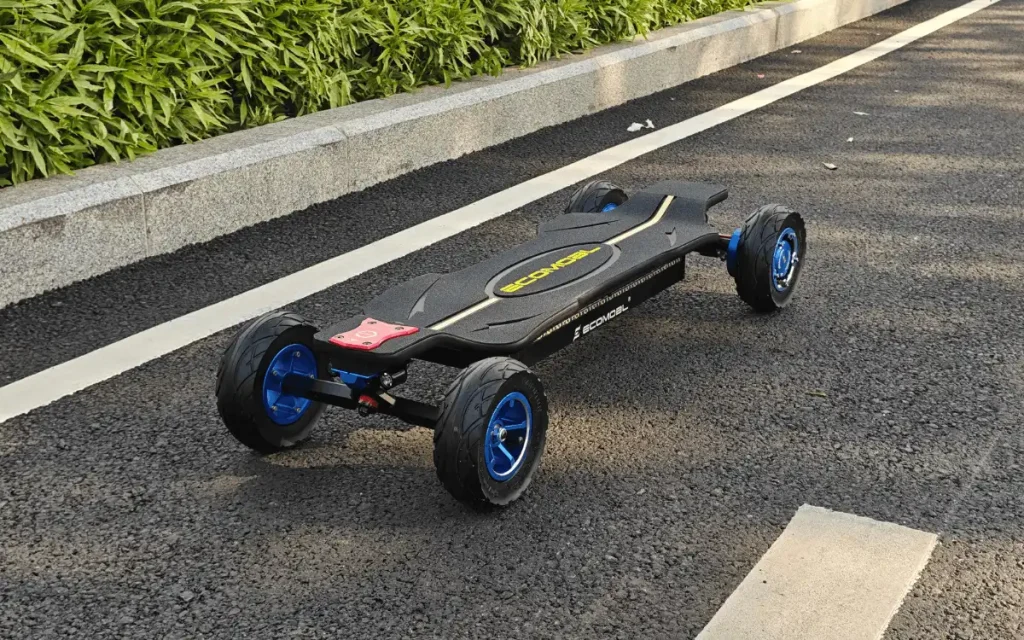
The Ecomobl ET2 Pro is powered by a 12S5P 864Wh (20Ah) battery, which is one of the largest packs available in this class. On a single charge, riders can expect 40 to 55 km (25 to 34 miles), making it one of the longest-range electric skateboards from Ecomobl.
Available in both 2WD and 4WD configurations, the ET2 Pro uses a planetary gear drive system rather than a belt drive, which improves drivetrain efficiency and reduces mechanical noise. Two 3500W gear motors with Hall sensors provide strong torque across flat roads and inclines up to 30 to 40 percent gradient.
Key specs:
- Battery: 12S5P 20Ah 864Wh
- Range: Up to 55 km (34 miles)
- Top speed: 55 km/h (34 mph)
- Max incline: 30 to 40 percent
- Wheels: 180 x 60mm
- Rider weight limit: 150 kg (330 lbs)
The board also features integrated headlights, taillights, and side lights, making it a practical choice for commuters and riders who want to cover serious distances on a single charge. Not sure which board suits your needs? The guide on finding the right electric skateboard can help you decide.
Ecomobl ET Pro 2.0 (2WD) – Up to 28 Miles Per Charge
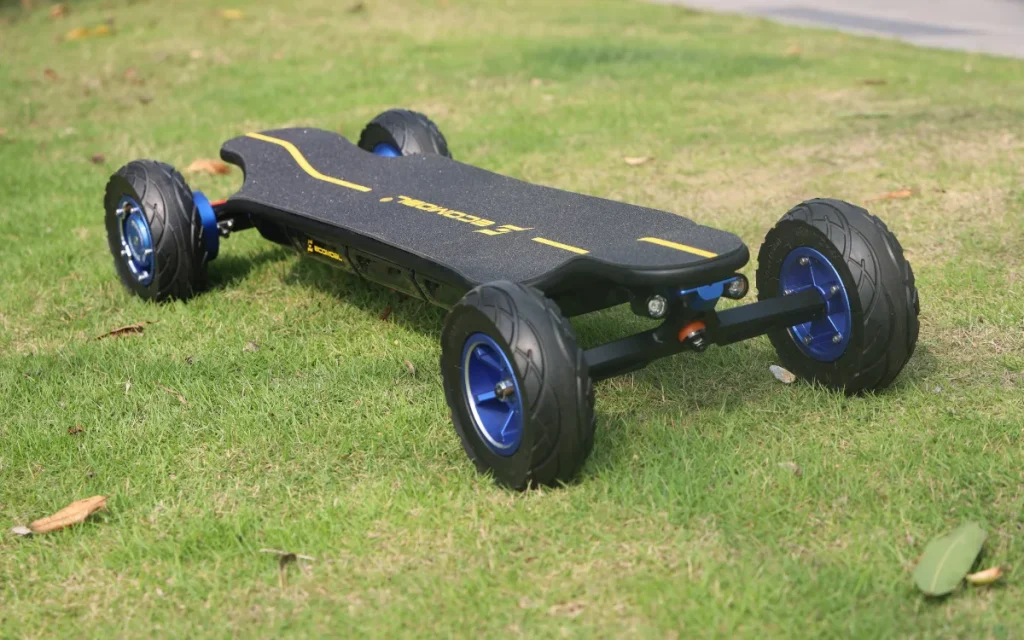
The Ecomobl ET Pro 2.0 is a lighter, more nimble option that still delivers a strong range. Its 12S3P 518Wh (12Ah) battery provides 35 to 45 km (20 to 28 miles) per charge under normal riding conditions, making it well-suited for daily commutes and longer recreational rides.
The ET Pro 2.0 features the same planetary gear drive technology as the ET2 Pro, paired with dual 3500W Hall sensor motors and a carbon fiber-integrated elastic shock-absorbing battery box. This design reduces overall weight to 13.8 kg (30.4 lbs) while keeping the ride smooth and comfortable.
Key specs:
- Battery: 12S3P 12Ah 518Wh
- Range: Up to 45 km (28 miles)
- Top speed: 55 km/h (34 mph)
- Max incline: 25 to 35 percent
- Wheels: 180 x 60mm
- Rider weight limit: 150 kg (330 lbs)
Reviewers consistently report exceeding 20 miles per charge, even with hills in the route. The ET Pro 2.0 is also one of the most affordable entries in the Ecomobl lineup for riders who want a strong range without the premium price tag. If you are still comparing options across the full range, the complete electric skateboard collection is a good place to start.
Final Thoughts
Electric skateboard range depends on a combination of rider behavior, equipment quality, and environmental conditions. Lighter riders on flat terrain naturally enjoy longer distances, while hills and heavier loads call for boards with larger battery packs.
To get the most range from your board:
- Choose a high-quality lithium battery from a trusted brand
- Maintain wheels and bearings regularly
- Cruise at moderate speeds
- Use lower assist levels on hills
- Optimize remote and display settings
With proper setup and mindful riding habits, achieving 30 or more miles per charge is realistic on a premium electric skateboard. If range is your top priority, the ET2 Pro and ET Pro 2.0 are two of the strongest options available from Ecomobl.