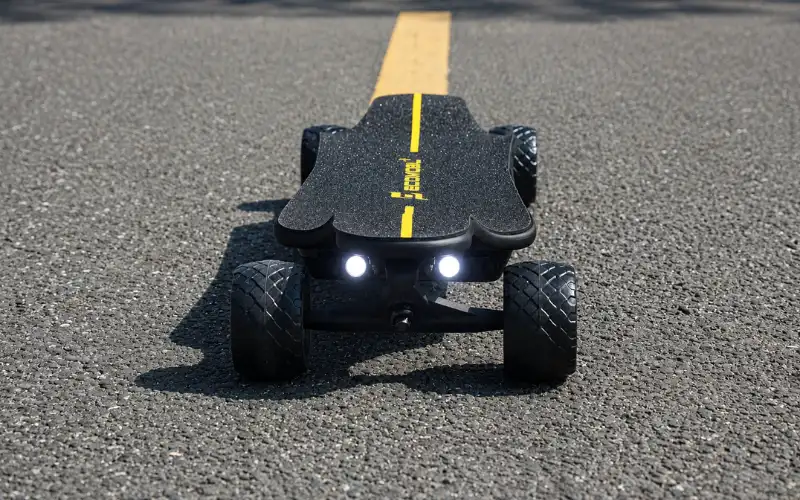


I never thought a piece of gear could change how I spend my weekends. For three years, my electric skateboard was a commuter tool. I rode it to coffee shops, down bike lanes, and through parking lots. It was fast, practical, and honestly a little boring. Then a friend introduced me to off-road riding, and everything shifted.
This is the story of how I made that transition, what I learned along the way, and why I will not be going back to pavement-only riding anytime soon.
The Problem With Pavement
Street riding is convenient. There is no denying that. But after a while, the routes start to feel repetitive. You are constantly dodging potholes, waiting at crosswalks, and sharing space with cars. The thrill fades fast when the biggest obstacle in your path is a speed bump.
I started noticing other riders on social media exploring forest paths, gravel fire roads, and grassy hillsides. Their boards looked different. Chunkier. More aggressive. I was curious but skeptical.
Could a skateboard really handle that kind of terrain?
The First Test Ride Off-Road
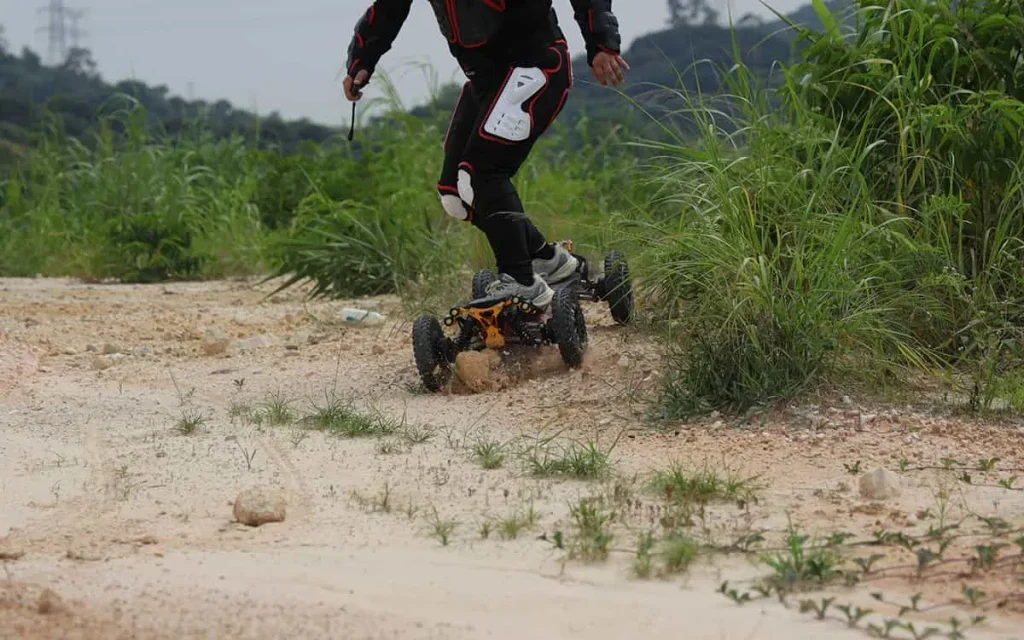
A friend let me borrow his all-terrain board for a weekend. It had large pneumatic tires, a wider deck, and dual gear motors with noticeably more torque than anything I had ridden before. We took it out to a local trail near a reservoir, nothing extreme, just packed dirt with a few roots and slight inclines.
The difference was immediate. The board absorbed bumps that would have sent me flying on my street setup. Traction on loose gravel felt solid. Climbing a modest hill that would have drained my old battery in seconds was handled without hesitation. I was hooked within the first ten minutes.
Related: Electric Skateboard Battery Troubles? Here’s What You Need to Know
Researching the Right Board
After that ride, I spent about three weeks researching all-terrain electric skateboards. I had a few priorities: reliable motor power for hills, a battery that could handle longer trail sessions, and a brand with a reputation for building boards that actually hold up outdoors.
That research kept bringing me back to Ecomobl. The brand focuses specifically on off-road electric skateboarding, which immediately felt more credible than a company that treats all-terrain as a side category. Two models stood out during my research.
The Telum 2WD is built for riders who want serious trail capability without sacrificing portability. It runs on large tires with dual planetary gear-driven motors that deliver strong torque on steep or uneven surfaces. The deck is flexible enough to absorb trail chatter without making the ride feel unstable.
The Ecomobl M24 Pro pushes performance further with a higher top speed, extended battery range, and a sturdier frame designed for more aggressive terrain. For anyone who wants to go beyond light trails and explore rougher backcountry paths, it is worth the extra investment.
What convinced me most was the community around Ecomobl. Forums, YouTube channels, and Reddit threads were full of riders sharing real long-term use footage, not just polished unboxing videos. That kind of transparency matters when you are spending a significant amount on outdoor gear.
Making the Switch: What Changed Day to Day
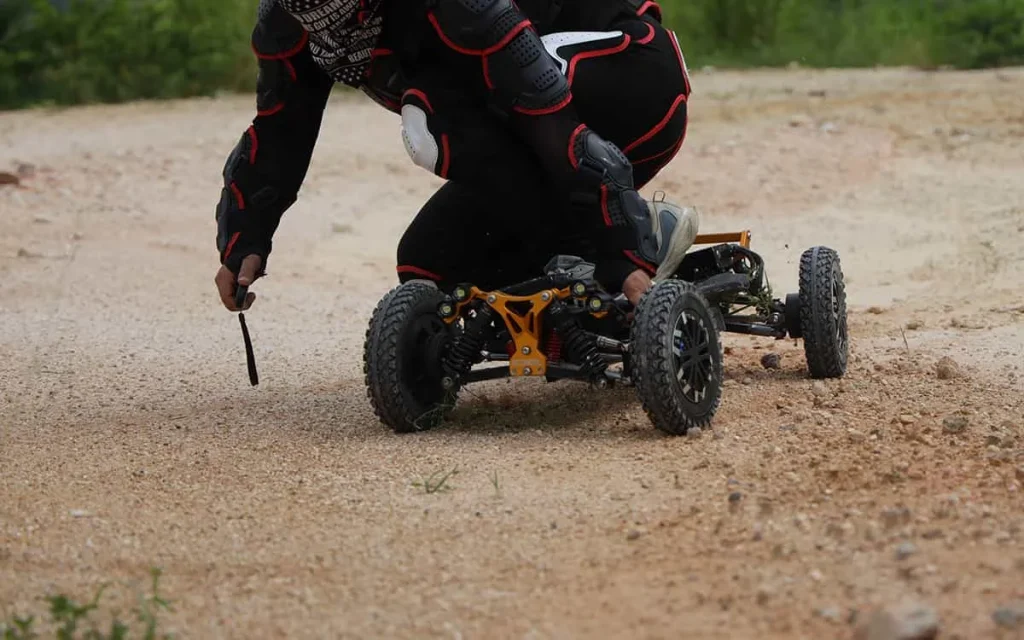
When my new board arrived, the adjustment period was shorter than expected. The remote and braking system felt familiar. The bigger shift was mental. I had to stop thinking about routes and start thinking about terrain.
Instead of plotting the smoothest path from point A to point B, I started looking at maps for parks, fire roads, and open land near my city. Weekends that used to involve scrolling through my phone became proper outdoor sessions. I started riding with a small group of trail riders who mix mountain biking with electric boarding, and that community aspect has been one of the most rewarding surprises.
Battery management became more important. Off-road riding drains power faster than flat pavement, especially on hills. I learned to plan routes with return trips in mind and to keep a conservative buffer rather than pushing to zero. Carrying a small battery pack for emergencies became a habit quickly.
What I Wish I Had Known Before Switching
A few things caught me off guard in the early weeks. First, off-road boards are heavier than street boards. Carrying a board through a trail that becomes unrideable requires more effort than you might expect if you are used to lighter commuter setups.
Second, protective gear becomes non-negotiable. I wore a helmet casually on the pavement. On trails, I added wrist guards, knee pads, and a more robust helmet without a second thought. The terrain is less predictable, and the consequences of a fall at speed are more serious.
Third, maintenance cycles change. Pneumatic tires need pressure checks before every serious ride. Gear-driven motors accumulate more debris on trails, so cleaning the drivetrain becomes a regular habit rather than an occasional one.
Would I Go Back to Street Riding?
Honestly, no. I still take my board into the city occasionally, and all-terrain electric skateboards handle light pavement without trouble. But the energy of trail riding, the variation, the physical engagement, the feeling of actually exploring a place rather than just traveling through it, is something that flat concrete cannot replicate.
If you are a street rider who has ever felt like the novelty has worn off, I would strongly encourage at least one off-road session before dismissing it. Borrow a board if you can. Find a local trail that allows electric personal vehicles. Give yourself an hour.
It might be all the convincing you need.