


Electric skateboarding in winter can be thrilling, but it also brings a new set of risks for both rider and machine. Cold temperatures, moisture, road salt, and reduced traction can quietly damage your electric skateboard if you are not careful. Many riders unknowingly shorten the life of their board by making simple winter riding mistakes that could easily be avoided.
Today, we will explore the most common winter riding mistakes that can damage your electric skateboard and explain how to prevent them. Whether you ride occasionally or commute daily, these tips will help you protect your investment and keep your board running strong throughout the cold season.
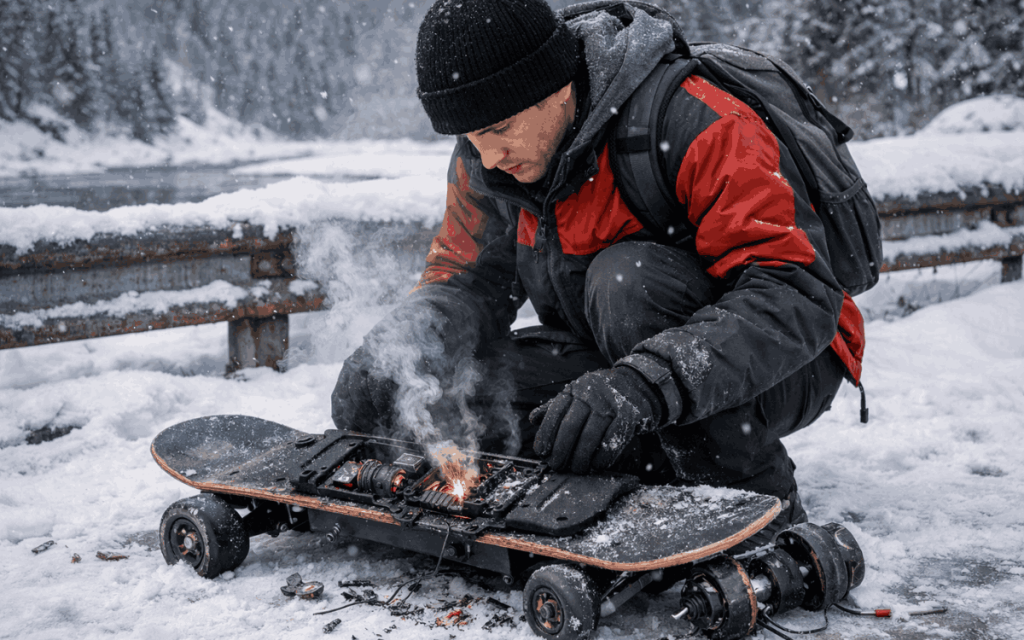
1. Riding on Wet, Snowy, or Icy Roads
One of the biggest mistakes riders make is assuming their electric skateboard can handle winter road conditions the same way it handles dry pavement.
Water and ice reduce traction, making it easier to slip and lose control. Even worse, moisture can seep into bearings, motors, and electronic components. Snow melts into water, which can enter battery enclosures and cause corrosion over time.
Road salt is especially dangerous. It sticks to metal parts and accelerates rust on screws, trucks, and bearings. Over time, this corrosion can weaken structural components and reduce performance.
To avoid damage, never ride on snowy or icy roads and avoid puddles and slushy surfaces. If the ground is wet, ride slowly and clean your board immediately afterward.
Read: 3 Useful Tips for Winter-Proofing Your Electric Skateboard Ride
2. Charging a Cold Battery
Cold temperatures significantly affect lithium batteries. One of the most damaging mistakes is charging your battery while it is still cold from a winter ride.
When a battery is cold, its internal chemistry becomes unstable. Charging it immediately can cause internal damage, reduce long-term capacity, and in extreme cases, lead to battery failure.
Always allow your board to warm up indoors for at least one hour before plugging it in. The battery should reach room temperature before charging begins.
This simple habit can dramatically extend your battery life.
3. Leaving Your Board in Freezing Temperatures
Many riders leave their boards in garages, car trunks, or balconies during winter. This exposes the battery and electronics to freezing temperatures for long periods.
Cold storage can permanently reduce battery capacity. It can also cause condensation to form inside the enclosure when the board is brought indoors, increasing the risk of water damage.
Your electric skateboard should always be stored in a dry, temperature-controlled environment. A closet, hallway, or indoor storage space is ideal.
4. Ignoring Reduced Battery Performance
Cold weather reduces battery efficiency. Riders often push their board as hard as they would in summer, draining the battery faster and stressing the system.
This can lead to deep discharges, which are harmful to lithium batteries. Running your board until it completely dies in cold weather is especially damaging.
In winter, ride shorter distances, keep your battery level above 20 percent, and recharge more frequently.
5. Riding Without Proper Waterproof Protection
Many electric skateboards are marketed as water-resistant, not waterproof. Riders often misunderstand this and ride through rain, slush, and wet roads without protection.
Moisture can enter through cable ports, power buttons, and battery seams. Over time, this leads to corrosion of internal components and failure of electronic systems.
If you plan to ride in damp conditions, apply waterproof sealing tape to exposed ports and use silicone sealant on enclosure seams. Always dry your board thoroughly after riding.
Also read: Top 11 Cold-Weather Riding Gears Every Electric Skateboarder Needs
6. Skipping Post-Ride Cleaning
Winter roads are full of dirt, salt, sand, and debris. Leaving this grime on your board is a recipe for long-term damage.
Salt eats away at metal parts. Sand grinds down bearings. Water causes rust.
After every winter ride, wipe down your deck, trucks, motors, and battery enclosure with a dry cloth. If needed, use a damp cloth and then dry everything completely.
A five-minute cleaning routine can save you hundreds in repairs.
7. Using Summer Wheels in Winter Conditions
Standard street wheels are designed for dry pavement. In cold and wet conditions, they lose grip easily.
Poor traction leads to slipping, sudden braking, and wheel spin. This puts extra strain on motors and belts.
If you ride in winter, consider switching to all-terrain or pneumatic wheels. These provide better grip and absorb bumps from rough winter roads.
8. Overlooking Bearing Maintenance
Cold, wet conditions are brutal on bearings. Water and salt penetrate the bearing seals and wash away lubrication.
Rusty bearings reduce efficiency, increase motor load, and shorten range. They can also seize completely.
Clean and lubricate your bearings more frequently in winter. If they start making noise or feel rough, replace them immediately.
9. Riding Too Aggressively in Cold Weather
Cold pavement has less grip than warm asphalt. Aggressive acceleration and hard braking increase the risk of wheel slip.
Wheel slip damages belts, pulleys, and motors. It also increases wear on tires.
Ride smoothly in winter. Accelerate gradually and brake gently. This protects both your board and your safety.
10. Ignoring Strange Noises or Performance Drops
Many riders ignore early warning signs during winter. Strange motor sounds, reduced range, slower acceleration, or vibration often indicate moisture or mechanical issues.
Small problems become expensive repairs if left untreated.
Inspect your board weekly during winter. Check screws, belts, bearings, battery housing, and motor mounts. Address issues immediately.
11. Using High-Pressure Washing or Hoses
Some riders try to clean winter dirt using a hose or pressure washer. This forces water into sensitive electronic components.
Never spray your electric skateboard directly with water. Use a damp cloth and gentle cleaning methods only.
12. Not Protecting the Remote Controller
The remote is just as important as the board. Cold temperatures reduce battery life and can cause screen malfunctions.
Moisture can enter buttons and charging ports.
Keep your remote in an inside pocket when not riding. Use a silicone protective cover and avoid exposing it to rain or snow.
13. Skipping Regular Bolt and Hardware Checks
Cold temperatures cause metal to contract. Vibration loosens screws more easily in winter.
Loose hardware leads to rattling, misalignment, and long-term structural damage.
Check all bolts weekly, including trucks, motor mounts, battery enclosure, and deck screws.
Final Thoughts
Winter riding can be fun, but it demands extra care. Most electric skateboard damage in winter does not come from accidents. It comes from neglect, poor storage, improper charging, and riding in unsafe conditions.
Avoiding these common winter riding mistakes will protect your battery, motors, electronics, and mechanical components. A little extra attention goes a long way in preserving performance and extending the life of your board.
If you respect winter conditions and ride smart, your electric skateboard will reward you with reliable performance season after season. Stay safe, ride responsibly, and take care of your board.

