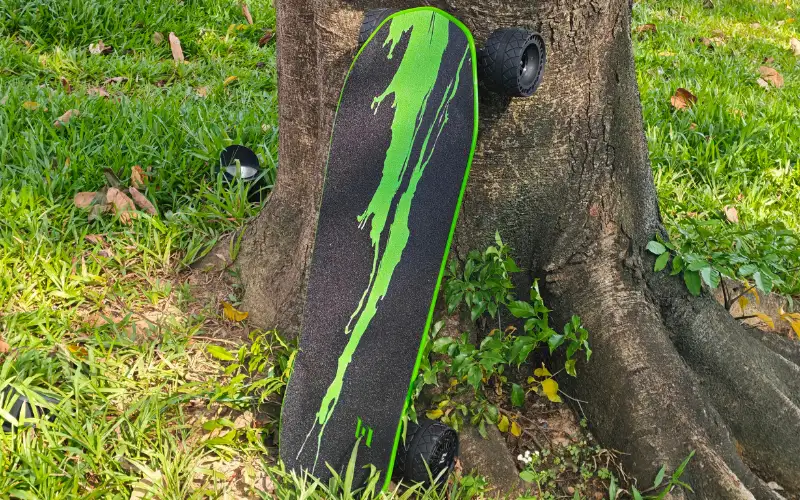


An electric longboard is a motorised skateboard equipped with a rechargeable lithium battery, brushless electric motor, electronic speed controller (ESC), and wireless remote. It looks almost identical to a traditional longboard but delivers effortless powered travel at speeds of up to 35 mph without a single kick-push required. Whether you are shopping for your first board or upgrading to a high-performance model, this guide answers every critical question so you can buy with confidence.
Electric longboards have become one of the fastest-growing personal electric vehicles of the 2020s. Commuters, students, and enthusiasts choose them for their low running cost, portability, and the simple fact that riding one is genuinely enjoyable.
| Quick Summary: Electric longboards are legal in most U.S. states, worth it for regular commuters, capable of 15–38 mph, and can last 3–5+ years with proper care. Prices range from $500 (entry-level) to $3,000+ (premium). |
1. Are Electric Longboards Legal in the USA?
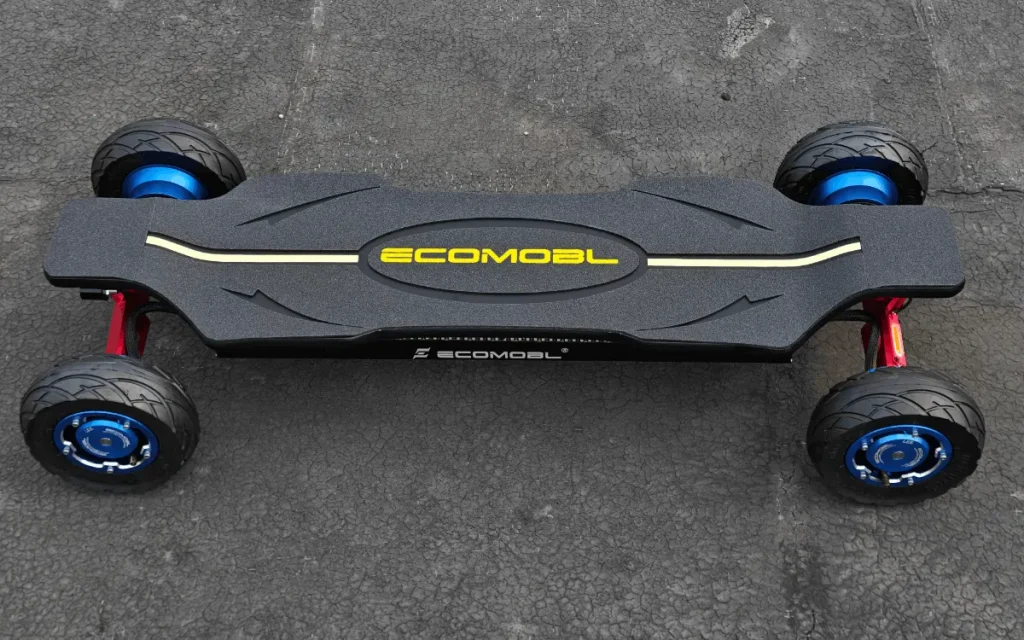
Yes, electric longboards are legal to ride in most of the United States, but rules vary significantly by state and city. The electric skateboard’s legal status by state breaks this down in full, but here is the essential summary.
Federal Classification
At the federal level, electric skateboards are not classified as motor vehicles, so no registration, licence plate, or vehicle insurance is required under federal law. The downside is that federal highway law does not protect riders either, leaving regulation entirely to individual states.
State Laws
Most states have enacted specific e-skateboard legislation over the past decade. California (AB 604), Florida, and Texas permit electric skateboards on bike lanes and paths at speeds up to 15–20 mph in many jurisdictions. Some states still rely on older electric bicycle statutes, which can create ambiguity for e-longboard riders.
Local Ordinances
Even within a permissive state, city or county rules can restrict where you ride. Common local restrictions include:
- No riding on sidewalks in business districts
- Speed caps of 15 mph on shared multi-use paths
- Mandatory helmet requirements for all ages
- Age minimums of 16 or 18 for operation
- Prohibited zones near schools, hospitals, and transit hubs
| Pro Tip: Always check your state’s DMV website and your city’s municipal code before riding. E-mobility laws are actively evolving, and what was a grey area in previous years may now be explicitly legal or explicitly banned in your area. |
2. Are Electric Longboards Worth It?
This is the question most prospective buyers wrestle with, and the honest answer depends entirely on how you plan to use it.
Why They Make Sense
Commute savings. Replacing a 1–5 mile daily car or rideshare trip can allow a $1,000 board to pay for itself within months. The cost per mile of an electric longboard is a fraction of a cent, versus $0.50–$1.50 for rideshare.
Time efficiency. In dense urban areas, an e-longboard often beats a car during peak hours. You park anywhere, skip traffic, and close last-mile gaps that public transit cannot.
Wellbeing. Even motorised riding engages your core, improves balance, and gets you outdoors. The mental health benefits of electric skateboarding are real and well-documented, something a car commute simply cannot offer.
Low running cost. A fully charged 648 Wh battery costs roughly $0.07 to charge and produces zero tailpipe emissions.
Honest Trade-offs
Upfront cost. Quality boards start around $500–$800. Budget boards under $300 often carry inflated range claims and unreliable electronic. The budget electric skateboard segment has improved, but cutting corners on cell quality is still common.
Weather dependency. Rain and wet roads are dangerous on any longboard regardless of IP ratings. Most riders treat e-longboards as a three-season vehicle.
Learning curve. Comfortable commuting speed takes 2–4 weeks of practice to achieve safely. Rushing that stage is the primary cause of beginner injuries.
Electric longboards are worth it for commuters travelling 2–10 miles daily in mild weather, recreational riders who value the experience, and anyone looking to meaningfully reduce transport costs. For all-weather reliability or consistent trips over 15 miles per charge, supplement with public transit.
3. How Do Electric Longboards Work?
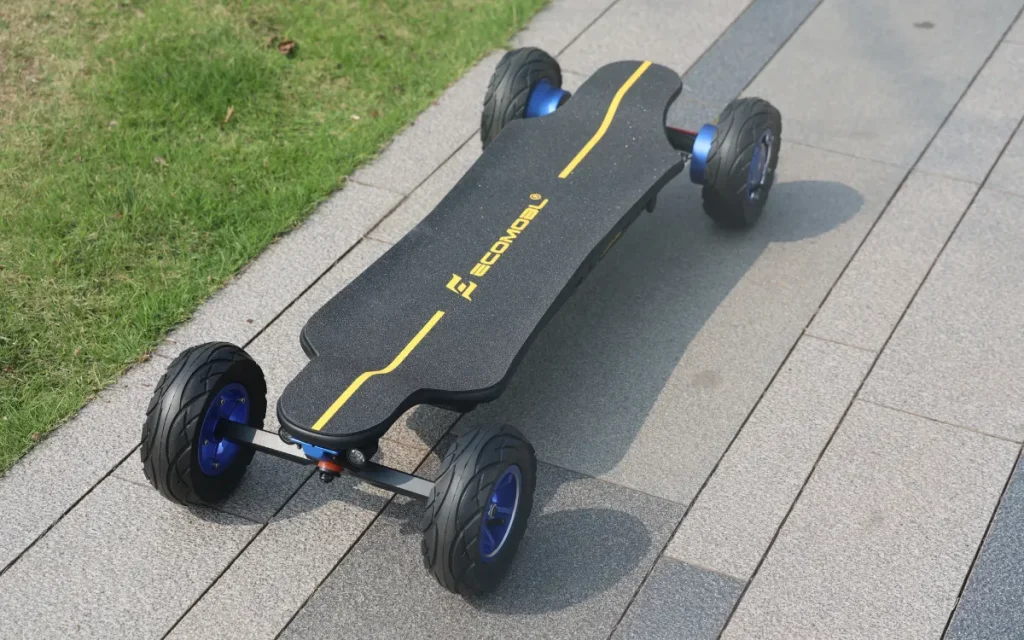
Understanding the technology helps you evaluate specs and make smarter buying decisions.
The Motor
Most electric longboards use brushless DC hub motors or belt-drive motors integrated into the rear wheel(s). Hub motors sit inside the wheel hub, are quiet, low-maintenance, and discreet. Belt drives offer more torque and better hill-climbing, but need periodic belt replacement. Ecomobl uses a Planetary Gear Drive: a compact sealed gearbox that multiplies motor torque without belt noise or maintenance overhead. The dual-motor configuration used on high-performance boards like the ET2 Pro adds traction and climbing power on top of that.
The Battery
The battery is the most expensive component and the biggest driver of real-world range. High-quality boards use Samsung or LG 21700 lithium-ion cells in series-parallel configurations. A 12S3P 648 Wh pack delivers roughly 35–45 km; a 12S5P 25 Ah pack extends that to 40–50 km. Battery health degrades approximately 20% after 300–500 full charge cycles, making a quality battery management system (BMS) equally critical.
The ESC
The electronic speed controller is the board’s brain. It translates remote signals into precise motor commands, manages regenerative braking, and protects the battery from over-discharge and overcharge. Ecomobl boards use FOC (Field-Oriented Control) ESCs for the smoothest possible power delivery and most responsive braking feel.
Regenerative Braking
When you brake, the motor acts as a generator, converting kinetic energy back into electricity and feeding it to the battery. Regenerative braking on the ET Pro 2.0 and ET2 Pro recovers approximately 22% of battery charge, meaningfully extending real-world range, especially on hilly routes.
4. How Fast Do Electric Longboards Go?
Speed varies by motor power, rider weight, terrain, and wind. The table below gives a practical tier overview for a full breakdown, including real-world testing data, and shows how fast electric skateboards go.
| Board Tier | Typical Speed | Best For |
| Entry-Level ($300–$500) | 15–20 mph (24–32 km/h) | Campus, flat sidewalks |
| Mid-Range ($500–$1,000) | 20–28 mph (32–45 km/h) | Urban commute, moderate hills |
| High-Performance ($1,000+) | 28–38 mph (45–60 km/h) | Long commutes, hilly terrain |
The Ecomobl ET Pro 2.0 and ET2 Pro both hit 48–55 km/h (30–35 mph) in Sport mode, firmly in high-performance territory. New riders should always start in Beginner mode, capped at around 10–15 km/h, and increase speed incrementally over several weeks.
| Safety Note: At 30+ mph, a helmet alone is insufficient. Wear a certified full-face or ASTM F1492 skate helmet plus wrist guards and knee pads. Speed wobbles are the leading cause of serious e-skateboard injuries. Building proper body mechanics before chasing top speed is non-negotiable. |
5. How Long Do Electric Longboards Last?
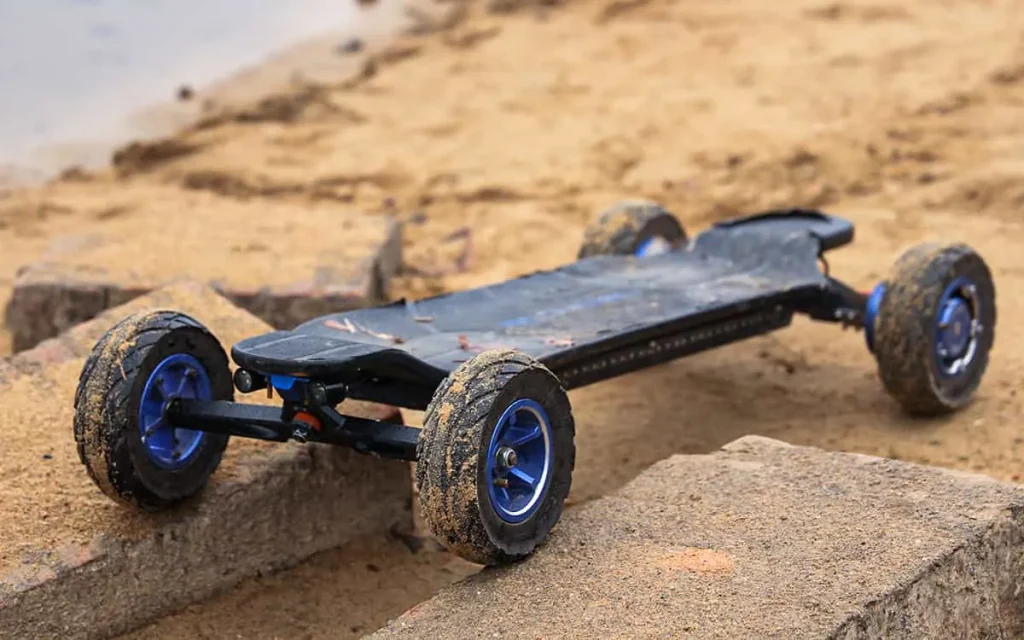
A well-maintained premium electric longboard can last 3–5 years or more.
Battery
Lithium-ion batteries typically retain 80% capacity after 300–500 full charge cycles. Keeping the battery between 20% and 80% for everyday use significantly extends longevity. Ecomobl boards use high-grade cells with active BMS protection against over-discharge and thermal runaway.
Motor and Drivetrain
Brushless hub motors are largely maintenance-free and can last 3,000–5,000+ km under normal use. The Planetary Gear Drive used on all Ecomobl longboards is sealed and weather-resistant, requiring minimal servicing.
Deck, Trucks, and Wheels
A 9-layer maple plus 2-layer fiberglass deck is highly durable and typically outlasts the electronics. Urethane wheels wear at approximately 0.5–1 mm per 100 km on rough pavement.
Maintenance Habits That Matter
- Storage: cool, dry location away from direct sunlight and temperature extremes
- Charging: 80% for everyday use; full charge only before long trips
- After wet rides: rinse trucks and bearings with clean water, dry thoroughly before storage
- Hardware: tighten all bolts monthly; vibration loosens hardware over time
- Firmware: install manufacturer updates when available; they often improve thermal management and braking
For a full seasonal routine, including winter storage and battery preservation across all weather conditions, the electric skateboard lifespan guide covers every maintenance task in detail.
| Further Reading: Maintenance & Longevity |
| → How to Increase the Lifespan of an Electric Skateboard (All Seasons) |
| → 8 Useful Tips to Store Your Electric Skateboard During Winter |
| → 10 Most Common Problems Electric Skateboard Riders Face |
6. How Much Do Electric Longboards Cost?
Price is the most distorting factor in the e-longboard market. Here is an honest breakdown for 2026.
Entry-Level: $300–$500
These boards work and are viable for very casual riders. Expect modest torque, 10–15 mile range, basic remotes, and shorter battery lifespans. Build quality is adequate, but corners are cut on cell quality and ESC firmware.
Mid-Range: $500–$1,000
Better range (15–25 miles), more reliable electronics, stronger braking, and improved deck flex. The sweet spot for most commuters who ride three to five days a week.
High-Performance: $1,000–$3,000+
This is where Ecomobl operates. Premium cells, high-torque motors, FOC ESC firmware, regenerative braking, full lighting systems, and meaningful warranties. Browse the complete electric longboard range to compare models side by side.
| Buying Tip: The cheapest electric longboard you will ever own is the one you buy once and maintain properly. Sub-$300 boards almost universally disappoint within 6 months, usually through battery degradation or ESC failure. |
7. Which Electric Longboard Should You Buy?
Two Ecomobl longboards cover the widest range of rider needs in 2026. Both ship from our USA domestic warehouse with fast domestic delivery.
Prefer a lighter street board? The ET Storm 2.0 and Mini are purpose-built for portability. Riders who take things off-road should explore the M24 PRO 4WD or the mountain board lineup, the Telum BA 4WD, and Ripper Pro handle terrain that would stop a street longboard cold.
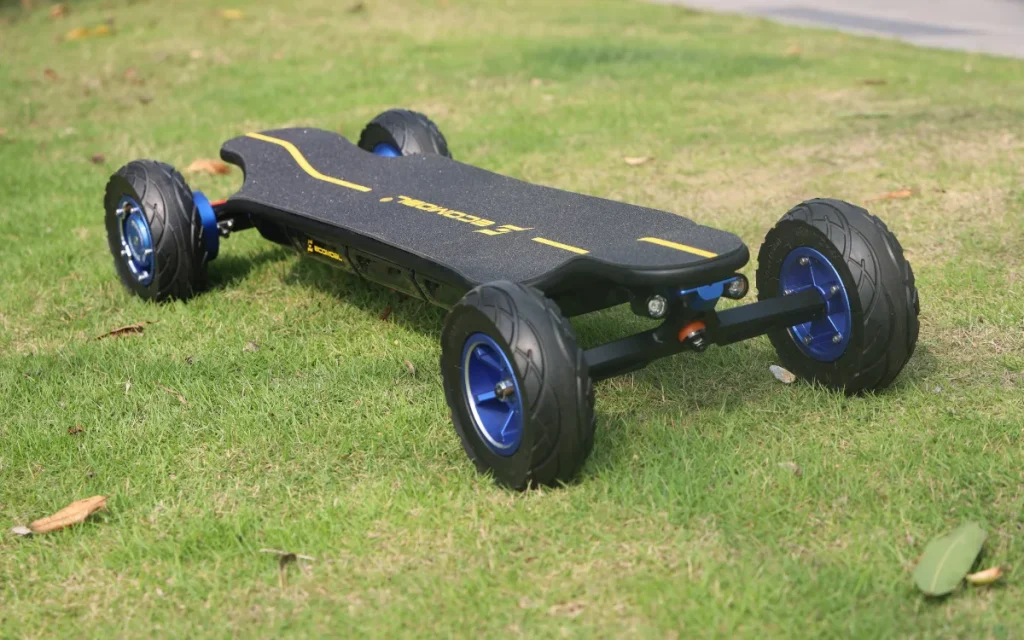
| Ecomobl ET Pro 2.0 — The High-Performance Daily Driver
Best for: urban commuters, intermediate and advanced riders, and those who want high speed and range in a lighter 27-lb package.
|
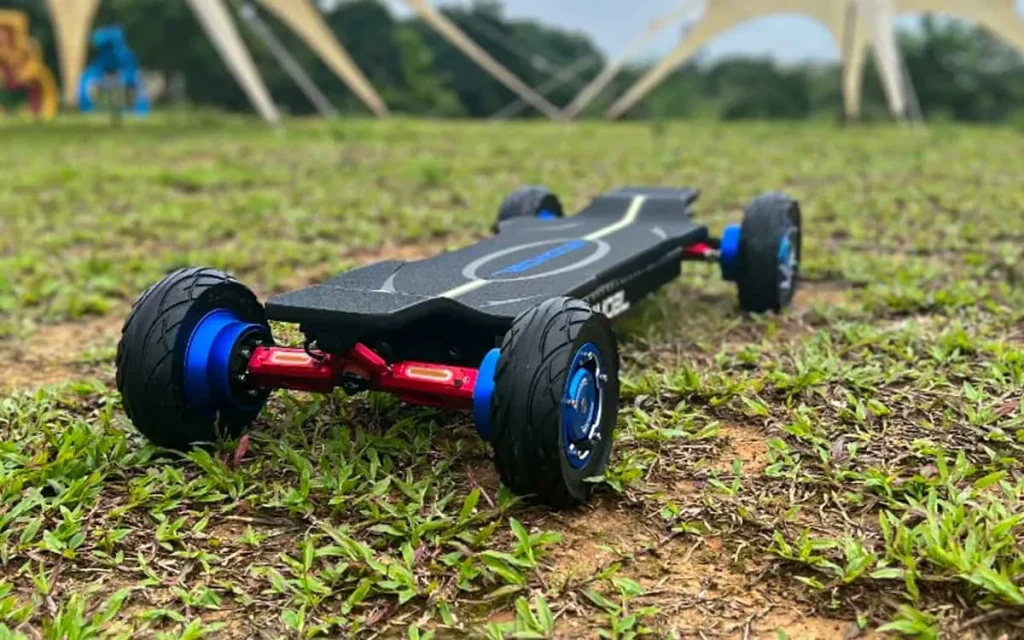
| Ecomobl ET2 Pro — Maximum Power and Range
Best for: riders who tackle hills daily, carry heavier loads, or want every specification pushed as far as current technology allows.
|
Not sure which suits you? The contact page connects you directly with the Ecomobl team for a personalised recommendation, or visit our FAQ for quick answers.
| Explore the Full Ecomobl Range |
| → Electric Longboard Series |
| → Off-Road Electric Skateboard Series |
| → Electric Mountain Board Series |
8. How to Ride an Electric Longboard
The mechanics are intuitive, but the first few sessions are where most injuries occur. Work through these stages in order.
Before Your First Ride
- Wear a certified helmet (ASTM F1492 or CPSC), wrist guards, and knee pads every session, without exception.
- Charge the board to 100%, power on, and confirm remote pairing before stepping on.
- Familiarise yourself with the remote’s speed mode button and brake sensitivity settings while stationary.
- Choose a flat, quiet paved surface; an empty car park is ideal for the first 2–3 sessions.
Session 1: Stance and Balance
Step on with your dominant foot near the front trucks. Regular stance (left foot forward) or goofy (right foot forward) both work equally well. Keep knees slightly bent and arms out. Before using the remote, practice shifting weight heel-to-toe to feel the trucks respond. Proper foot placement is the single biggest factor in avoiding speed wobbles at higher speeds.
Session 2: Throttle and Braking
Start in Beginner mode. Use minimal throttle electric motors accelerate faster than new riders expect. Practice accelerating to walking pace, holding steady, then decelerating smoothly. When riding downhill, brake early and progressively; braking distance increases significantly on a gradient and in summer heat.
Session 3: Turning, Terrain, and Night Riding
Turns happen by shifting bodyweight across the deck heels to carve one way, toes for the other. As you progress, pay attention to surface conditions: cracks, gravel, and wet leaves all affect traction significantly. For riding after dark, all Ecomobl longboards include front and rear lighting, but gear choices and route planning for night rides deserve their own preparation.
| Further Reading: Riding Skills |
| → Useful Electric Skateboard Riding Tips for New Riders |
| → How to Ride Downhill Safely on an Electric Skateboard |
| → What Terrains Can Electric Skateboards Handle Safely? |
Final Thoughts
Electric longboards are genuinely transformative for urban commuters, deeply enjoyable for recreational riders, and increasingly capable of meeting real-world demands, hills, range, and durability that earlier generations could not match.
For flat urban commutes of 3–5 miles, a quality mid-range board around $600–$800 serves well. For daily hills, heavier loads, or long-term reliability, the ET Pro 2.0 or ET2 Pro delivers performance and longevity that justify the investment.
Invest in proper safety gear, understand your local regulations, and give yourself real time to develop skills before riding in traffic. The experience once dialled in is genuinely hard to match.