


Electric skateboarding has grown from a niche hobby into one of the most practical ways to get around a city, a campus, or a stretch of trail. Once someone decides to go electric, though, a new question usually replaces the old debate between traditional decks: electric longboard vs electric skateboard- which one actually fits how you want to ride?
Both categories run on a battery, a motor, and a handheld remote, but the resemblance mostly stops there. Deck shape and wheel size- the two things that separate a classic longboard from a classic skateboard- matter even more once electric power enters the picture, because those choices shape range, top speed, and how confidently a board handles a hill or a rough patch of pavement.
This guide breaks down what actually separates an electric longboard from an electric skateboard, compares them side by side, and helps you figure out which one matches your riding goals, whether that’s a daily commute, a weekend cruise, or a trail most boards can’t touch.
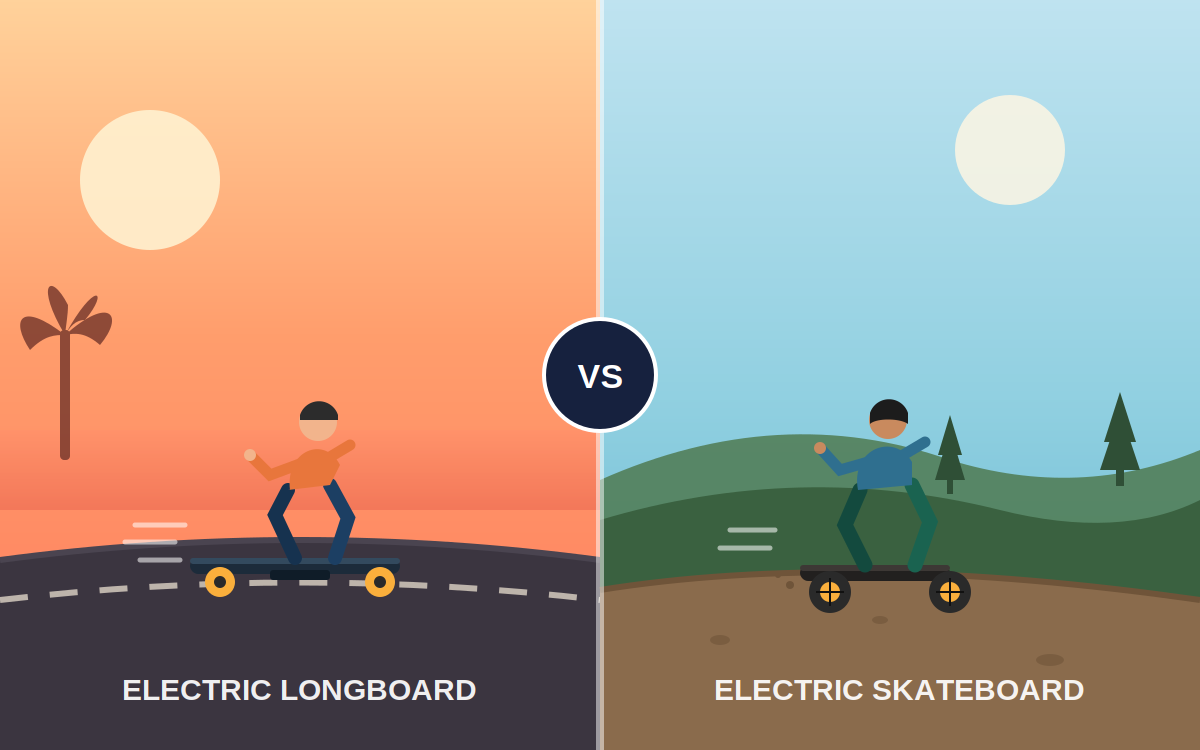
Electric longboards lean into cruising and range. Electric skateboards, especially off-road builds, lean into grip and agility.
What is an Electric Skateboard?
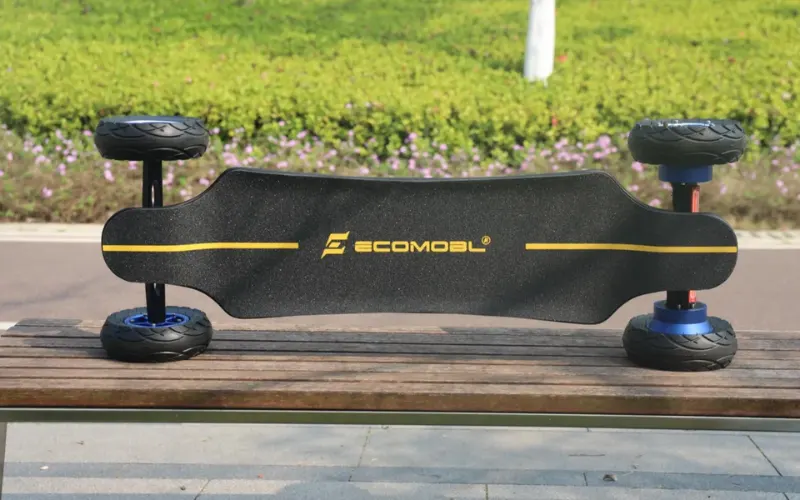
An electric skateboard starts from the same short, compact deck as a traditional street board, usually somewhere between 28 and 38 inches, but the electric version has to make room for a battery pack, a motor (or two), and the wiring that connects them to a handheld remote. That extra hardware pushes most electric skateboards toward a wider, flatter deck than their non-electric ancestors, even when the concave shape and kicktail stick around.
Where this category has grown the most is off the pavement. A wave of off-road electric skateboards built around chunky all-terrain wheels and reinforced trucks now handle gravel, packed dirt, and grass about as easily as a sidewalk, which is a big departure from the trick-focused street boards most people picture when they hear “skateboard.” A compact model like the M24 2WD sits closer to this end of the spectrum: short enough to carry, but built with the wheels and torque to handle more than smooth concrete.
Because the deck stays short and the wheelbase stays tight, electric skateboards generally turn sharper and feel more agile at low speed than longer boards, which matters in crowded areas or tight trail switchbacks.
What is an Electric Longboard?
An electric longboard keeps the long, often flexible deck of a traditional longboard, typically somewhere between 38 and 46 inches or more, and builds the drivetrain around it instead of forcing the deck to shrink to fit the hardware. That extra length leaves room for a larger battery, which is one reason electric longboards tend to be the range champions of the category.
The wheel and truck setup usually favors comfort over sharp cornering. Larger, softer wheels soak up cracks and seams that would rattle a smaller board, and a drop-through or drop-deck mount lowers the rider’s center of gravity for a steadier ride at speed. A model like the ET2 Pro reflects this approach directly, pairing a longer platform with a setup tuned for smooth, sustained cruising rather than tight maneuvering. For anyone comparing full lineups rather than single models, the electric longboard series generally trades some agility for stability, comfort, and distance.
Electric Longboard vs Electric Skateboard: Core Differences
The easiest way to see the difference between an electric longboard and an electric skateboard is side by side.
| Feature | Electric Skateboard | Electric Longboard |
| Deck Length | 28 to 38 inches | 38 to 46+ inches |
| Deck Shape | Concave, stiffer, often with kicktail | Flatter or drop-through, some flex |
| Wheels | Smaller to mid-size, often all-terrain | Larger, softer, built for smooth roads |
| Best Terrain | Streets, parks, off-road trails | Pavement, boardwalks, bike paths |
| Riding Feel | Agile, quick to turn | Stable, planted at speed |
| Portability | Easier to carry and store | Bulkier, needs more storage space |
| Typical Range | Moderate, torque-focused | Longer, distance-focused |
Riders who cut their teeth on the non-electric versions of these boards will recognize most of this. The difference is that electric power amplifies both sets of strengths: a skateboard’s agility becomes useful for weaving through obstacles at 15 mph instead of 5, and a longboard’s stability becomes the difference between a comfortable 20-mile commute and an exhausting one.
Motor and Drivetrain Differences
The motor setup is where the electric versions really diverge from their analog counterparts, and it’s worth understanding before comparing specs.
Most electric skateboards, especially off-road models, rely on hub motors built into the wheels themselves or a compact geared motor mounted close to the truck. This keeps the setup low-profile and delivers strong torque from a standstill, which is exactly what’s needed to power through gravel or climb a short, steep rise. Electric longboards more often use belt-driven motors mounted to the truck, spinning a pulley that turns the wheel through a belt. Belt drives tend to deliver power more gradually, which suits the smoother, sustained acceleration longboard riders are usually after.
In both cases, the electronic speed controller sits between the remote and the motor, translating a trigger pull into a specific, repeatable amount of power. It’s a small component, but it’s the reason a well-tuned board feels predictable instead of jerky, and it’s worth understanding if you’re comparing boards on spec sheets alone.
Battery Range and Top Speed Compared
Range and speed are usually the first numbers people compare, and the deck differences above explain most of the gap.
Because an electric longboard has more physical space under the deck, it can generally fit a larger battery pack without changing the board’s proportions much. That translates into longer range per charge, which is a big part of why longboards dominate commuting use cases. Electric skateboards, particularly off-road builds, often prioritize torque and durability over sheer battery size, since climbing loose terrain draws more power per mile than cruising a flat bike path.
Top speed is closer between the two than most people expect. What differs more is how safe that speed feels: a longboard’s wider stance and lower deck make high speed feel more controlled, while a skateboard’s shorter wheelbase can feel twitchier at the same number on the speedometer. Battery habits matter here too. How the pack gets charged and stored between rides has a real effect on long-term capacity, and it’s usually the biggest factor in why one rider’s board still hits its original range after a year while another’s doesn’t.
Which One Handles Hills and Rough Terrain Better?
This is where the “skateboard” label gets misleading, because modern off-road electric skateboards are often the stronger choice on tough terrain, not the weaker one.
Their smaller, grippier all-terrain wheels and higher-torque motors are built for climbing steep residential streets and uneven trails without bogging down, something a traditional longboard setup, with its long wheelbase and softer wheels, isn’t optimized for. For riders who want to go even further off pavement, electric mountain boards push this idea further still, with bigger tires, dual motors, and suspension trucks designed for genuine trail riding rather than occasional gravel.
Longboards aren’t out of their depth entirely. Their stability at speed makes them a comfortable choice for long, gently sloped rides, and their softer wheels handle minor cracks and seams better than a stiff street setup. But if the ride regularly includes loose surfaces, steep pitches, or unpredictable terrain, it helps to know which surfaces are actually safe to ride on before assuming any electric board can handle them.
Which is Easier to Ride for Beginners?
Electric longboards tend to be the more forgiving starting point. The longer wheelbase and lower center of gravity make balancing easier, and the wider deck gives new riders more room to find their stance before worrying about carving or braking technique.
Electric skateboards ask a little more of a new rider, mostly because the shorter deck reacts faster to small shifts in weight. It’s a manageable learning curve, but proper foot placement and weight distribution usually take a few sessions to feel natural rather than something that clicks immediately. Riders coming from a skate park background tend to adapt fastest, since the stance is closer to what they already know.
Which is Better for Commuting?
For most commuters, the deciding factor isn’t speed or terrain; it’s what happens before and after the ride. A shorter electric skateboard is easier to carry onto a train, tuck under a desk, or store in a small apartment, while a longer electric longboard usually needs to be leaned against a wall or hung on a rack.
Range works the other way. If the commute is long enough that battery life matters more than storage space, a longboard’s bigger pack usually wins out. Budget matters too, and it’s worth understanding what actually separates a reliable board from one that quietly loses range and power a few months in, rather than assuming every listed spec holds up the same way in daily use.
Can You Do Tricks on an Electric Skateboard?
Not really, at least not in the ollie-and-kickflip sense most people associate with skateboarding. The battery, motor, and wiring add enough weight that traditional street tricks become impractical on almost any electric board, longboard, or skateboard.
What electric skateboards do offer is tighter, more responsive handling than a longboard in everyday riding: quicker direction changes, easier weaving through pedestrians, and a more playful feel at moderate speed. If tricks specifically are the goal, a non-electric street skateboard is still the better tool for the job.
Pros and Cons of Electric Skateboards
Pros:
- Compact and easier to carry or store
- Strong torque for hills and loose terrain
- Agile handling in tight spaces
- Off-road models extend riding to trails and gravel
Cons:
- Generally shorter range than longboards
- Less stable at higher speeds for new riders
- Smaller wheels feel every crack on rough pavement
Pros and Cons of Electric Longboards
Pros:
- Longer range from a larger battery bay
- More stable and comfortable at speed
- Smoother ride on cracked or uneven pavement
- Easier learning curve for first-time riders
Cons:
- Bulkier to carry and store
- Less agile in crowded or tight spaces
- Not built for trails, gravel, or loose terrain
Electric Longboard vs Electric Skateboard: Which One Should You Choose?
Choose an electric skateboard if:
- You want a compact board that’s easy to store and carry
- Your rides regularly include trails, gravel, or hills
- You value quick, agile handling over long-distance range
Choose an electric longboard if:
- Your priority is range for a long commute
- You mostly ride on pavement, boardwalks, or bike paths
- You want a stable, comfortable ride as a beginner
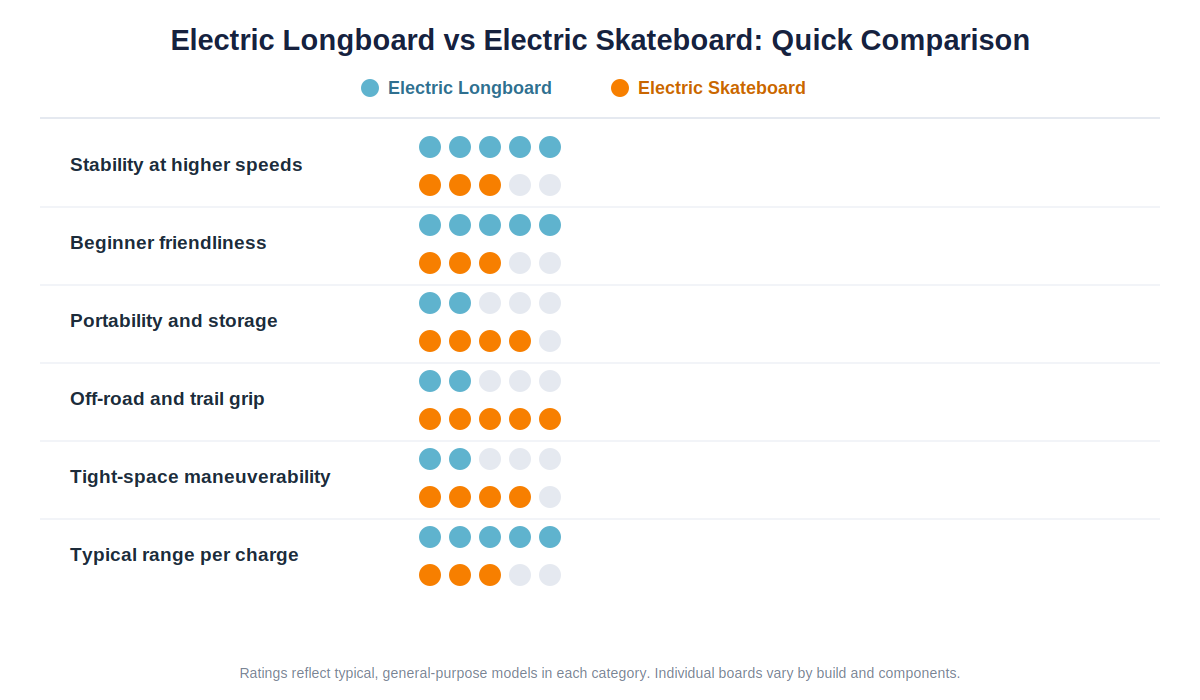
A general side-by-side view of where each board style tends to lead or lag.
Safety Tips for New Electric Riders
Whichever board you choose, a few habits make the learning curve safer for both types:
- Always wear a helmet and wrist guards, especially in the first few weeks
- Practice acceleration and braking on flat, open ground before tackling hills or crowds
- Learn how to control speed gradually on a descent rather than braking hard partway down
- Understand what the board actually does if the remote loses connection mid-ride, since panic is the real risk, not the disconnect itself.
- Start well below the board’s top speed until turning and stopping both feel automatic.c
Final Thoughts
There’s no universal winner in the electric longboard vs electric skateboard debate, only the board that fits how and where you actually ride. An electric longboard rewards riders who want a stable, long-range cruiser for pavement and commuting. An electric skateboard, especially an off-road build, rewards riders who want something compact, agile, and ready for terrain a standard board would struggle with.
Whichever direction fits your riding style, a few details actually separate a good match from a frustrating one: deck length, wheel type, motor setup, and battery size. Start with how and where you’ll ride most often, and the right board tends to follow from there.