


Whether you are comparing your first board or trying to get more from the one you own, the same questions keep coming up. How fast do electric skateboards go? Can you ride in the rain? Are they legal where you live? What happens to the battery over time?
This FAQ gives short, direct answers to 36 of the most common questions, grouped by topic. Where a subject deserves more depth, you will find a link to a detailed guide on our blog. If you run into unfamiliar jargon along the way, our electric skateboard glossary explains the terms in plain English.
Jump to a section: Basics | Choosing a Board | Performance | Riding and Safety | Laws and Travel | Weather and Care
Electric Skateboard Basics
1. What is an electric skateboard?
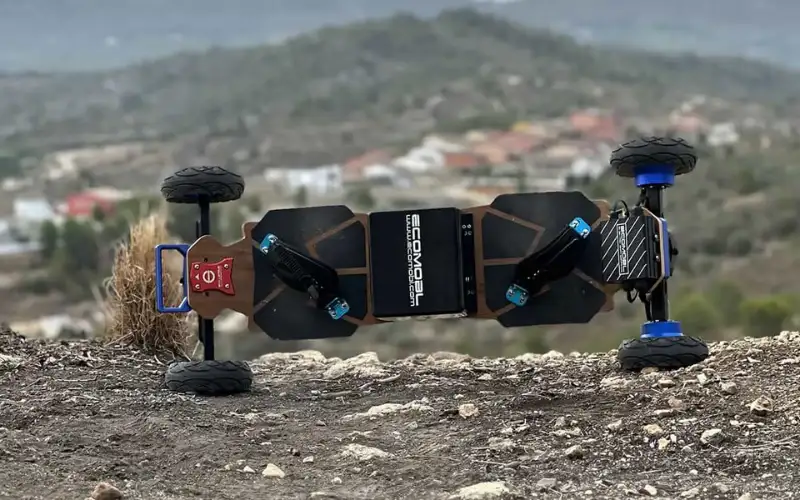
An electric skateboard is a skateboard or longboard powered by a rechargeable battery and one or more electric motors. You control acceleration and braking with a wireless handheld remote, so you can ride without pushing. You can browse the full range on our electric skateboards page.
2. How do electric skateboards work?
When you press the throttle on the remote, a receiver in the board signals the electronic speed controller (ESC), which sends power from the battery to the motors. Releasing or pulling back on the remote slows the board, often using the motors themselves to brake. For a full walkthrough, read how electric skateboards actually work.
3. What is the difference between an electric longboard and an electric skateboard?
Longboards generally have a longer deck and wheelbase, which makes them more stable for cruising and commuting. Shorter skateboard-style decks are more compact and nimble but can feel twitchier at speed. Our comparison of electric longboards and electric skateboards helps you decide which suits your riding.
4. What are the main parts of an electric skateboard?
The core parts are the deck, trucks, wheels, motor or motors, ESC, battery pack with a battery management system (BMS), and the remote. Our ESC guide goes deeper into the “brain” of the board, and the glossary defines every component.
5. What does “esk8” mean?
Esk8 is rider shorthand for electric skateboard. You will see it in forums, social media tags, and builder communities. If you want to meet other riders, our guide to building an electric skateboard community is a good place to start.
6. Are electric skateboards worth it?
For many riders, yes. They are portable, fun, and efficient for short trips, and they can replace car or rideshare trips for everyday errands. Whether one is worth it for you depends on your distance, terrain, and budget. See how riders are using boards as everyday transport in our article on living car-free with an electric skateboard.
Choosing the Right Board

7. How do I choose the right electric skateboard?
Start with where you will ride, how far you go, how often you ride, your weight, and your budget. Then compare battery capacity, motor setup, wheel or tire type, and remote. Our guide on which electric skateboard is right for you walks through it, and the Find Your Perfect Board tool narrows the options. For a closer look at build quality, read the factors that make an electric skateboard reliable.
8. How much does an electric skateboard cost?
Prices vary widely. Entry-level boards cost a few hundred dollars, while premium all-terrain and high-power models cost considerably more. Battery size, motor power, build quality, and extra features drive the difference. You can see specs side by side on the compare all boards page, or read our 2026 buying picks.
9. What is the best electric skateboard for beginners?
A predictable, easy-to-control board with adjustable riding modes is a sensible starting point, and compact street boards are a common choice. Our Supermini announcement explains how a compact street board is designed for everyday riding. Pair it with our riding tips for new riders.
10. What is the best electric skateboard for commuting?
Look for a board that is portable, reliable, and has enough real-world range for your round trip. Street-focused designs are usually the best fit for pavement. Browse our electric longboard and street series, and see urban commute tips or our guide for college students if you ride around campus.
11. What is the best electric skateboard for hills?
Hill climbing depends on motor torque, motor type, battery voltage, and rider weight. Dual motor and all-wheel-drive setups generally handle steep grades better than single-motor boards. Read our guides to boards for hilly areas and electric skateboard hill climbing, or explore our electric mountain boards.
12. What is the best electric skateboard for off-road riding?
Off-road riding calls for larger pneumatic tires, a sturdy frame, strong torque, and ideally all-wheel drive. Our article on the features that set all-terrain boards apart explains what to look for. You can explore the all-terrain series or read about e-mountain boarding.
Performance, Range, and Power

13. How fast do electric skateboards go?
Many street and commuter boards top out around 20 to 25 mph, and performance-focused models can go faster. Real-world speed also depends on rider weight, battery charge, wind, and slope. Remember that local laws may set speed limits for powered devices. See our guide for advanced riders if you want more power.
14. How far can an electric skateboard go on one charge?
Real-world range commonly falls somewhere between 10 and 25 miles, and larger batteries can go farther. Hills, rider weight, cold temperatures, and high speeds all reduce it. Plan routes with a buffer, and use our guide to plan a safe and efficient route.
15. How long does it take to charge an electric skateboard?
A few hours is typical, but it varies with battery capacity and charger output. Charge in a cool, dry, ventilated space and avoid charging a battery that is hot from riding or heat exposure. Your user manual lists the recommended charger and charging guidance for your model.
16. Can electric skateboards go uphill?
Yes. Well-built boards climb comfortably, but steep grades demand more torque and battery power. Rider weight and tire type also matter. For a complete breakdown, see Can Electric Skateboards Go Uphill?
17. Do I need dual motors or four-wheel drive?
Not always. Single-motor boards can be fine for flat commutes, while dual motors give stronger acceleration, steadier hill climbing, and smoother braking. Four-wheel drive adds even more traction, especially on loose ground. Read more about how dual motors work, or compare drive setups on the compare boards page.
18. What is regenerative braking?
Regenerative braking uses the motor as a generator to slow the board while sending a small amount of energy back to the battery. It makes braking smoother, but it is not available on every board and can feel different when the battery is full. Learn the benefits and limits in our guide to regenerative braking.
Riding and Safety
19. Are electric skateboards safe?
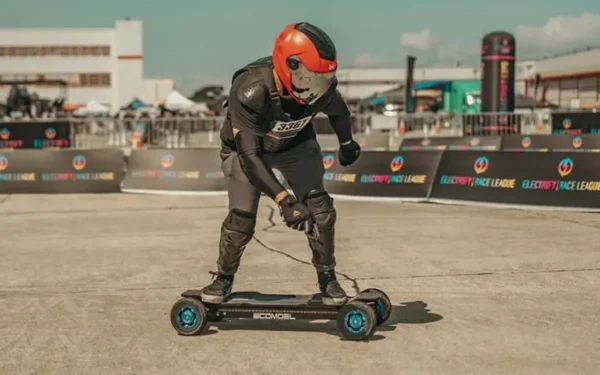
They can be, but they carry real risks, mainly from falls, loss of control, and traffic. Safe riding comes from the right gear, a board that suits your skill level, speed you can control, and good habits. Read the mistakes new riders make and 10 things you should not do, and review our safety precautions.
20. What safety gear do I need?
At minimum, wear a properly fitted helmet. Wrist guards, knee and elbow pads, and gloves reduce common injuries, and closed-toe shoes with good grip help with control. Add lights and reflective items if you ride near traffic or after dark.
21. How long does it take to learn to ride?
Many riders feel comfortable on flat ground after a few sessions, but building real confidence at higher speeds and on hills takes longer. Start in an empty, smooth area on a gentle riding mode. Our article on mastering an electric longboard covers realistic timelines.
22. How do I brake safely?
Apply the brake smoothly and early rather than grabbing it suddenly, keep your knees bent, and keep your weight centered over the board. Practice stopping at different speeds in a safe area. For step-by-step technique, see mastering electric skateboard braking.
23. What are speed wobbles and how do I stop them?
Speed wobbles are fast side-to-side oscillations that can build quickly at higher speeds. If they start, stay relaxed, bend your knees, keep your weight centered, and ease off the throttle gradually instead of braking hard. Proper stance and well-adjusted trucks help prevent them. Our guide explains how to prevent speed wobbles.
24. Can I ride an electric skateboard at night?
Yes, if you are visible and your path is well lit. Use a front and rear light, wear reflective gear, slow down, and avoid routes with poor lighting. See our picks for night riding and low visibility.
25. Is there a weight limit for riders?
Every board has a maximum rider weight, and it differs by model. Heavier riders should pay extra attention to motor torque, battery capacity, and braking performance. Check the specs on the compare boards page and in your user manual before you buy or ride.
Laws, Rules, and Travel
26. Are electric skateboards legal?
It depends on where you live. Rules vary by country, state, and city, and some places classify electric skateboards as motorized vehicles with limits on where and how fast you can ride. Always check local regulations. Our overview of electric skateboard laws by state is a useful starting point.
27. Where can I ride an electric skateboard?
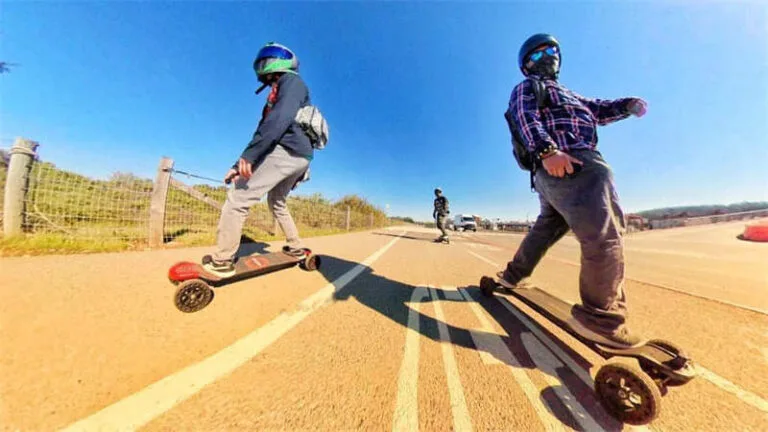
Depending on local law, riders commonly use bike lanes, low-traffic streets, paths, and trails. Sidewalk use is often restricted or discouraged. Be considerate of pedestrians and cyclists, and read our guide to electric skateboard etiquette and route planning.
28. Do I need a license, registration, or insurance?
In many places, an electric skateboard does not require a license or registration, but this varies,s and some jurisdictions treat powered boards differently. Check your local rules, and consider whether your existing insurance policies cover accidents involving a personal electric vehicle. Our legal guide covers the basics.
29. Can I take an electric skateboard on a plane?
Often not. The FAA requires airline approval for lithium-ion batteries above 100 watt-hours (Wh) and prohibits batteries above 160 Wh in passenger baggage. Many electric skateboard batteries exceed those limits. Find your battery’s watt-hours by multiplying volts by amp-hours (see the glossary entry for watt-hour), and always confirm with your airline before you travel.
Weather, Battery, and Care

30. Can I ride an electric skateboard in the rain?
It is generally not recommended. Water can damage electronics, and wet pavement reduces grip and braking performance. Check your board’s waterproof rating in the manual, and avoid puddles and standing water. Read more in Can You Ride an Electric Skateboard in the Rain?
31. Is it safe to ride in hot weather?
Yes, with precautions. Heat stresses the battery and motor, so avoid long, high-power rides in peak heat, let the board cool before charging, and never leave it in a hot car. Our guide on riding in summer heat safely offers practical tips.
32. Can I ride in cold weather, and how do I store my board in winter?
You can, but cold reduces battery range and makes pavement less predictable. Dress for it and expect shorter rides. For long storage, keep the board indoors at a moderate temperature with a partial charge. See cold-weather riding gear and winter storage tips.
33. How long does an electric skateboard battery last?
Lithium-ion batteries lose capacity gradually over hundreds of charge cycles, and heat, deep discharges, and poor storage speed up the process. With good care, many riders get several years of use. If you want the flexibility of extra range, explore boards with removable batteries.
34. How do I maintain my electric skateboard?
Check bolts, wheels, and bearings regularly, keep the board clean and dry, charge it properly, and inspect the battery area for damage. Replace worn parts before they fail. You can find replacement and upgrade components in our accessories section, and our list of reliability factors shows what to monitor.
35. What should I do if my board will not turn on or the remote disconnects?
Start with the basics: charge the battery, check connections, re-pair the remote, and replace remote batteries. Many issues have simple fixes. Our guides on common problems you can solve without contacting customer service and the 10 most common problems riders face walk through them. If the issue persists, contact our support team.
36. Can I upgrade my electric skateboard?
Yes, many riders customize wheels, grip, lighting, and other parts. Be careful with performance changes, since some modifications affect safety or warranty coverage. See our guide to 10 ways to upgrade an electric skateboard, and browse compatible parts on the accessories page.
Still Deciding on a Board?
If you are ready to choose, start with the Find Your Perfect Board tool or compare models side by side on the compare all boards page. For more guides on riding, safety, and gear, browse the full Ecomobl blog.
This FAQ provides general information. Always follow your board’s user manual and your local laws.

